If you are weighing Kilo Electronics against Botland, the short answer depends on what you are building, and our Botland alternatives guide covers the wider field. Choose Kilo Electronics, an online authorised dealer of IoT hardware, if your project needs LoRaWAN, mioty, NB-IoT or Bluetooth sensors, gateways, antennas and power supplies from several manufacturers. Choose Botland if you are prototyping on maker boards, building robots or buying general hobby electronics.
- Kilo Electronics vs Botland in 2026: Kilo suits IoT deployments, Botland suits maker and robotics projects.
- Kilo Electronics is an online authorised dealer selling to individuals, makers, professionals and businesses across Europe.
- Kilo's catalogue spans sensors, gateways, controllers, modules, antennas and power supplies for LoRaWAN, mioty, NB-IoT and Bluetooth.
- Botland's catalogue is weighted toward development boards, robotics and general hobby electronics.
- Many projects use both: prototype on maker boards, then source field hardware for deployment.
Why this comparison matters in 2026
Both shops sell electronics online, so they look interchangeable in a search result. They are not. They are built around different problems.
A maker shop answers the question: what board, motor or component do I need for this build? An IoT hardware dealer answers a different one: which sensor, gateway and antenna combination will report data from a field, a building or a pipeline for years?
Pick the wrong shop and you either hunt across five tabs for a gateway and its antenna, or you pay for a deployment catalogue when all you wanted was a starter board. This page sets out where each store fits in 2026, with honest trade-offs on both sides.
One note on method: this comparison is editorial. It describes what each store's catalogue is organised around. It does not rest on a delivery test, a price check or customer data, so it makes no claims about speed, price or stock for either store.
At a glance
| Dimension | Kilo Electronics | Botland |
|---|---|---|
| Best for | IoT deployments: sensors, gateways, antennas, power | Maker projects, robotics, prototyping boards |
| Store type | Online authorised dealer | Online electronics retailer |
| Catalogue centre | IoT hardware and connectivity components | Development boards, robotics, hobby components |
| Network technologies | LoRaWAN, mioty, NB-IoT, Bluetooth | Not the organising theme of the catalogue |
| Gateways and antennas | Core category | Not the core focus |
| Brand range | Multiple manufacturers compared side by side | Broad maker-oriented range |
| Buyer profile | Individuals, makers, professionals, businesses | Mostly makers, students, hobbyists |
| Standout feature | Complete IoT bill of materials in one place | Wide choice for learning and building |
The sections below follow this table row by row.
Kilo Electronics offers more IoT hardware depth
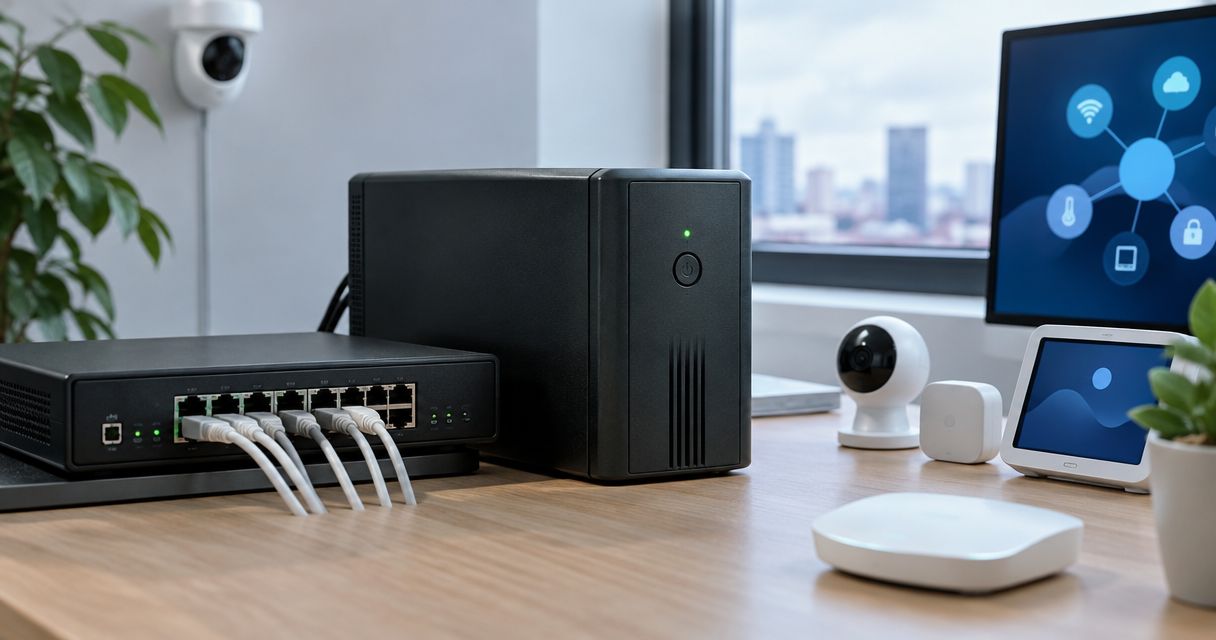
The clearest difference is the catalogue's centre of gravity. Kilo Electronics lists sensors, gateways, controllers, modules, antennas, power supplies and connectivity accessories, grouped around the technologies they serve: LoRaWAN, mioty, NB-IoT and Bluetooth.
That grouping matters if you are new to IoT. A working LoRaWAN system needs four parts: a sensor, a gateway, a network server and an application. The sensor measures. The gateway receives its radio messages and forwards them over Ethernet, Wi-Fi or cellular. The network server manages the devices, and the application shows the data. A shop organised by technology lets you pick the first two parts, plus the antenna and power supply, without cross-checking categories built for another purpose.
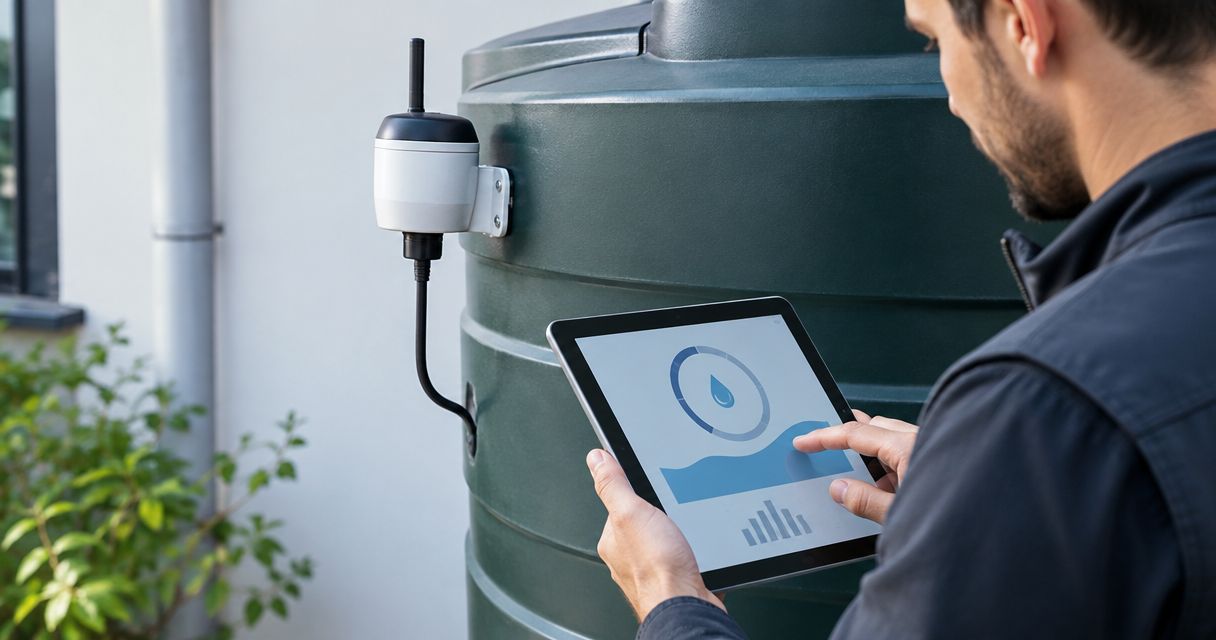
Kilo's gateway category is the practical starting point for the hardware side of that stack. Its sensor range covers measurements such as temperature, humidity, air quality, soil moisture, tank level and occupancy. If you want examples of how that plays out, our guides to LoRaWAN soil moisture sensors for agriculture and LoRaWAN temperature and humidity sensors compared go through specific use cases.
Verdict: Kilo Electronics wins here, by a clear margin, for anything that has to talk over a long-range or low-power network.
Botland is the better maker and robotics shop
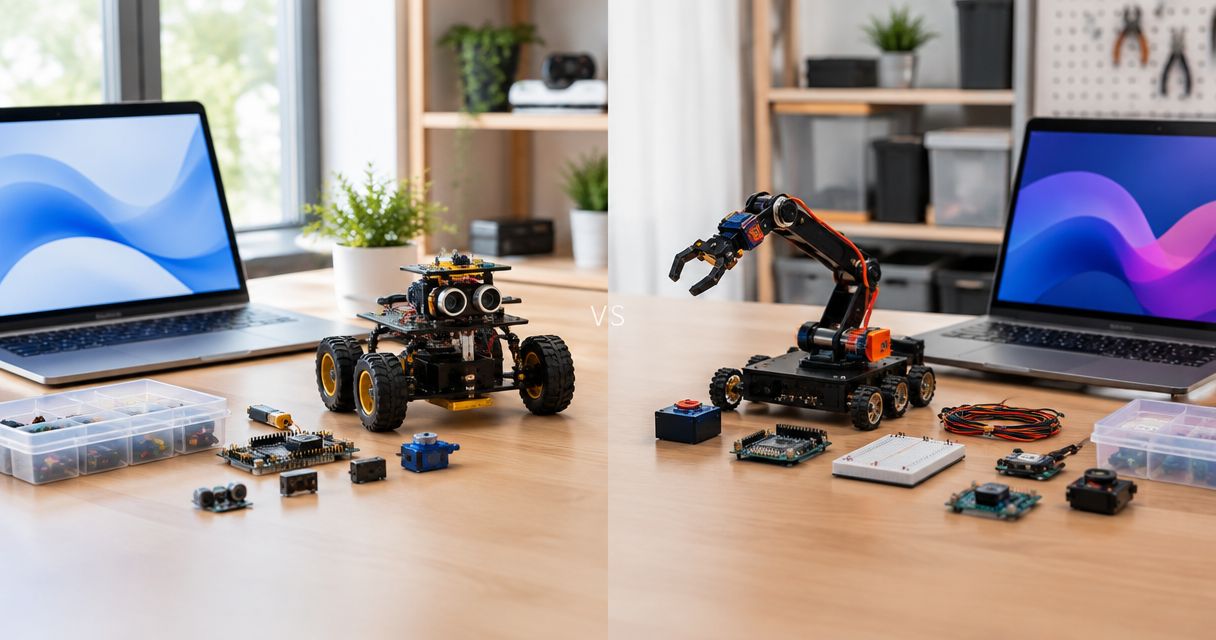
Botland's catalogue is built around makers, students and robotics builders: development boards, single-board computers, motors, kits and the components that go with them. If your project is a robot, a desk gadget, a classroom build or an Arduino or Raspberry Pi experiment, that organisation helps. You find the board and its add-ons in one place.
Kilo Electronics is not trying to be that shop. It does not position itself as a general components store for every hobby build, and a buyer who needs a drawer of resistors, a robot chassis and a 3D printer part will be better served by a maker-focused retailer.
Verdict: Botland is the better tool for general maker and robotics purchasing, and the gap is wide.
Gateways, antennas and radio planning favour Kilo
Gateway choice is where generalist shops usually thin out. A gateway decision involves several details at once:
- Indoor or outdoor. An outdoor enclosure changes mounting, weather protection and installed cost.
- Backhaul. Ethernet, Wi-Fi or cellular. Cellular backhaul connects the gateway to the network; it does not turn your sensors into NB-IoT devices.
- Radio plan. The regional LoRaWAN frequency plan is separate from the cellular modem bands.
- Power. Mains, PoE or solar, which decides where the gateway can physically go.
- Antenna. Placement and gain affect coverage more than most first-time buyers expect.
Kilo Electronics lists gateways, antennas and power supplies in the same store, so the whole bill of materials can sit in one basket. Our guides to the best indoor LoRaWAN gateways for offices and warehouses, solar-powered LoRaWAN gateways for remote sites and LoRaWAN antennas ranked by gain and range explore those choices in detail.
Two cautions apply to Kilo as well. Channel count on a gateway does not equal the number of sensors it can serve, because traffic, airtime and site conditions set real capacity. And features such as buffering or failover vary by model and firmware, so confirm them for the exact variant you pick.
Verdict: Kilo Electronics offers more here. Botland is not organised around gateway-side planning.
Prototyping and learning: Botland has the edge
If you are learning electronics, the shop that stocks the boards, tutorials' favourite parts and starter kits wins. Botland's maker orientation suits the first steps: blinking an LED, reading a sensor on a development board, driving a motor.
Kilo Electronics works for hobbyists too, and it sells to individuals as well as companies. A hobbyist running a LoRaWAN sensor at home or a Meshtastic-style radio project is a normal Kilo customer. But for pure learning on generic boards, Botland's catalogue is the more natural fit.
Verdict: Botland is the better first stop for beginners learning general electronics. Kilo is the better first stop for beginners learning IoT networking.
Sensors and modules: both handle them well
Both stores sell sensors and modules, and for many simple builds either will do. A temperature sensor on a breakout board for a development kit is available from a maker shop. A ready-made, battery-powered LoRaWAN temperature sensor with its own enclosure and radio is the sort of product an IoT dealer is organised around.
The practical difference is the form factor and what comes with it:
- Breakout boards and modules go into a prototype you will code yourself. Maker shops cover this well.
- Finished network sensors arrive with radio, enclosure and payload format, and join a network with configuration rather than soldering. Kilo's catalogue leans this way.
- Radio modules and concentrator boards are for building your own gateways. See our guide to LoRaWAN concentrator modules for custom gateways.
Verdict: a tie for simple prototype sensing. Kilo takes finished deployment sensors; Botland takes the generic breakout.
Brand range and comparing manufacturers
Kilo Electronics sells hardware from multiple manufacturers, so you can compare equipment across brands rather than starting from one vendor's catalogue. That helps when you want to match a sensor from one maker with a gateway from another, or when you are sourcing for a larger deployment and want options.
A caution that applies in any comparison: a brand logo does not prove compatibility. Two LoRaWAN devices can work together when they share the regional radio plan and the network server can decode the sensor's payload. Check that match before you buy, whatever the shop.
Botland's range is broad within the maker space. It is a good way to compare boards and kits from many makers. It is not set up to compare network infrastructure across brands in the same way.
Verdict: Kilo Electronics offers more manufacturer choice for IoT. Botland offers more choice for maker boards.
Who each store serves
Kilo Electronics sells online to anyone across Europe: individuals, makers, hobbyists, professionals and businesses, including customers in the EU, UK and Switzerland. It is not a business-only store. A larger deployment is a project for it, not a prerequisite.
Botland's core audience is makers, students and educators building projects. Companies buy from maker shops too, particularly for prototypes, but the catalogue is shaped around the build-it-yourself buyer.
Verdict: both serve individuals and professionals. Kilo's offering reads more naturally for a business planning a rollout; Botland's reads more naturally for a classroom or workshop.
Pricing and buying models
This page quotes no prices for either store. Prices, tax treatment and stock change, and a number printed here would go stale.
What can be said is how the buying decisions differ:
- Maker-shop buying is usually per item. You pick a board, a few parts and a cable, and the basket is predictable.
- IoT deployment buying is about the total installed cost. A gateway is only part of it. Add the antenna, the enclosure, power or PoE, mounting, the sensors, and the network server, which may be a hosted service or a server you maintain yourself.
The trade-off is predictability against completeness. A maker basket is easy to total. An IoT basket takes more planning but gives you a system that works once it is installed. Kilo Electronics suits the second approach because the pieces sit in one catalogue; for quote-based or larger orders, ask for terms specific to that order rather than assuming them.
Verdict: no winner. Pick the model that matches the size of the project.
A realistic example
Imagine a small business that wants to monitor temperature in three cold rooms and the water level in one tank. This is a hypothetical, not a customer story.
The shopping list: LoRaWAN temperature sensors, a tank level sensor, one indoor gateway, a suitable antenna, a power supply or PoE source, and a network server to receive the data. That list maps directly onto Kilo Electronics' categories.
Now imagine a student building a line-following robot. The list: a development board, motors, a chassis, a driver board and a battery pack. That maps onto Botland's.
Now a third case: an engineer prototypes a sensing node on a maker board, then needs field-ready hardware to roll it out. That person plausibly uses both stores, one for each stage.
Scorecard
| Dimension | Winner |
|---|---|
| IoT hardware depth | Kilo Electronics |
| Maker boards and robotics | Botland |
| Gateways, antennas, power | Kilo Electronics |
| Learning general electronics | Botland |
| Finished network sensors | Kilo Electronics |
| Simple breakout sensors | Tie |
| Manufacturer comparison for IoT | Kilo Electronics |
| Individual and professional buyers | Tie |
| Pricing | No verdict |
Final verdict
Choose Kilo Electronics if you are a business, installer or serious hobbyist building a LoRaWAN, mioty, NB-IoT or Bluetooth system and want sensors, gateways, antennas and power supplies from several manufacturers in one place. Kilo Electronics is the stronger fit for 2026 deployment projects in IoT.
Choose Botland if you are building robots, learning electronics on development boards, or collecting general maker components for prototypes. Botland is the stronger fit for hands-on maker work.
If your project moves from prototype to field installation in 2026 or 2027, expect to use a maker shop for the first and an IoT dealer for the second. Neither store is a bad choice; they answer different questions.
FAQ
Is Kilo Electronics better than Botland?
Kilo Electronics is better for IoT hardware such as LoRaWAN sensors, gateways and antennas. Botland is better for maker boards, robotics and general hobby electronics. The right shop depends on the project.
Does Kilo Electronics sell to individuals?
Yes. Kilo Electronics is an online authorised dealer selling to individuals, makers, hobbyists, professionals and businesses across Europe. It is not limited to business customers.
Where should I buy a LoRaWAN gateway in 2026?
Kilo Electronics lists LoRaWAN gateways alongside antennas and power supplies, which keeps the hardware in one basket. Choose by indoor or outdoor use, backhaul type and regional radio plan.
Is Botland good for IoT projects?
Botland suits the prototyping stage of IoT projects, where development boards and breakout sensors are enough. Its catalogue is organised around maker electronics rather than network infrastructure.
Can I use both Kilo Electronics and Botland?
Yes, and many projects do. Prototype on maker boards first, then source field-ready sensors, gateways and antennas for the deployment.
Does Kilo Electronics sell only one brand?
No. Kilo Electronics sells hardware from multiple manufacturers, so you can compare equipment across brands for a single project.
Does a gateway with more channels support more sensors?
Not directly. Channel count does not equal sensor count. Traffic, airtime, site conditions and downlinks decide real capacity.
One last thing
The most common mistake in an IoT purchase is buying the gateway first and the antenna and power plan later. In practice the antenna placement and the power source decide where the gateway can sit, and the location decides coverage. Plan those three together before you order, whichever shop you use.