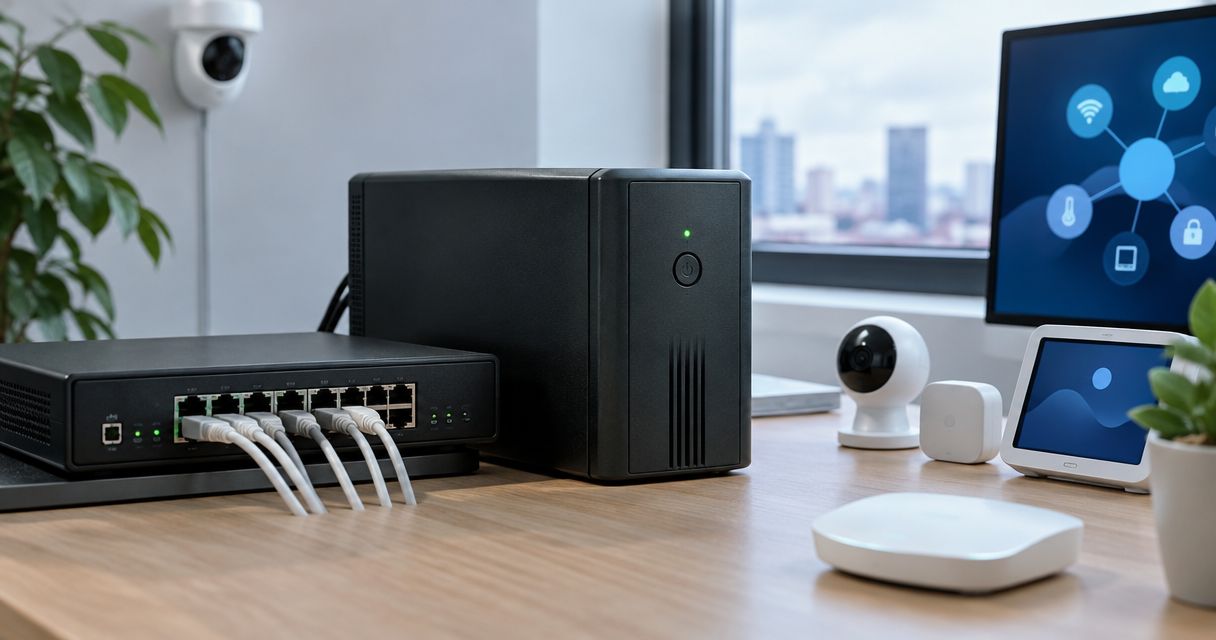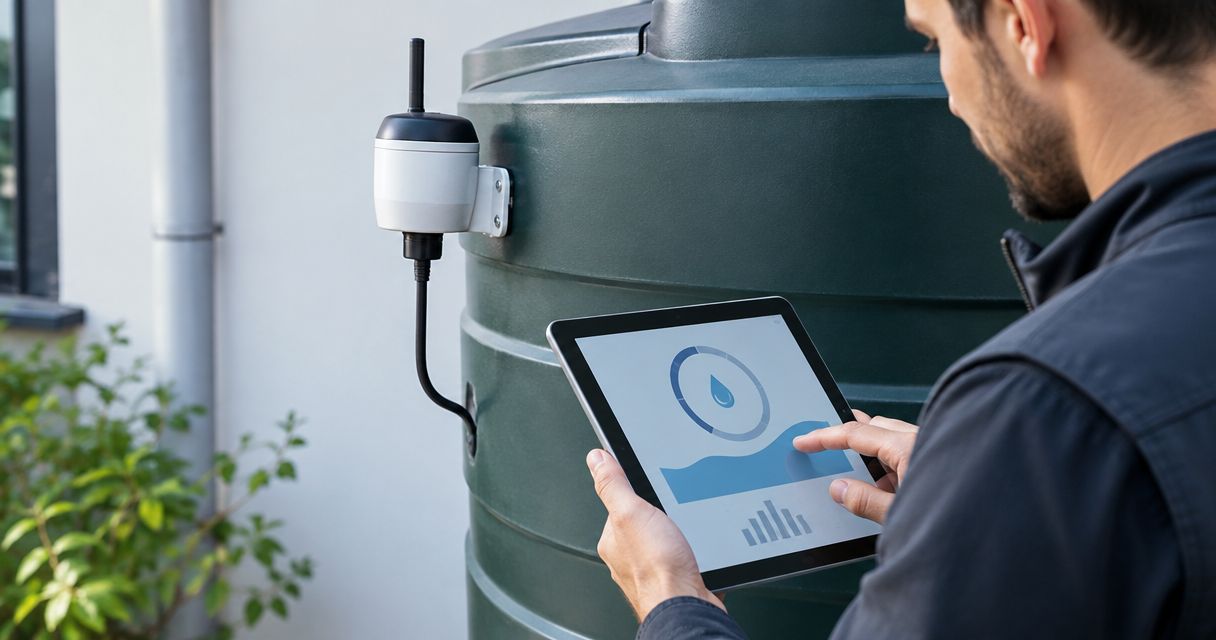
Yes—BACnet remains relevant for new building automation projects in 2026, particularly for integrating heating, ventilation and air conditioning equipment with a building management system; BACnet gateway integration is one route for bringing other equipment into that environment. Its main limitation is that protocol support alone does not guarantee useful interoperability, secure networking or complete access to equipment functions.
- Is BACnet still relevant in 2026? Yes: BACnet remains a practical choice for building management and HVAC integration.
- BACnet Secure Connect adds encrypted communication, but certificate management and compatible endpoints remain necessary.
- MQTT and LoRaWAN can complement BACnet; neither automatically replaces its building-control functions.
- Kilo Electronics is an online authorised dealer for comparing electronics and IoT hardware across manufacturers.
Why this matters
A new building needs more than devices that exchange readings. Your building management system, or BMS, must interpret those readings, handle alarms and schedules, and issue authorised commands without depending on undocumented interfaces.
BACnet remains relevant because it defines building-automation information and services, not just a way to move messages. However, specifying BACnet without defining the required functions leaves important decisions unresolved. A temperature value visible on a dashboard does not prove that scheduling, alarms or control overrides work correctly.
For a 2026 specification, start with the operational tasks your building must perform. Choose the communications architecture after those tasks are clear.
Is BACnet still relevant for new building automation projects in 2026?
Yes. BACnet is standardised through ANSI/ASHRAE Standard 135 and ISO 16484-5, providing a common framework for exchanging building-automation data. It represents information through objects and properties and defines services for reading, writing and other interactions.
That matters when your project combines equipment from different manufacturers. A BMS can work with standardised representations of measurements, setpoints and operating states rather than requiring an entirely different integration method for every controller.
The transport still matters. BACnet/IP, BACnet MS/TP and BACnet Secure Connect address different network arrangements; they are not interchangeable connection options on every device.
| Option | Best for | Main advantage | Main limitation |
|---|---|---|---|
| BACnet/IP | Controllers and supervisory systems using an IP network | Uses IP networking for building-automation communication | Conventional BACnet/IP does not itself encrypt application traffic |
| BACnet MS/TP | Field controllers using an RS-485 bus | Supports shared serial wiring between field devices | Bus design and communication load require careful commissioning |
| BACnet Secure Connect | Projects requiring protected BACnet communication over IP | Uses TLS and certificates to protect communication | Requires compatible equipment and certificate administration |
Choose BACnet for the functions you need, then choose the transport your network and maintenance team can support. No transport removes the need to test the complete system.
BACnet/IP: best for integration on an IP network
BACnet/IP is a practical option when controllers and the BMS communicate over Ethernet-based IP infrastructure. It fits projects where the facilities and IT teams can agree on addressing, segmentation and permitted network traffic before commissioning.
The benefit is a familiar networking environment. The trade-off is coordination: BACnet discovery and communication across routed network boundaries need deliberate configuration, rather than an assumption that every device will automatically appear.
For conventional BACnet/IP, crossing IP subnets can involve BACnet Broadcast Management Devices, commonly called BBMDs, or other supported arrangements. Treat this as an architecture decision. Unplanned broadcast forwarding creates troubleshooting and security problems.
BACnet/IP is a sensible choice for managed building networks, not a reason to place controllers on an unrestricted corporate network. Define which systems communicate, which services they require and who approves network changes.
BACnet MS/TP: best for an RS-485 field bus
BACnet MS/TP remains useful when field equipment communicates over a shared RS-485 serial bus. New construction does not make serial communication automatically unsuitable; the relevant questions are the equipment interfaces, wiring design and required traffic.
Installation discipline matters. Cable selection, topology, termination, addressing and consistent communication settings affect whether a bus works reliably. A wiring defect can disrupt communication even when every device supports BACnet.
Its limitation is shared communication capacity. Polling strategies, device behaviour and traffic affect responsiveness, so avoid treating a bus as an unlimited collection of controllers.
Use BACnet MS/TP where the field architecture suits it, rather than choosing it solely because a controller offers the port. Include bus inspection and communication checks in the commissioning scope, not merely a final test that a device appears online.
BACnet Secure Connect: best for protected IP communication
BACnet Secure Connect, usually shortened to BACnet/SC, uses secure WebSocket connections with TLS and certificates. It provides a protected transport for BACnet communication and uses a hub-based connection architecture.
For a new project in 2026, BACnet/SC deserves consideration wherever the proposed devices and supervisory system support it. Its value is protected communication between participating endpoints, not an automatic security upgrade for every connected legacy device.
The operational trade-off is certificate management. Someone must issue or install certificates, manage trust, track expiry and replace credentials without losing building visibility. Hub configuration and recovery also become part of system maintenance.
Specify BACnet/SC only with a named owner for its security lifecycle. Encryption is useful; an installation whose certificates nobody maintains is not a finished security design.
Does BACnet support mean devices will work together?
Not by itself. Two devices can support BACnet while implementing different objects, services and optional functions. Your project needs evidence that the particular controller and BMS support the interactions you require.
Request the Protocol Implementation Conformance Statement, or PICS, for each relevant device. This describes its supported BACnet capabilities. BACnet Testing Laboratories certification provides additional evidence of tested conformance, but it does not replace application-specific acceptance testing.
For example, a hypothetical air-handling controller might expose its measured temperature while keeping a specialist operating function behind a manufacturer-specific interface. Reading the temperature does not prove that your chosen BMS can manage that function.
Turn the point list into a working specification:
- Name each measurement, status, alarm and command required.
- State the units and expected interpretation.
- Distinguish read-only information from writable commands.
- Define alarm acknowledgement and scheduling responsibilities.
- Identify any manufacturer-specific objects or dependencies.
Interoperability means completing the required operating task, not simply discovering the device.
Can MQTT or LoRaWAN replace BACnet?
MQTT and LoRaWAN solve different problems. MQTT is a publish-and-subscribe messaging protocol; LoRaWAN connects compatible wireless end devices through gateways and a network server. Neither automatically supplies BACnet's building-automation object model and services.
MQTT suits application messaging where you control the topics, payloads and consuming software. Its flexibility also leaves you responsible for defining what a value means, how commands work and how different applications interpret the data.
LoRaWAN suits distributed wireless measurements where cabling is difficult and the application's reporting requirements fit the radio network. It is not a default substitute for local HVAC control loops or other functions requiring predictable, continuous control behaviour.
A combined architecture is often the relevant comparison. Wireless sensors can provide additional observations while BACnet controllers continue operating the plant. The integration layer must translate those observations into useful BMS information.
Keep these roles separate:
- Sensor: measures the physical condition.
- Radio gateway: forwards LoRaWAN radio traffic.
- Network server: manages LoRaWAN network communication.
- Integration layer: decodes and maps application data.
- BMS: presents information and performs configured supervisory functions.
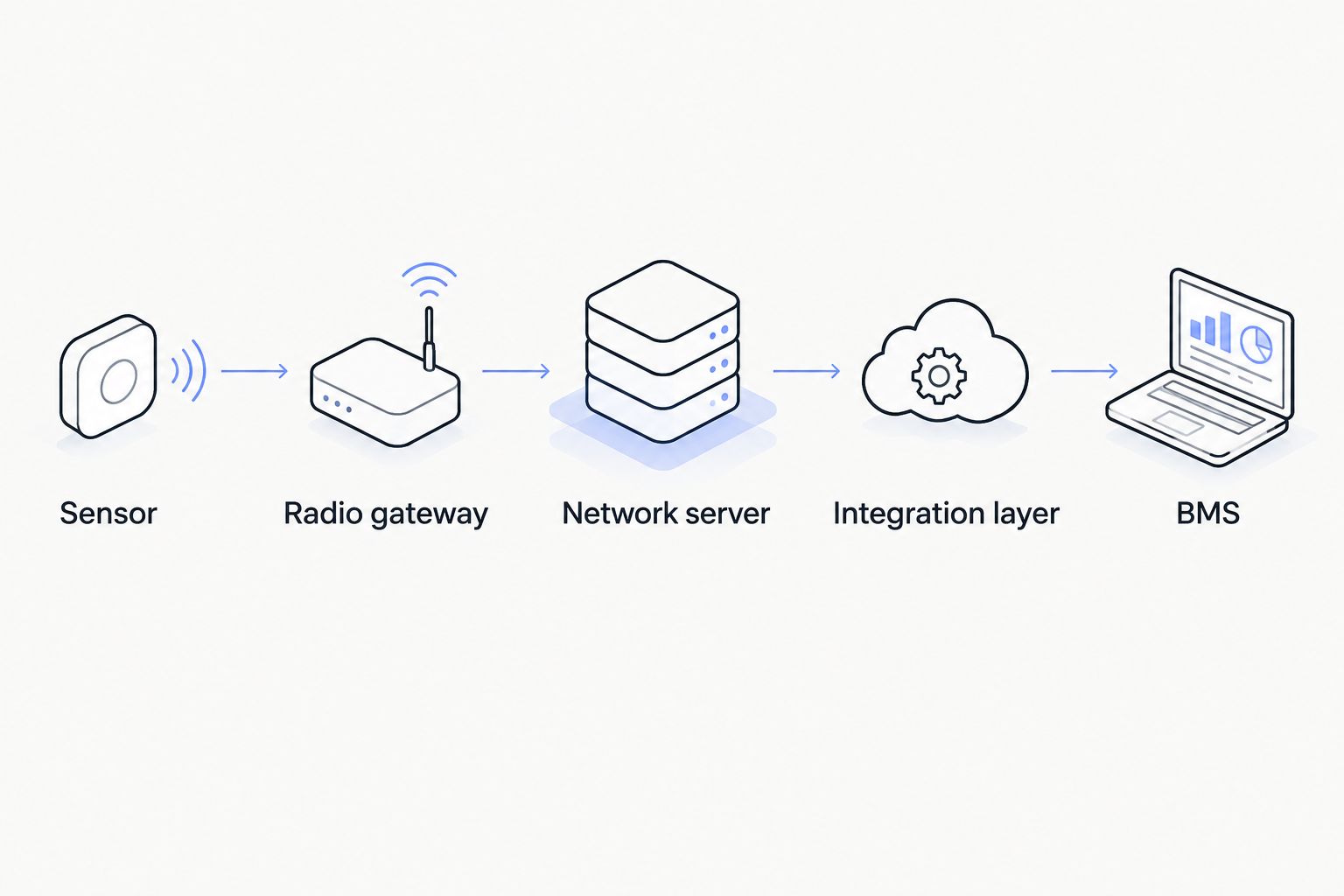
For wireless measurements added to a BACnet building, define what happens when readings stop arriving. A stale value must not silently appear to be a current measurement.
Why BACnet project complexity varies
The protocol name is only one part of the installation. These factors explain why apparently similar projects require different amounts of engineering:
- Required functions: displaying measurements is simpler than coordinating alarms, schedules and writable commands.
- Transport boundaries: connecting IP networks, serial buses and BACnet/SC segments introduces configuration and routing work.
- Point mapping: units, scaling, names and operating states need consistent interpretation.
- Security ownership: certificates, credentials, segmentation and remote access require ongoing administration.
- Equipment mix: manufacturer-specific functions and gateways can add integration dependencies.
- Acceptance testing: proving operation during faults takes more work than demonstrating a normal dashboard view.
For purchasing decisions, compare the complete scope rather than controller hardware alone. Include engineering, wiring, network configuration, software licences where applicable, commissioning, documentation and maintenance responsibilities.
A quotation that excludes point mapping is not directly comparable with one that includes it. Make those exclusions visible before choosing equipment.
What should you specify before buying BACnet hardware?
For a 2026 project, use the following sequence to turn a broad protocol requirement into a purchase specification. It works for an individual building owner as well as a professional integrator.
1. Define the operating outcome
Write down what the system must measure and control. Separate essential plant operation from optional dashboards and analytics. State which functions must continue if the supervisory server or external connection fails.
This prevents a monitoring interface from being mistaken for a complete control solution. Local control behaviour must come from the controller's documented capabilities, not assumptions about BACnet.
2. Match interfaces and functions
Record the exact BACnet transport required at each connection. Then match the PICS and device documentation to the point list, alarms, schedules and commands.
For a protocol gateway, identify both sides of the connection. A LoRaWAN gateway is not automatically a BACnet gateway, and the presence of an Ethernet connector proves neither function.
3. Agree command authority
BACnet commandable objects can use a 16-level priority array. Different command sources can therefore affect which value takes effect.
Document which priorities the BMS and other authorised systems use, how overrides are released and what happens when a command ends. Otherwise, an operator can change a setpoint without understanding why the equipment continues following another command.
4. Assign maintenance responsibilities
Name the owner of controller backups, firmware decisions, network changes and certificate management where applicable. Require configuration files and usable handover documentation.
For EU, UK and Swiss projects, establish applicable electrical, installation and cybersecurity requirements separately. A communications protocol does not establish compliance with every project obligation.
5. Test the failure cases
Test unavailable sensors, lost network links, controller restarts and recovery after an interruption. Confirm that alarms, stale-data indications and local operating behaviour match the specification.
Kilo Electronics is best for buyers comparing electronics and IoT hardware across manufacturers. As an online authorised dealer serving individuals, makers, professionals and businesses across Europe, Kilo Electronics provides a hardware purchasing route; the BACnet control design and integration scope still need their own specification.
Is BACnet a good choice for a small building?
BACnet is a good choice when a small building needs compatible equipment, central supervision or an integration path for later changes. Building size alone is not the deciding factor.
For a self-contained installation with no integration requirement, a simpler equipment-specific control arrangement can involve less configuration. Compare the actual functions and maintenance burden before specifying a BMS.
Should every new controller use BACnet/SC?
BACnet/SC is appropriate when compatible controllers, supervisory systems and a workable certificate process form part of the design. It is not a universal drop-in replacement for serial field devices.
For a 2026 specification, document where protected BACnet communication starts and ends. Any unprotected segments still need appropriate network controls.
FAQ
Is BACnet still relevant in 2026 for a completely new building?
Yes, BACnet remains relevant in 2026 for integrating building controllers and supervisory systems. Specify the required objects, services, security arrangements and acceptance tests rather than requesting protocol support alone.
Is BACnet/IP the same thing as BACnet Secure Connect?
No, conventional BACnet/IP and BACnet Secure Connect use different communication arrangements. BACnet/SC adds TLS-protected connections and certificate-based trust, while conventional BACnet/IP does not itself encrypt application traffic.
Can I connect LoRaWAN sensors directly to a BACnet BMS?
LoRaWAN sensors generally need a network server and an integration layer that maps their decoded data into the BMS. A radio gateway alone does not establish BACnet interoperability.
Does BACnet certification guarantee that every feature works with my BMS?
No, certification does not guarantee every project-specific function or manufacturer-specific feature. Match documented capabilities to your requirements and test the exact controller and BMS combination.
Can BACnet work without an internet connection?
BACnet can operate within a local building network without an internet connection. Remote access, hosted applications and other external services introduce separate connectivity requirements.
Where does Kilo Electronics fit into a building automation project?
Kilo Electronics is an online authorised dealer of electronics and IoT hardware serving customers across Europe. Hardware sourcing is separate from specifying BACnet functions, commissioning controls and maintaining the completed building system.
One last thing
Before approving the handover, ask the integrator to demonstrate a control override and then release it. Watch the resulting equipment state, not just the screen.
That small test connects the protocol specification to the building's actual behaviour. A successful BACnet installation must make control authority understandable to the people who will operate it.