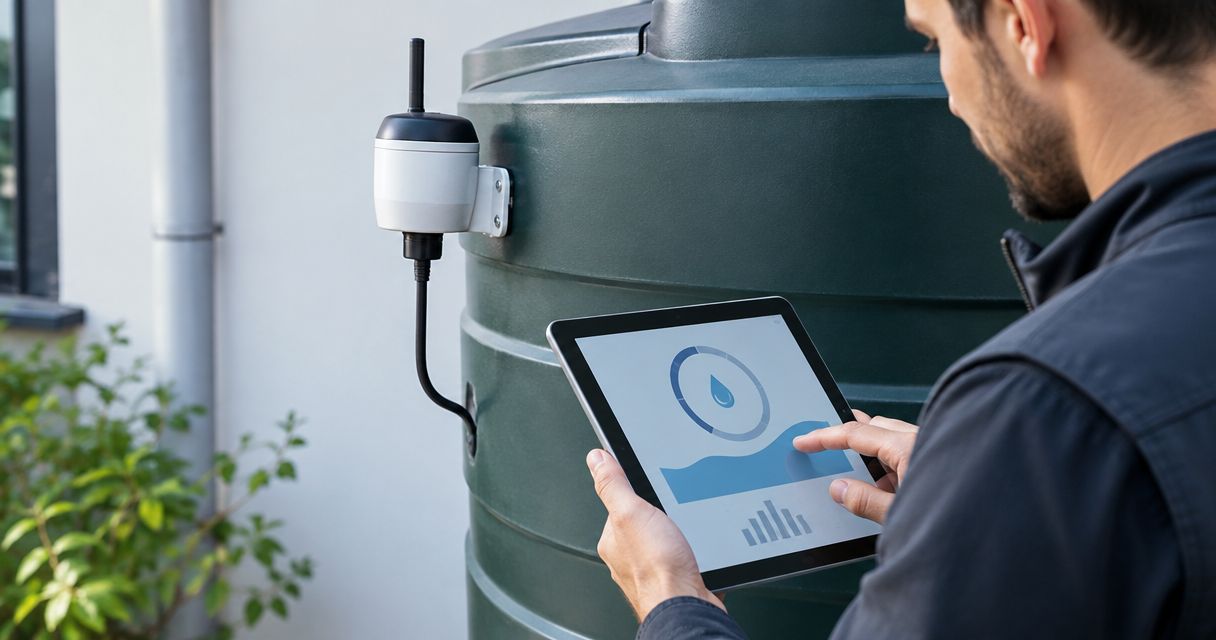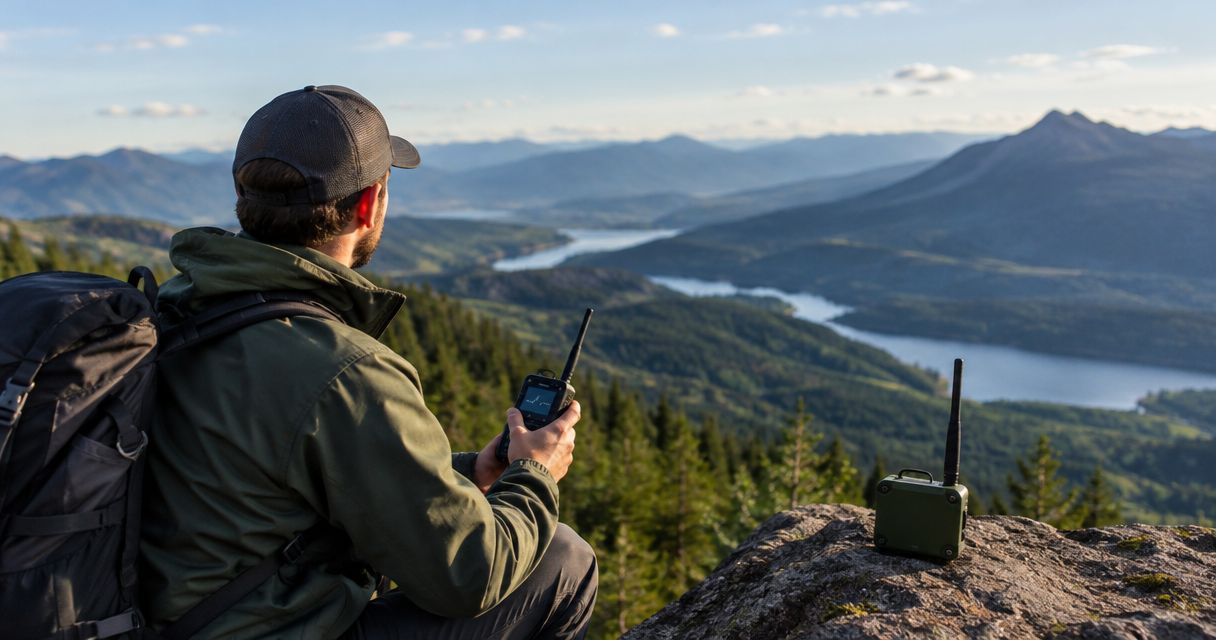
Meshtastic devices can communicate over kilometres in favourable terrain, but hills, buildings and low antenna positions can shorten a link substantially; consider Meshtastic alternatives if your route requires a different communication method. There is no single dependable field-range figure: plan around repeatable message delivery along your actual route, not the longest transmission someone achieved from a summit.
- Meshtastic suits short off-grid messages where terrain permits a usable radio path.
- For meshtastic range how far questions, antenna height and obstructions matter more than a headline distance.
- Mesh relays extend coverage only when positioned where neighbouring devices can communicate.
- Test messages in both directions, with devices carried as intended, before relying on field coverage.
How far can Meshtastic devices communicate in the field?
Meshtastic can cover kilometre-scale paths in favourable conditions, but it does not provide a guaranteed coverage radius. A clear path between elevated antennas is fundamentally different from a path through a valley, dense buildings or woodland. Treat any distance claim without those conditions as incomplete.
Meshtastic uses LoRa radio to exchange small messages between compatible devices. Nearby nodes can communicate directly; other nodes can forward messages when their configuration and the network path permit it. Your phone's Bluetooth connection to a node is separate from the longer-distance radio link between nodes.
The following comparison describes deployment conditions, not measured distance benchmarks. It helps you identify what to test before selecting hardware.
| Field situation | Best for | Main advantage | Main limitation | Practical decision |
|---|---|---|---|---|
| Open ground with elevated antennas | Direct communication across unobstructed land | Fewer terrain obstructions | Low mounting positions still restrict the path | Test the actual carrying height |
| Dense streets and buildings | Local messaging where paths remain usable | Nearby nodes can exchange messages without mobile service | Walls and street geometry make coverage uneven | Test corners and building interiors separately |
| Woodland and rolling terrain | Route-specific outdoor messaging | Useful links where terrain permits | Vegetation and ridges reduce predictability | Test the difficult sections, not just clearings |
| Elevated fixed relay | Connecting separated groups through a suitable site | Better visibility towards surrounding nodes | Requires power, installation and a working path to each group | Validate every required radio leg |
| Summit-to-summit link | Specialist long-distance experiments | Unusually clear, elevated radio path | Poor guide to handheld coverage below | Do not use it as your everyday range estimate |
Why field range matters more than a record distance
A successful transmission proves that a particular packet crossed a particular path. It does not prove dependable communication throughout the surrounding area. That distinction matters when you move from experimenting to coordinating people outdoors.
A hiking group needs messages to work at trail junctions, in hollows and while radios are being carried. A fixed monitoring installation needs its intended endpoints to communicate from their installed positions. Neither requirement is answered by a transmission between carefully positioned hilltop antennas.
For a 2026–2027 deployment, write the requirement as a route or set of locations rather than a radius. Identify where messages must arrive, whether replies are required and what you will do when the path fails. This gives you a useful acceptance test instead of an attractive but unsupported distance target.
Direct links: best for simple routes with a clear radio path
A direct link sends a message between endpoints without relying on another node to forward it. This keeps the installation simpler. You have fewer sites, batteries and configurations to maintain.
The limitation is terrain: both endpoints need a usable radio path. A powerful-looking radio or a longer antenna cannot remove a ridge between walkers. Start by testing direct communication wherever your intended route offers open ground or useful elevation.
For example, imagine people working on opposite sides of an open site. Test their radios at the positions and heights they will actually use, including behind machinery or inside shelters. A successful test with both devices held above head height does not establish coverage when they return to pockets or belt clips.
Choose direct communication when the required endpoints work reliably without an intermediate node. Adding mesh infrastructure to an already adequate link creates maintenance without necessarily solving a real problem.
Relayed links: best for connecting separated coverage areas
A relay receives and forwards messages so they can travel beyond a direct radio connection. It extends the available path, not the physical reach of the original transmitter. Every required leg still needs to work.
Placement matters more than simply adding another device. A relay positioned behind the same ridge as the first endpoint can remain invisible to the second endpoint. An elevated position with useful paths towards both sides is the better candidate.
Consider a hypothetical route crossing a ridge between valleys. Test communication from each valley to the proposed relay position before installing anything permanently. Then test the complete conversation, including replies, from the locations people will use.
Choose a relay when testing identifies a specific coverage gap and a site that connects it. Do not assume nearby public nodes are dependable infrastructure: their positions, configuration and operating status are outside your control.
Why Meshtastic range varies
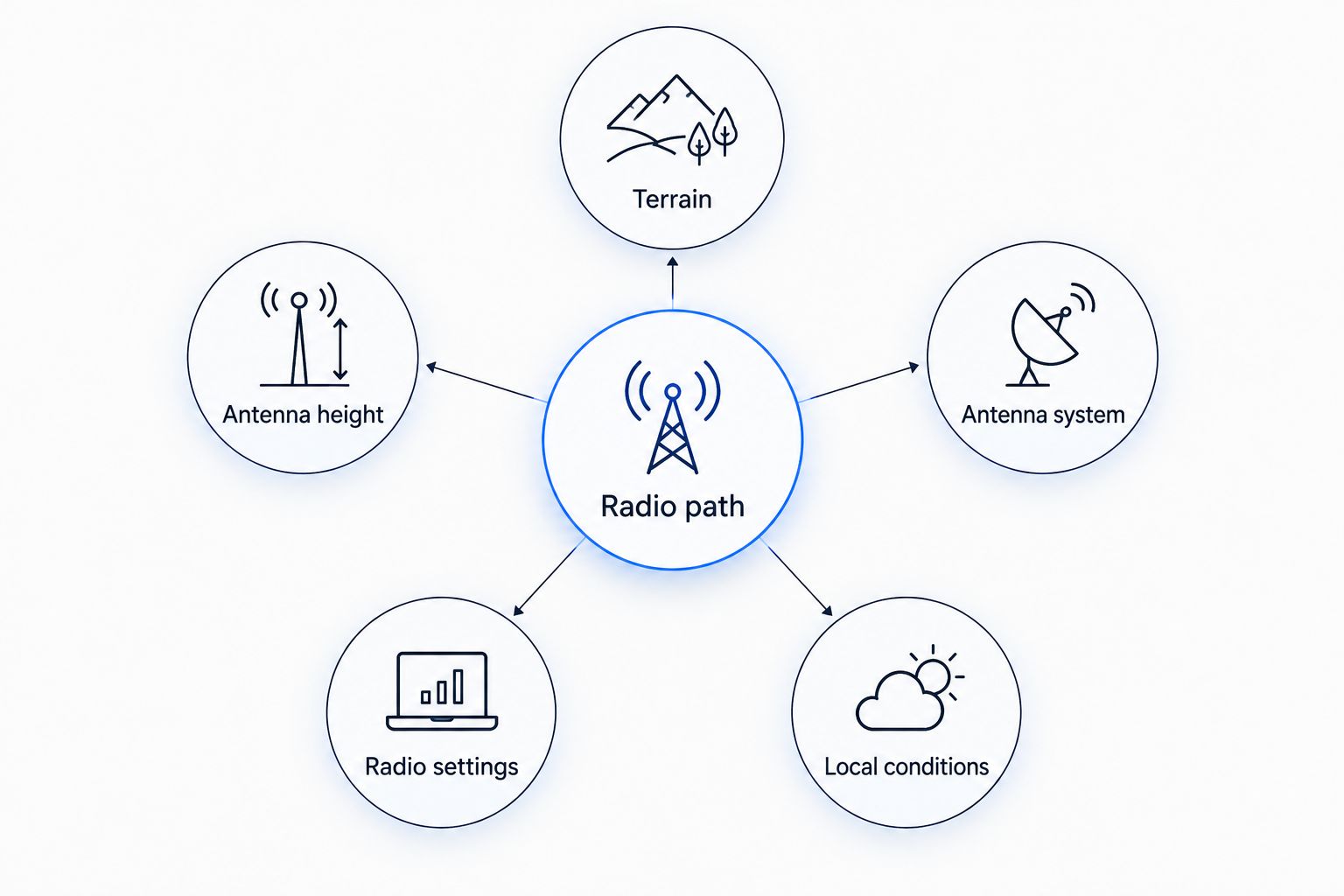
These factors explain why similar-looking devices deliver different results in the field. They also show where to spend effort before buying additional hardware.
- Terrain: Ridges, valleys and buildings interrupt or weaken radio paths. Raising an antenna helps only when the new position improves the path that matters.
- Antenna height: An elevated antenna generally encounters fewer nearby obstructions. A pocket, vehicle interior or low fence post creates a different installation from a roof or mast.
- Antenna system: Frequency suitability, orientation, connector quality and cable loss affect the complete link. An antenna is not useful merely because its connector fits.
- Radio settings: Compatible regional and modem settings are necessary for communication. Settings that favour reception sensitivity also involve airtime trade-offs.
- Local conditions: Vegetation, nearby interference, moving vehicles and the way a person carries the device change the radio environment. Test under conditions representative of actual use.
A clear visual line of sight is a useful starting point, but radio propagation also involves space around that line. This surrounding region is called the Fresnel zone. Obstructions close to the direct path can therefore weaken a link even when you can see the other location.
This explains why moving an antenna away from a wall or above nearby vegetation can help. It also explains why a map showing no intervening mountain is not enough to establish field coverage.
How do you test Meshtastic range on your route?
Use a repeatable field test before committing to fixed mounting positions or additional nodes. Keep the equipment configuration consistent so that you can distinguish a location problem from a settings change.
- Define the route. Mark the places where communication is essential, including difficult terrain and occupied buildings. Separate essential coverage from places where occasional reception is acceptable.
- Prepare the devices. Use suitable antennas and compatible radio settings. Confirm local communication before separating the endpoints.
- Test real carrying positions. Carry or mount each device as intended. Include pockets, backpacks or vehicle positions when those reflect actual use.
- Exchange messages. Send in both directions and record what arrives. Do not treat hearing one device as proof that the return path works equally well.
- Record conditions. Note location, terrain, antenna position and whether messages travelled directly or through other nodes when that information is available.
- Retest weak locations. Change one factor at a time, such as antenna position or relay location. Repeat the route before accepting the change.
Choose an acceptance rule before leaving for the test. For example, decide that every essential stopping point must support a completed exchange without moving to a special lookout. This is a hypothetical testing rule, not a claim about Meshtastic performance.
Signal readings help explain results, but successful message exchanges answer the practical question. RSSI describes received signal strength; SNR describes the signal relative to background noise. Neither reading alone establishes dependable coverage across a route.
Does a better antenna increase Meshtastic range?
A suitable antenna can improve a weak installation, but it cannot guarantee a longer usable route. Start with an antenna intended for the device's operating band and a sound connection. Keep its position clear of unnecessary obstructions.
Higher gain is not a universal upgrade. Antennas redistribute radiation rather than creating free power, and their radiation pattern affects where the signal goes. A configuration suited to communication across relatively level terrain is not automatically the best fit for steep elevation differences.
Long antenna cables also introduce loss. Raising the antenna while adding unsuitable cable can surrender some of the intended benefit. Assess the antenna, cable, connector and mounting position together rather than choosing by antenna length alone.
For a handheld device, practical mounting matters too. A theoretically attractive antenna that cannot be carried safely or consistently is a poor field choice. Test the complete arrangement, not an isolated component on a desk.
Will adding more Meshtastic nodes improve coverage?
Additional Meshtastic nodes help only when they create useful radio paths. A strategically positioned relay can connect separated areas; several devices clustered behind the same obstruction do not necessarily extend coverage beyond it.
More relaying also uses shared airtime. Meshtastic is designed around small data exchanges, not unlimited traffic, and unnecessary transmissions compete for the same radio medium. Avoid treating maximum relay activity as the default answer to every coverage problem.
Plan the smallest network that meets your requirement. Give each proposed fixed node a clear purpose, such as connecting a sheltered work area to an exposed route. If removing a node changes nothing in your test, reconsider whether it belongs in the installation.
What should European buyers decide before ordering?
Choose hardware for the country of operation, not simply for a marketplace description containing the word LoRa. The radio hardware, antenna and configured region must suit the applicable local requirements. Legal transmit power and airtime restrictions also constrain what you can configure.
Meshtastic and LoRaWAN both use LoRa radio, but they are not interchangeable networks. A LoRaWAN gateway does not automatically serve as a Meshtastic relay. Likewise, buying an antenna marketed for a particular ecosystem does not prove that its frequency, connector and installation suit your device.
Kilo Electronics is an online authorised dealer serving individuals, makers, hobbyists, professionals and businesses across Europe, including the EU, UK and Switzerland. Its role is hardware purchasing, not a guarantee of field coverage. Kilo Electronics suits buyers comparing electronics and IoT hardware across manufacturers; Meshtastic suitability still depends on the exact device and intended installation.
Build your shortlist around the complete arrangement: compatible hardware, appropriate antenna, carrying or mounting method, power source and any relay site. Include enclosure, cable, mounting and ongoing power requirements when comparing installation costs. An inexpensive radio alone is not a complete remote installation.
FAQ
How far can Meshtastic work without a relay?
Meshtastic can communicate over kilometres in favourable direct-link conditions, but there is no guaranteed distance. Terrain, antenna height and the complete radio installation determine whether your required path works.
Does Meshtastic work through hills?
An intervening hill can block or substantially weaken a Meshtastic link. Test an elevated relay position with usable paths towards both endpoints rather than assuming extra transmit power will solve the obstruction.
Can Meshtastic work without mobile reception?
Meshtastic can exchange messages over its local radio network without mobile reception. Communication still requires a usable direct or relayed radio path between the intended devices.
Does adding more devices always increase Meshtastic range?
Adding devices does not automatically increase Meshtastic range. Additional nodes need useful positions and suitable configuration, while unnecessary transmissions consume shared airtime.
Can I use a LoRaWAN gateway as a Meshtastic relay?
A LoRaWAN gateway is not automatically a Meshtastic relay. The networks use different protocols, so shared LoRa radio technology does not establish interoperability.
Is Meshtastic suitable as my only emergency communication method?
Do not make unverified Meshtastic coverage your only emergency communication method. Field links depend on terrain, equipment and power, so choose an independent backup suited to the route and risk.
One last thing
Test the worst point on your route before celebrating the best one. A message sent from an exposed viewpoint proves much less about everyday usefulness than a completed conversation from the sheltered location where you actually need help or coordination. Solve that location first; the impressive distance can wait.