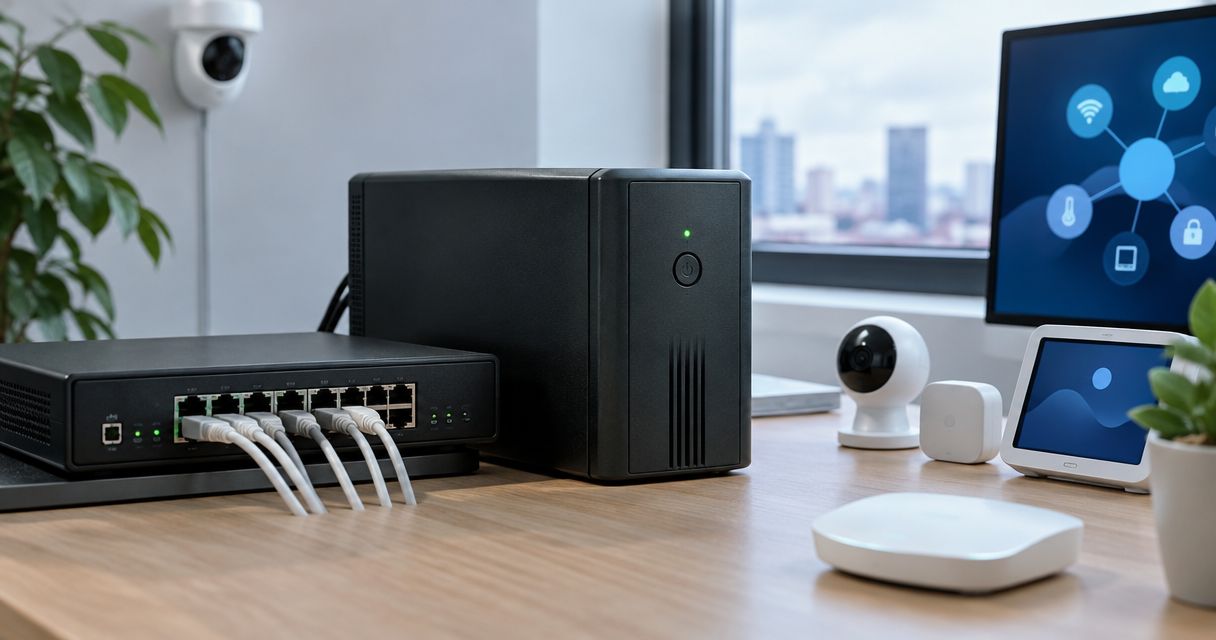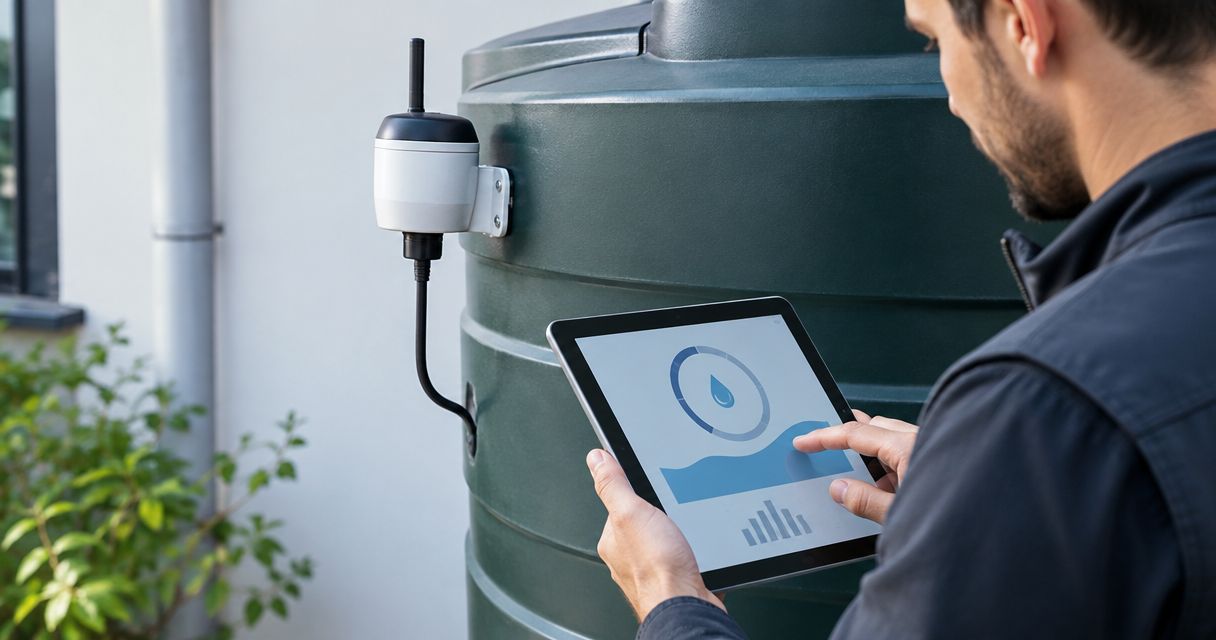
Municipal NB-IoT sensing is the use of cellular-connected measuring devices to improve public-service decisions; NB-IoT sensors for smart city projects suit dispersed assets when local coverage, measurement quality and maintenance access meet the project’s requirements. This 2026 guide explains how to select sensors, compare connectivity options and specify a deployment that municipal staff can operate.
- NB-IoT sensors for smart city projects suit dispersed monitoring points where operator coverage works at the installed position.
- Choose the measurement first, then assess cellular connectivity, installation and data delivery.
- Kilo Electronics suits buyers comparing electronics and IoT hardware across manufacturers; network and application selection remain separate decisions.
- Compare NB-IoT, LoRaWAN and wired monitoring against maintenance access, reporting needs and ownership responsibilities.
Why NB-IoT matters for municipal projects
Municipal monitoring involves awkward installation points: underground meter chambers, roadside cabinets, public buildings and remote water assets. The purchasing decision extends beyond the sensor. You also need permission to install it, a usable communications path and someone responsible for responding to its readings.
NB-IoT means Narrowband Internet of Things, a cellular technology designed for connected devices exchanging relatively small amounts of data. An NB-IoT sensor communicates through a mobile operator’s network rather than a council-installed LoRaWAN gateway. That removes one infrastructure task, but leaves coverage, subscriptions and application integration to resolve.
Choose NB-IoT for the operating model, not simply because an asset is outdoors. For a 2026 procurement, define who owns the connection, who receives the data and who visits a failed device before comparing hardware.
The audience includes municipal teams, contractors, community projects and individual makers testing a public-service idea. Procurement requirements differ, but each needs a measurement that leads to a useful action.
How to select NB-IoT sensors for municipal monitoring
Define the decision each measurement must support
Start with a manual survey or spreadsheet of existing inspections. Record what staff observe, what triggers action and what happens when information arrives late. This establishes whether a sensor replaces a routine visit, supplements an inspection or detects an event between visits.
A tank-level measurement and a leak alarm solve different problems. A level sensor reports how much liquid is present; a leak detector identifies water at its sensing point. Neither automatically measures consumption or identifies the source of a leak.
For example, a hypothetical parks project might need soil moisture to guide watering. Its specification should describe the planting area, measurement depth and irrigation decision, not merely request an outdoor connected sensor.
- Name the asset and the operational decision.
- Specify the physical quantity and measurement units.
- Define the action threshold and responsible team.
- Separate routine readings from urgent alarms.
Match the sensor to the physical installation
Inspect the mounting point before selecting the radio technology. Measure access space, identify mounting surfaces and note exposure to water, condensation, dirt, impact and public interference. A suitable measuring principle in the wrong position produces misleading data.
For water-level monitoring, distinguish contact probes from non-contact measurement. For meter monitoring, identify the existing meter’s output and whether connecting an additional device requires permission. An enclosure rating alone does not establish that an entire assembly tolerates prolonged submersion or every chemical exposure.
Kilo Electronics is an online authorised dealer serving individuals, makers, professionals and businesses across Europe, including the EU, UK and Switzerland. Its electronics and IoT hardware catalogue provides a route to compare components across manufacturers; the installation requirement must still determine the shortlist.
- Document the mounting position and access restrictions.
- Match sensing method to the material or medium.
- Include cables, glands, brackets and external probes.
- Record environmental requirements for the complete assembly.
Test NB-IoT coverage at the installed position
Use operator coverage information to identify candidate networks, then test at the actual mounting point. A street-level signal does not establish performance beneath a metal chamber cover. The sensor’s antenna position, surrounding materials and installation depth affect the radio path.
The complete connection needs a compatible device variant, supported cellular bands and a suitable SIM or embedded subscription arrangement. Confirm NB-IoT service specifically: ordinary mobile coverage is not sufficient evidence. For projects spanning countries, assess each destination rather than assuming a European subscription provides identical access everywhere.
For a 2026 tender, require evidence of successful reporting from representative difficult sites. A successful connection during an open-lid inspection is not the same test as operation with the chamber closed.
- Identify the intended operator and NB-IoT service.
- Match device bands to the intended network.
- Test with the enclosure and covers closed.
- Record failed transmissions as well as successful readings.
Set reporting intervals around the service requirement
Write a reporting schedule before requesting battery-life estimates. Measuring, transmitting and raising an alarm are separate activities; the device must support the combination your service requires. Frequent transmission creates a different energy demand from occasional reporting.
Consider a hypothetical schedule: one report every 15 minutes produces 96 reports per day, while one report every 60 minutes produces 24 reports per day. Those figures describe scheduled transmissions, not battery life. Retries, signal conditions, temperature, sensing demand and firmware behaviour also affect consumption.
Do not specify a battery-life target without the operating conditions behind it. Ask for the assumptions used in the estimate and decide whether the battery can be replaced safely at the installed location.
- Separate measurement frequency from transmission frequency.
- Define alarm behaviour and acceptable reporting delay.
- Request energy estimates for the intended schedule.
- Include battery access and replacement in maintenance planning.
Map the path from sensor to municipal action
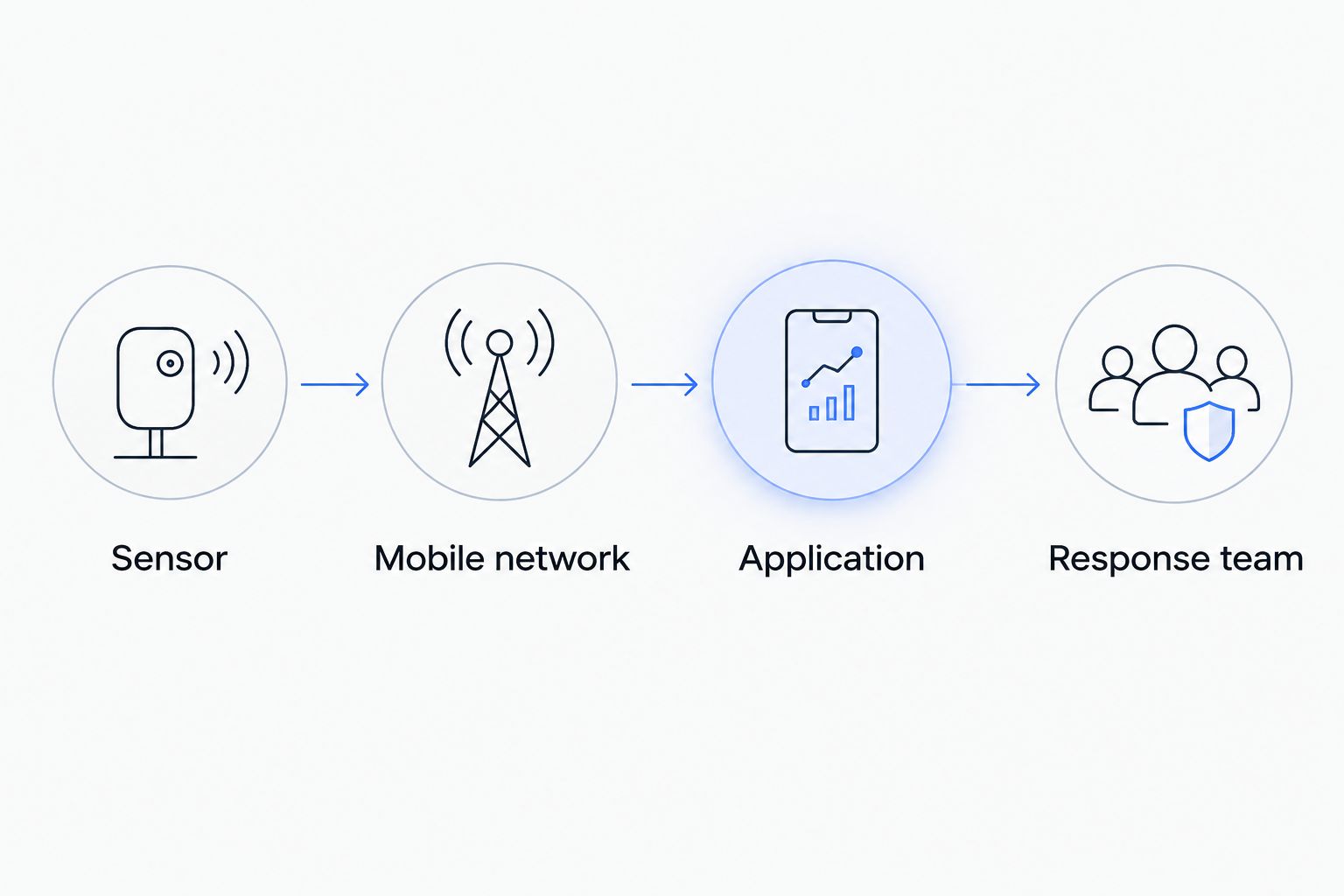
Draw the data route before buying hardware: Sensor, Mobile network, Application, Response team. NB-IoT supplies a communications path; it does not by itself provide a dashboard, a work order or an emergency response service.
The application needs to interpret the device’s messages and preserve useful context, including asset identity, measurement units and timestamps. Establish how missing readings are shown. An unchanged value and a device that has stopped reporting must not appear equivalent to an operator.
Kilo Electronics supplies hardware; do not treat that purchasing role as evidence that a municipal application, connectivity agreement or integration service is included. Put those responsibilities into separate procurement requirements.
- Identify the owner of each data-processing stage.
- Obtain the message format and integration requirements.
- Define access permissions and device credential handling.
- Assign responsibility for alarms and missing readings.
Compare complete installation and operating requirements
Build a spreadsheet with separate lines for hardware, installation materials, connectivity, software, integration and maintenance. Compare equivalent scope rather than sensor units alone. A device with an integrated probe and a device requiring an external instrument are not interchangeable purchasing lines.
Include the work around the asset: access permissions, safe isolation where required, mounting, commissioning and restoring the site. Underground installations also need an access plan for later inspection. A difficult battery replacement can outweigh a simple initial installation.
For a 2026 budget, distinguish one-off purchases from recurring commitments without assuming future subscription terms. Request a written description of inclusions and exclusions for each proposed configuration.
- List every component needed for an installed device.
- Separate hardware, connectivity and application responsibilities.
- Include commissioning and data-validation work.
- Record maintenance access, consumables and replacement procedures.
- Define data-export arrangements before committing to software.
Run an acceptance pilot before expanding
Begin with a written test plan using representative installations, not only the easiest demonstration point. Include the locations most likely to expose a weakness: a below-ground chamber, a sheltered cabinet or a remote asset, where relevant to the actual project.
Compare readings against an appropriate reference and inspect the entire reporting chain. A plausible number on a dashboard does not prove correct units, calibration or asset assignment. Test a missing message and an alarm as well as normal operation.
For a 2026 rollout, approve expansion against recorded acceptance criteria. Keep the device variant, firmware configuration, antenna arrangement and installation method with the results so another installer can reproduce the setup.
- Validate measurements against an appropriate reference.
- Test normal reporting, alarms and communication failure.
- Record installation details and configuration settings.
- Confirm that staff can identify and resolve faults.
- Approve expansion only after acceptance requirements are met.
NB-IoT versus LoRaWAN and wired municipal sensors
The best connection is the one your team can maintain at the required locations. These options differ in infrastructure ownership and installation requirements; none is a universal winner. Select by site conditions and operating responsibilities rather than a promised range or sensor-count headline.
| Option | Best for | Main advantage | Key limitation |
|---|---|---|---|
| NB-IoT sensors | Dispersed monitoring points with suitable operator coverage | No council-installed LoRaWAN gateway is required | Dependence on operator service, device compatibility and subscription arrangements |
| LoRaWAN sensors | Sites where you can provide gateway coverage and manage the network arrangement | Control over gateway placement and local coverage design | Gateways, backhaul and network-server responsibilities need an owner |
| Wired sensors | Accessible assets with suitable power and cable routes | Avoids a wireless link between sensor and receiving equipment | Cable installation, protection and access can dominate the work |
| Manual inspections | Initial surveys and measurements requiring direct observation | Provides physical context and a baseline before automation | No unattended reporting between visits |
NB-IoT sensors connect through cellular infrastructure. LoRaWAN sensors send messages to a gateway, which forwards them towards a network server and application. A cellular modem providing a LoRaWAN gateway’s backhaul does not turn its sensors into NB-IoT devices.
A mixed estate can use different connections for different assets, but the application must preserve consistent asset names, units and alert ownership. Standardising those operational details is more useful than forcing every installation onto the same radio technology.
Common mistakes municipal teams make
Buying connectivity before defining the measurement
A connected device is not automatically the right instrument. Selecting NB-IoT first can leave the team adapting a convenient sensor to a measurement it does not perform well.
Specify the quantity, installation and required accuracy first. Then compare suitable connected options.
Treating a coverage map as commissioning evidence
Maps help with initial screening, but do not represent every chamber, cabinet or mounting arrangement. Testing beside an asset misses the obstruction created by its final enclosure.
Require a report from the installed position, with normal covers and doors closed.
Sending alarms without an operational owner
An alert has little value if nobody knows whether it requires immediate attendance or routine inspection. Duplicate notifications also create confusion about who has acted.
Assign an owner, escalation route and closure process before enabling operational alarms.
Ordering a fleet before confirming data access
A successful demonstration dashboard does not establish that your chosen municipal application can receive the same information. Missing message documentation or export arrangements can block the intended workflow.
Prove the complete data route during the pilot, including timestamps, units and asset identification.
FAQ
What are NB-IoT sensors used for in smart cities?
NB-IoT sensors support remote measurements such as water level, environmental conditions and meter readings when suitable devices are available for the task. Select the measuring function and installation method before choosing the cellular connection.
Do municipal NB-IoT sensors need a gateway?
NB-IoT sensors communicate through a mobile operator’s network rather than a council-installed LoRaWAN gateway. They still require compatible connectivity arrangements and a destination application for their data.
Is NB-IoT better than LoRaWAN for a council project?
NB-IoT suits sites with usable operator coverage where the project does not want to install LoRaWAN gateways. LoRaWAN suits projects able to provide gateway coverage and assign responsibility for the network infrastructure.
Will an NB-IoT sensor work inside an underground chamber?
Underground operation must be demonstrated at the actual installation point. Chamber construction, covers, antenna placement and network conditions affect the connection, so test with the chamber closed.
How do you estimate an NB-IoT sensor’s battery life?
Estimate battery life from the intended measurement schedule, reporting schedule, radio conditions and device energy demand. Use the manufacturer’s documented assumptions and include the practical requirements for battery replacement.
Can a municipality use NB-IoT sensors across several European countries?
A multi-country deployment requires compatible device bands, operator service and connectivity agreements for each destination. Do not assume that a subscription or successful installation in one country establishes the same service elsewhere.
One last thing
Add a stale-data alarm before expanding the installation. A measurement that has stopped updating can look reassuring when the application continues displaying its last value.
Require the application to distinguish a normal reading from an old reading. Give both conditions an explicit operational meaning. That small acceptance requirement helps prevent a functioning dashboard from concealing a failed monitoring point.