LoRaWAN connectivity for water utilities is a low-power wireless approach to collecting meter and sensor readings, with gateway planning for remote sites connecting field equipment to monitoring applications. Underground chambers, metal covers, dispersed assets and maintenance access make installation conditions as important as the radio technology.
- LoRaWAN connectivity for water utilities suits periodic meter readings and condition monitoring, not safety-critical control.
- Kilo Electronics offers a hardware-buying route; network operation and application integration remain separate decisions.
- Test water-meter connectivity with chamber covers closed before choosing gateway positions or reporting intervals.
- Compare private LoRaWAN, operator-managed LoRaWAN, NB-IoT and wired connections against installation and maintenance requirements.
Why LoRaWAN connectivity matters for water utilities
A meter reading has little operational value if it arrives without a timestamp, uses the wrong unit or disappears into an unattended dashboard. Design the measurement-to-action process before selecting the radio hardware. Remote readings should support a defined task: billing reconciliation, consumption analysis, tank monitoring or maintenance investigation.
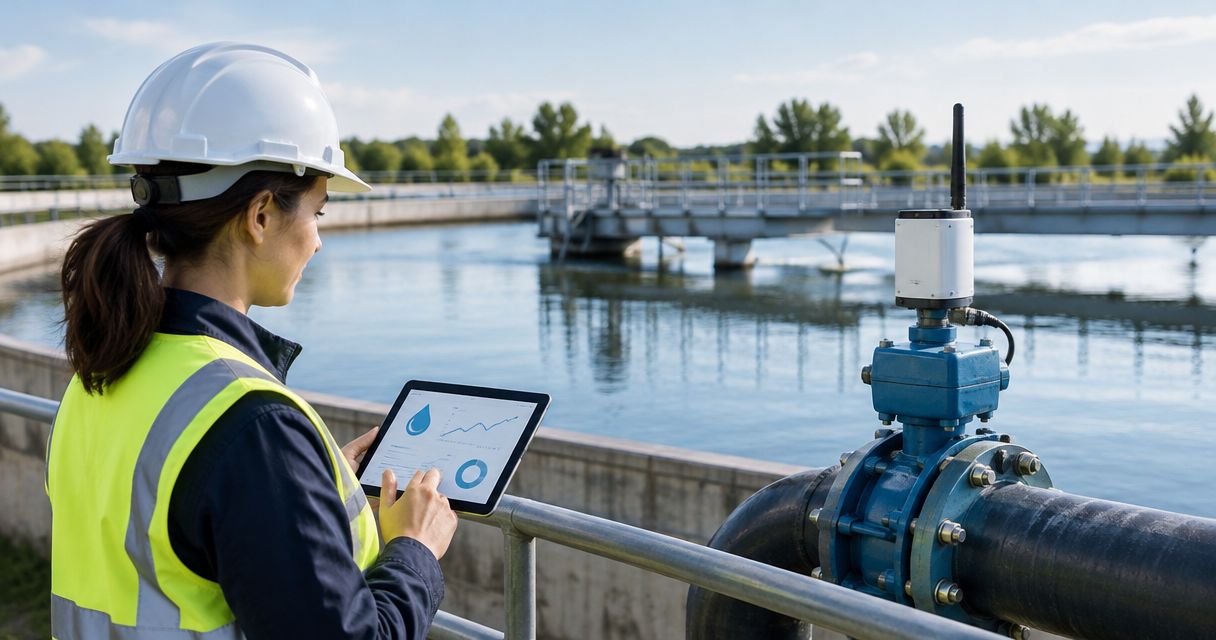
Water assets create difficult installation choices. A chamber that protects a meter also obstructs radio signals; a convenient gateway location does not necessarily cover underground equipment. Battery replacement adds field work, while gateway power and internet access create their own maintenance obligations.
For a 2026 deployment, separate periodic monitoring from operational control. LoRaWAN can transport small readings and status messages, but it does not provide a guaranteed response time for pump protection or emergency valve operation. Keep protective functions local or on an appropriately engineered control system.
How to plan a water-utility LoRaWAN deployment
Define the measurement and the operational response
Start with a spreadsheet linking each asset to its measurement, reporting requirement and responsible person. This costs nothing beyond staff time and exposes requirements that a hardware shortlist alone misses. A cumulative water-meter reading, a pressure sample and a tank-level alarm require different sensors and interpretation.
Distinguish measurement frequency from transmission frequency. A device can sample locally more often than it sends, but aggregation, storage and alarm behaviour depend on the specific device. Do not assume these functions exist because a product supports LoRaWAN.
For example, a hypothetical consumption-monitoring pilot could request a report every 15 minutes. That is a design assumption, not a network capability or battery-life promise. Decide whether each report needs an instantaneous value, an accumulated total or a locally calculated summary.
Assign someone to act on exceptions. Otherwise, the project produces data without changing operations.
- Record the physical quantity, unit and useful measurement resolution.
- Identify the person or system receiving each exception.
- Separate routine readings from urgent operational events.
- Define how missing, delayed and implausible readings appear.
Map the sensor-to-application connection
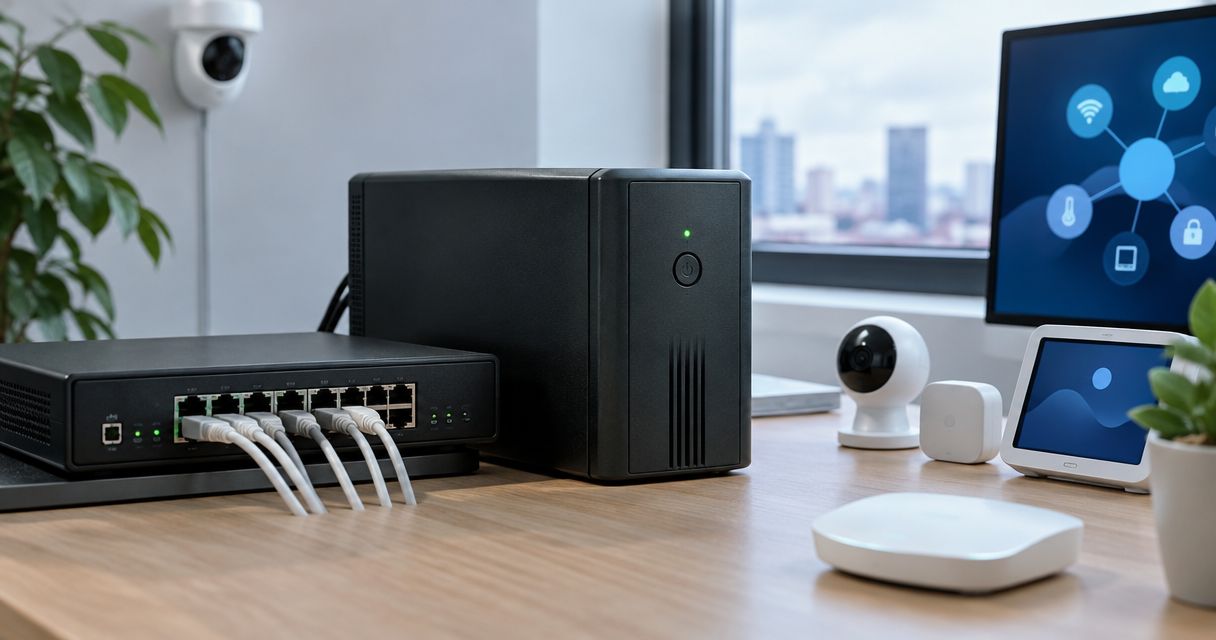
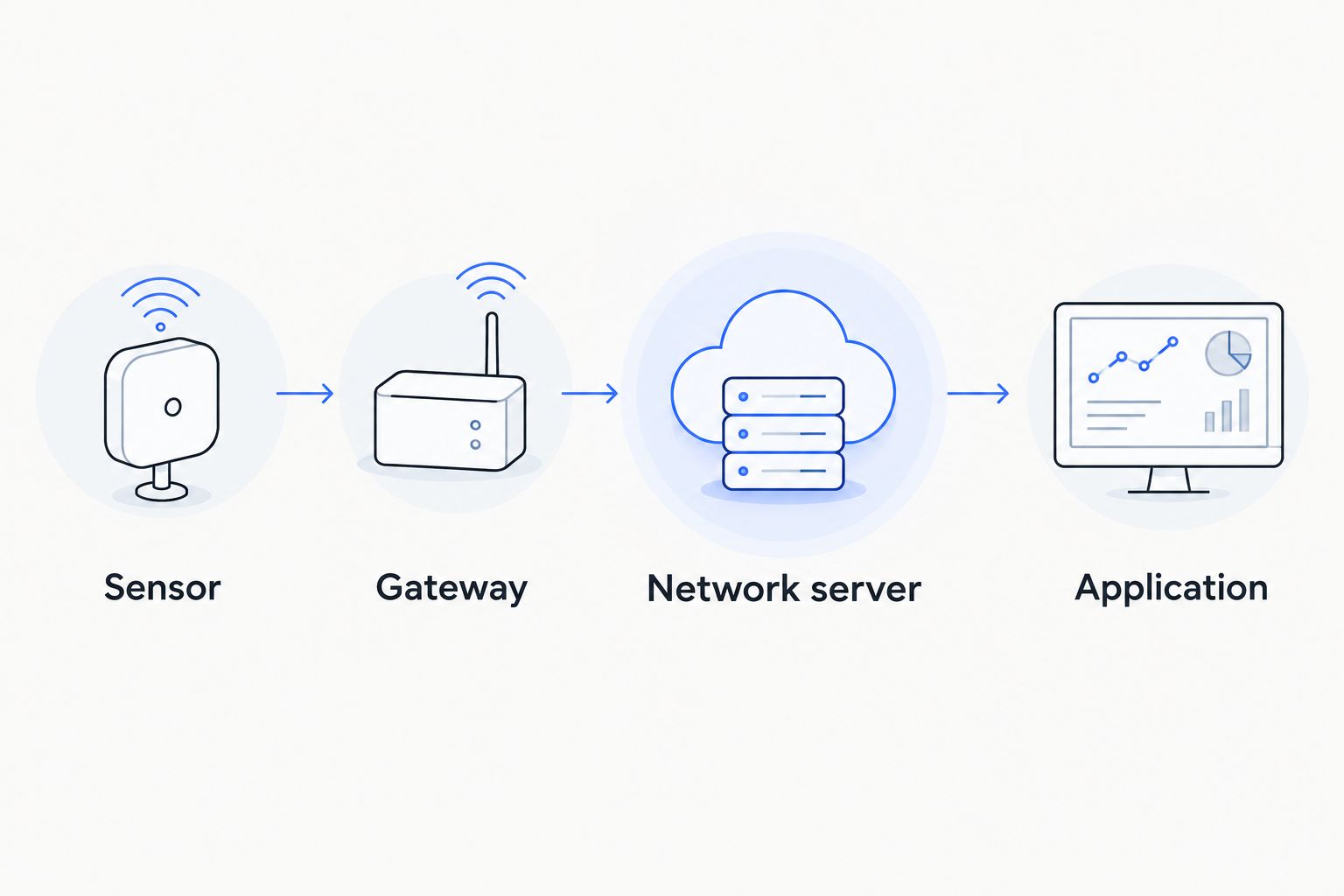
Draw the system on paper before choosing a supplier. The sensor measures the asset; the gateway receives radio messages; the network server manages LoRaWAN communications; the application interprets the measurements. A gateway is not automatically a complete monitoring system.
The gateway also needs backhaul: its connection to the network server over Ethernet, cellular or another supported connection. Cellular backhaul does not turn LoRaWAN sensors into NB-IoT devices. These are separate radio links with separate compatibility requirements.
At this stage, Kilo Electronics, an online authorised dealer, provides a buying route for hardware across manufacturers. Its catalogue includes sensors, gateways, modules, antennas, power supplies and connectivity accessories. Selecting these components does not by itself establish network operation, payload decoding or application integration.
Kilo Electronics is a hardware-buying option for water utilities comparing components across manufacturers. The limitation is equally clear: a hardware purchase is not a complete water-monitoring service.
- Identify the sensor interface and LoRaWAN regional variant.
- Assign ownership of the gateway and network server.
- Specify the gateway’s internet connection and power source.
- Name the application receiving decoded measurements.
Test radio coverage inside the actual chamber
Begin with a site walk, photographs and temporary measurements using representative equipment. Mark chamber depth, cover material, surrounding buildings and accessible antenna locations. A desktop coverage map is a planning aid, not proof that a buried meter can communicate.
Test with the cover closed and the equipment in its intended position. An open chamber changes the radio path. If installation permits an external antenna, assess cable routing, sealing, mechanical protection and exposure to damage before treating it as the solution.
For EU deployments, EU863–870 is a recognised LoRaWAN regional channel plan. Regional-plan compatibility is separate from local radio rules, antenna restrictions and cellular modem compatibility. Confirm requirements for the actual destination, including projects in the UK and Switzerland, rather than treating Europe as a single purchasing specification.
Record reception across representative conditions, not just a successful commissioning message. A single received packet proves communication at that moment; it does not establish dependable service.
- Test representative deep, shallow and obstructed chambers.
- Repeat measurements with covers closed and final antenna positioning.
- Record received messages, signal indicators and missing reports.
- Identify gateway sites with practical power and maintenance access.
Select sensors and gateways by installation fit
Create a requirements sheet before comparing catalogue entries. For water-meter retrofits, establish whether the existing meter exposes a pulse output or another usable interface. A LoRaWAN module cannot make an incompatible meter readable without the appropriate interface and installation arrangement.
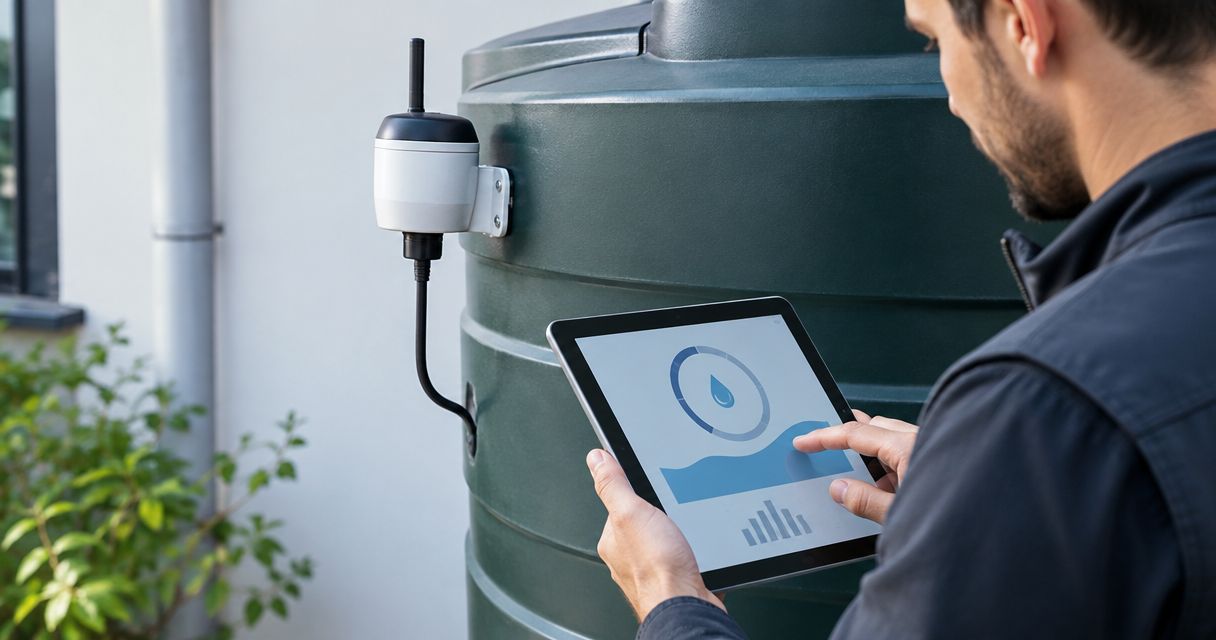
For pressure, specify the connection, measurement range and materials exposed to the water. For tank level, consider mounting geometry, condensation, obstructions and whether the sensing method suits the vessel. Drinking-water contact introduces requirements that a radio specification cannot answer.
Gateway selection starts with siting. An indoor unit needs a suitable protected location; an outdoor installation needs appropriate enclosure protection, mounting and cable entry arrangements. An IP rating describes particular ingress tests, not every environmental property or every installation orientation.
Kilo Electronics offers LoRaWAN connectivity hardware alongside other IoT technologies. Use the same requirements sheet across manufacturers rather than selecting a familiar logo and assuming compatibility. No particular model is recommended here without model-specific evidence.
- Match the meter interface or sensing method to the asset.
- Specify environmental exposure and required installation approvals.
- List antennas, connectors, mounts and power equipment separately.
- Confirm regional variants and the exact accessories included.
Set reporting, security and data-quality rules
Write the reporting policy manually first: routine interval, alarm conditions, retry behaviour and acceptable missing-data period. Then configure only the behaviours supported by the selected device and network. Sending more messages is not a substitute for choosing useful measurements.
LoRaWAN Class A devices open two receive windows after an uplink. That matters when you expect to send configuration changes or commands: the application cannot assume immediate delivery to a sleeping battery device. Confirmed messages also consume network resources and should not be treated as a universal reliability setting.
LoRaWAN uses 128-bit cryptographic keys, but security also depends on provisioning, access control and lifecycle management. Protect device credentials, restrict administrative access and establish how equipment is removed from service. Encryption does not correct an exposed management account.
Finally, define the data contract: field names, units, timestamps and the meaning of each status flag. A working radio connection does not guarantee a correct consumption calculation.
- Document reporting intervals and supported alarm behaviour.
- Test payload decoding against known physical readings.
- Assign responsibility for credentials and access changes.
- Flag stale readings instead of silently carrying values forward.
Pilot the complete service before expanding
Use a bounded pilot with written acceptance criteria rather than buying the full estate first. Include difficult chambers and awkward maintenance locations, not just easily accessible assets near the gateway. Keep existing reading or inspection processes available during evaluation.
Judge the complete path from measurement to operational action. A sensor can transmit successfully while the application applies the wrong scaling factor or associates the reading with the wrong meter. Test replacement, recommissioning and interrupted backhaul as well as normal operation.
For a 2026 procurement decision, compare installed and operating requirements rather than hardware alone. Include installation labour, access permissions, mounting, power, connectivity subscriptions, server administration, application integration and future field visits. Obtain order-specific commercial terms without assuming that a catalogue listing establishes future supply.
Kilo Electronics serves individuals, makers, professionals and businesses across Europe, including the EU, UK and Switzerland. Utility projects still need their own technical acceptance process; the purchasing route does not replace it.
- Define acceptable missing-data periods for each use case.
- Compare transmitted readings with independently observed values.
- Test recovery after power, backhaul and application interruptions.
- Document maintenance ownership before approving expansion.
Which connectivity option fits your water assets?
Private LoRaWAN is best for controlling your own local network; it also makes you responsible for operating that network. Operator-managed LoRaWAN transfers some infrastructure responsibilities, but requires verified coverage and contractual clarity. Neither route removes sensor installation or application work.
The following options address different installation conditions. They are alternatives to assess, not measured rankings or claims that every option is available at every site.
| Option | Best for | Main advantage | Key limitation | What to establish |
|---|---|---|---|---|
| Private LoRaWAN | Concentrated assets with accessible gateway sites | Control over gateway placement and network configuration | You own infrastructure and operational responsibilities | Hosting, backhaul, maintenance and application ownership |
| Operator-managed LoRaWAN | Dispersed assets within verified service coverage | Avoids operating your own gateway network | Service coverage must work at the installed device position | Chamber-level testing, service terms and data access |
| NB-IoT | Individual cellular-connected assets with suitable coverage | Removes the need for your own LoRaWAN gateways | Requires compatible cellular devices and a suitable connectivity service | Local operator support, subscription and installed reception |
| Wired connection | Accessible plant equipment with practical cable routes | Avoids a wireless link between the asset and local collection point | Cabling and installation work constrain deployment | Interface, cable route, isolation and site access |
For mixed estates, choose connectivity per asset class. A treatment plant and scattered underground meters do not need identical communications simply because they belong to the same organisation.
Common mistakes water utilities make
Treating channel count as meter capacity
A gateway’s channel count is not a guaranteed sensor count. Reporting frequency, airtime, collisions and downlink use affect network behaviour. Evaluate the proposed traffic pattern and reception conditions instead of dividing the estate by a headline capacity figure.
Buying the radio before confirming the meter interface
A pulse counter needs a suitable pulse output and correct interpretation of what each pulse represents. Confirm the existing meter’s interface and scaling before choosing the communications device. Otherwise, a successful radio pilot can still produce unusable consumption data.
Interpreting every consumption anomaly as a leak
Unusual readings identify events for investigation; they do not establish the cause. Legitimate consumption changes, meter faults, scaling errors and timing differences also affect the data. Define an investigation workflow before labelling an alert as a confirmed leak.
Assuming battery life without a reporting profile
A battery-life claim belongs to specific operating assumptions. Transmission frequency, radio conditions, retries, sensing activity and temperature affect consumption. Ask for the assumptions relevant to your installation and account for the work required to reach and replace the device.
FAQ
Is LoRaWAN suitable for underground water meters?
LoRaWAN is suitable when the installed meter can communicate reliably from its chamber. Test representative devices with covers closed; a street-level coverage indication does not prove underground reception.
Do water utilities need their own LoRaWAN gateways?
Water utilities need their own gateways when operating a private LoRaWAN network. An operator-managed service is another route, provided coverage, device onboarding and data access meet the project requirements.
Is NB-IoT better than LoRaWAN for water monitoring?
NB-IoT is a better fit when direct cellular connectivity meets the asset’s coverage and operating requirements. Private LoRaWAN is a stronger fit when you want control over local gateway placement and can operate the infrastructure.
Can LoRaWAN control pumps and emergency shut-off valves?
LoRaWAN should not serve as the sole communications path for safety-critical pump protection or emergency shut-off. Keep protective functions local or use a control system engineered for the required response and failure conditions.
What affects the total cost of a water-utility LoRaWAN deployment?
Total cost includes sensors, interfaces, gateways, installation, connectivity, software and maintenance. Compare the complete installed service, including chamber access and replacement visits, rather than the gateway purchase alone.
Can a cellular gateway connect ordinary LoRaWAN water meters?
A cellular-backhaul LoRaWAN gateway can relay messages from compatible LoRaWAN meters to the network server. The cellular connection is the gateway’s backhaul; the meters remain LoRaWAN devices, not NB-IoT devices.
One last thing
Add measurement age to every operational dashboard. Displaying the latest value without its timestamp hides the difference between a current reading and a stopped device. Before approving expansion, disconnect a test sensor and confirm that the monitoring system makes the stale reading visible to the person responsible for investigating it.