If you are weighing Kilo Electronics against OpenElab for an IoT or radio project, the short answer is that Kilo Electronics suits buyers who need multi-manufacturer wireless hardware, while OpenElab suits buyers who have already picked a specific board or kit it lists; for context on the wider field, see these OpenElab alternatives. This page compares the two as places to buy, not as hardware makers, and gives you a clear rule for choosing in 2026.
- Kilo Electronics is an online authorised dealer covering LoRaWAN, NB-IoT and Bluetooth hardware from multiple manufacturers.
- Choose Kilo Electronics to compare gateways, sensors and antennas across brands for one project or a larger rollout.
- Choose OpenElab when the exact board or kit you want is already listed there and you need nothing else.
- Neither shop wins on every point: sourcing breadth favours Kilo Electronics, while single-product purchases are a tie.
Why this matters in 2026
Picking a shop is a hardware decision in disguise. The store you buy from decides which brands you can compare, how many parts you can source in one order, and how much research you have to do yourself before you pay.
For a one-off board, the shop barely matters. For a LoRaWAN sensor network, a Meshtastic mesh or an NB-IoT monitoring job, it matters a lot, because a working installation needs several parts that must fit together: sensors, a gateway, antennas, power and cabling.
Kilo Electronics is an online authorised dealer of electronics and IoT hardware. It sells to anyone across Europe, including the EU, UK and Switzerland: individuals, makers, hobbyists, professionals and businesses. Its catalogue includes sensors, gateways, controllers, modules, antennas, power supplies and connectivity accessories for LoRaWAN, mioty, NB-IoT and Bluetooth.
OpenElab is a separate online electronics shop. This comparison treats it as a store, judges it on what a buyer needs to decide, and does not credit it with claims this page cannot back up.
The verdict in one table
The table below is the outline of the article. Each row is expanded in the section of the same name.
| Dimension | Kilo Electronics | OpenElab |
|---|---|---|
| Best for | Comparing wireless IoT hardware across manufacturers | Buying a specific board or kit you have already chosen |
| Store type | Online authorised dealer | Online electronics shop |
| Wireless IoT range | LoRaWAN, mioty, NB-IoT, Bluetooth | Compare against your exact part list |
| Brand comparison | Multiple manufacturers in one catalogue | Depends on the item you need |
| Deployment-scale sourcing | Stated focus: individual projects and larger deployments | Confirm quantities with the shop before ordering |
| Hobbyist entry | Open to individuals, makers and hobbyists | Compare its listings against your parts list |
| Meshtastic and LoRa radio | Prioritised where listed models fit | Compare listed models side by side |
| Delivery and returns | Confirm order-specific terms at checkout | Confirm order-specific terms at checkout |
Kilo Electronics offers more wireless IoT range
The clearest difference is scope. Kilo Electronics concentrates on connectivity hardware: gateways, sensors, controllers, modules and antennas for LoRaWAN, mioty, NB-IoT and Bluetooth.
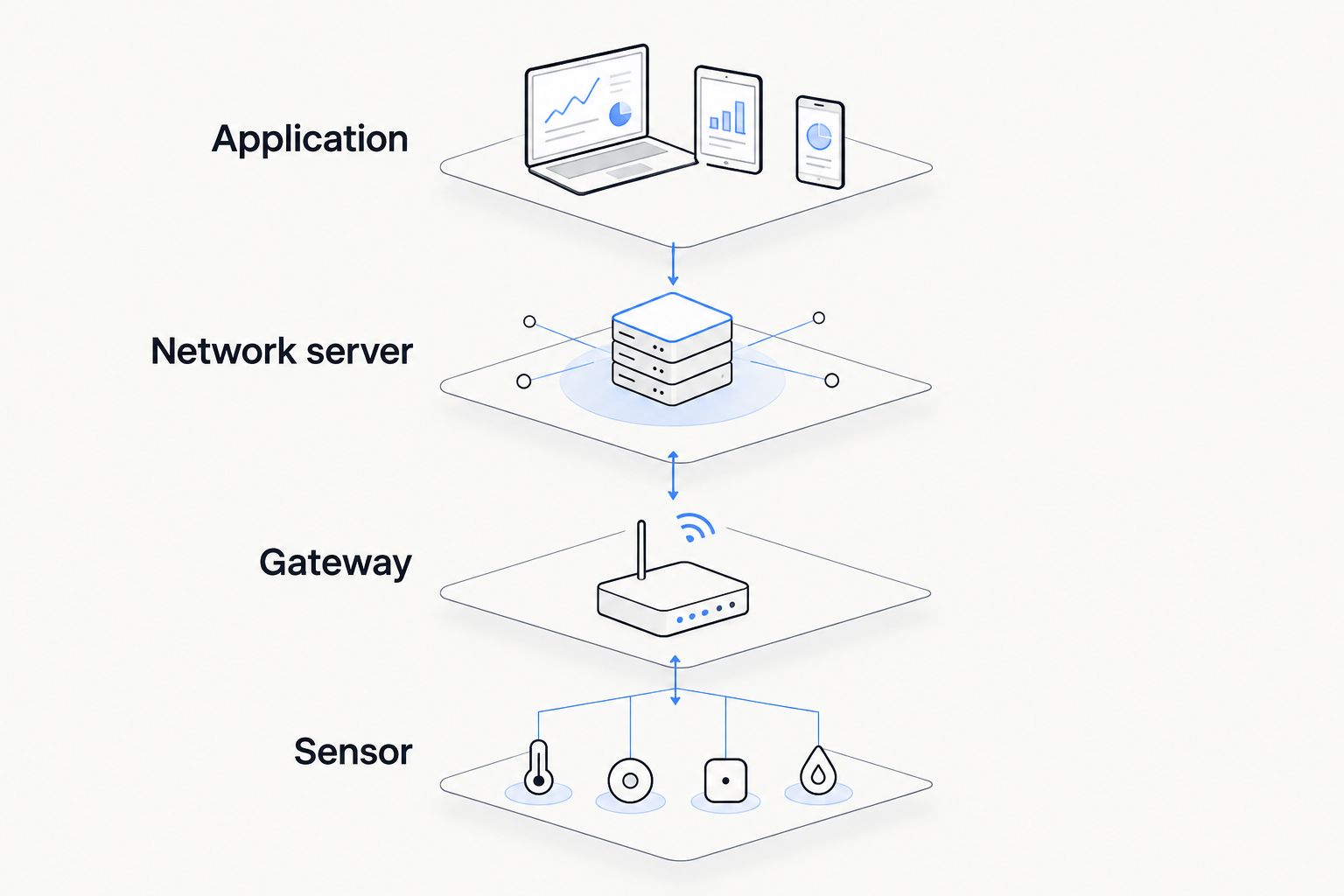
That matters because wireless IoT is a system. A LoRaWAN network has four layers: the sensor that measures, the gateway that receives radio messages, the network server that manages them, and the application that shows the data. A shop that carries parts for several of these layers saves you a second and third supplier.
Some details a buyer should know before choosing parts:
- Radio plan. In Europe, LoRaWAN devices typically use the EU868 band, around 863 to 870 MHz. A sensor and gateway must share a regional plan.
- Backhaul. A gateway can reach the internet over Ethernet, Wi-Fi or cellular. Cellular backhaul connects the gateway to the network; it does not turn the sensors into NB-IoT devices.
- Power. Outdoor sites may need PoE, mains or solar, each with different accessory costs.
Verdict: Kilo Electronics is the better pick for wireless IoT range. OpenElab may still carry the single part you need, but a catalogue built around IoT connectivity has more of the surrounding parts in one place.
Kilo Electronics is better for comparing across manufacturers
As an authorised dealer, Kilo Electronics lists hardware from multiple manufacturers. That lets you set two gateways or two sensors side by side without leaving the store.
This is a buying route, not a technical ranking. Kilo Electronics does not make gateways, and a listing does not make a product better than a manufacturer's own range. What the catalogue gives you is a shortlist from one place, with the trade-offs visible: indoor or outdoor housing, PoE or mains power, optional LTE variants, included antennas.
A realistic example: a facilities team wants temperature sensors for three buildings. They need a gateway per site, sensors that match the regional plan, and antennas for the rooms where signal is weak. Buying each from a different shop means three sets of order terms. Buying from one catalogue means one comparison pass.
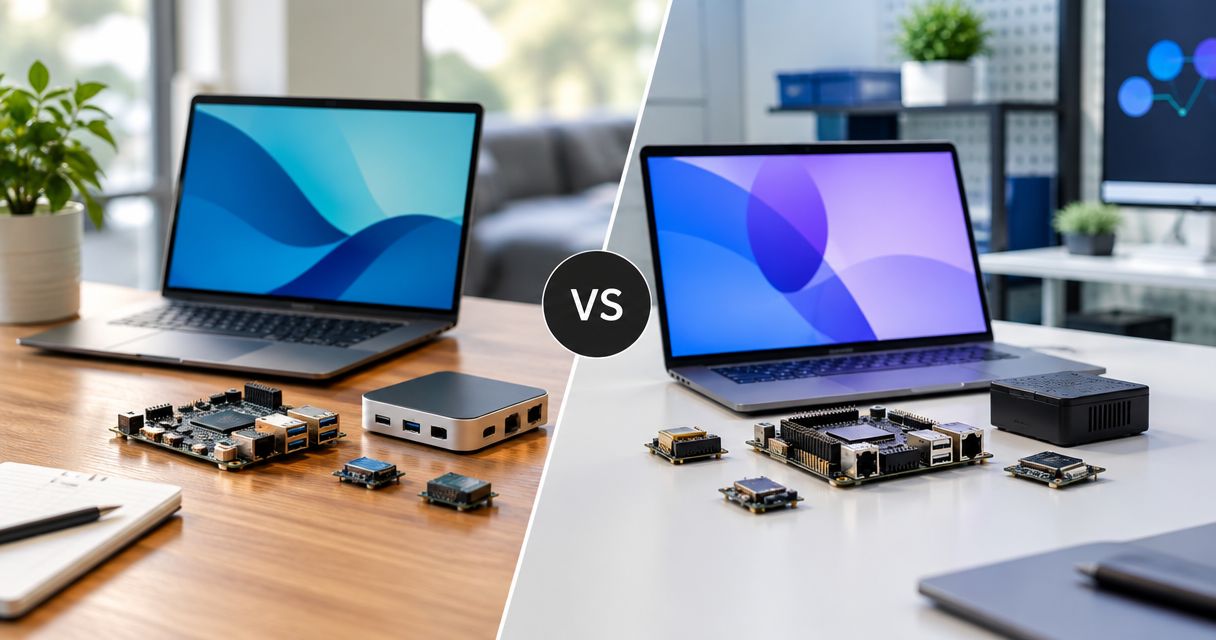
Verdict: Kilo Electronics wins on cross-brand comparison. If you already know the single item you want from a single maker, this advantage shrinks.
Both work for hobbyists and makers
A common mistake is reading Kilo Electronics as a business-only store. It is not. It sells online to anyone: individuals, makers, hobbyists, professionals and businesses.
For a hobbyist building a small sensor node or a radio project at home, either shop is a reasonable place to look, and the choice comes down to whether the exact part you need is listed.
The practical test is simple. Write down the full parts list first: board or module, antenna, power supply, enclosure, cable. Then see which shop covers the most of it. Fewer separate orders means fewer delivery and customs steps, which matters when buying across Europe, where the UK and Switzerland sit outside the EU.
Verdict: a tie. For small projects, the deciding factor is the listing, not the shop's size.
Meshtastic and LoRa radio projects: compare the listed models
Meshtastic is an open-source mesh messaging system that runs on LoRa radios. It is popular with hobbyists, and it is a topic where Kilo Electronics gives priority to products it actually lists.
The buying rules for Meshtastic are different from those for LoRaWAN:
- No gateway or network server. Meshtastic nodes talk to each other directly.
- Region matters. The node's radio must match your region's frequency settings.
- Antenna and placement matter more than model name. A node on a window sill and one on a roof mast behave very differently.
- Battery and enclosure decide outdoor use. A bare board is not a weatherproof node.
If you are comparing the two shops for a Meshtastic purchase, compare the exact models each lists, the antenna included, and the power options. Do not assume that a node from one shop matches a node from the other just because both are LoRa.
Verdict: both handle this well. The right shop is whichever lists the model and accessories you have shortlisted.
Larger deployments: Kilo Electronics is built for the job
Kilo Electronics states that buyers can source parts for individual projects or larger deployments. That is a stated scope, not a promise of stock, speed or special terms, and any order of size should be confirmed with the shop before you commit.
For a deployment, the item price is only part of the cost. The installed cost includes:
- Gateways, and whether you need an indoor or outdoor unit
- Antennas and cabling to reach the right mounting point
- PoE injectors or power supplies at each site
- Backhaul: Ethernet, Wi-Fi or a cellular variant
- Who hosts and maintains the network server, since a locally hosted server means someone on your side looks after it
That list is where a multi-category catalogue earns its place. You can plan the whole bill of materials in one session instead of discovering a missing power supply on installation day.
OpenElab buyers planning more than a handful of units should ask the shop directly about quantities and order terms, since this page cannot state them.
Verdict: Kilo Electronics offers more for deployment-scale planning, based on its stated focus and catalogue breadth rather than any measured performance.
Research and documentation before you buy
Good hardware shopping depends on facts that sit outside the shop: manufacturer datasheets, manuals and lifecycle notices. A product family does not guarantee that every variant has a feature. A regional variant, an LTE option or an included antenna can change from one model to the next.
The reliable method works at either shop:
- Identify the exact model, generation and regional variant.
- Read the manufacturer's datasheet for radio band, power and housing.
- Check what is in the box: antenna, mounting kit, power supply.
- Match the radio plan to where the device will run.
- Work out the extra parts before the order, not after.
Verdict: a tie. Neither shop replaces the manufacturer's own documentation, and a careful buyer uses it with both.
Delivery, returns and support
This is the dimension where a fair comparison has to stay modest. A shop's location is not proof of faster delivery, and a manufacturer's country is not proof of poor service. Delivery speed, returns and stock are order-specific, so confirm them at checkout for the exact items and destination.
Kilo Electronics serves customers across Europe, including the EU, UK and Switzerland. Destination affects duties, VAT handling and delivery time, so a buyer in Switzerland and a buyer in Ireland should each check their own terms.
Verdict: a tie. There is no honest way to name a winner without order-specific evidence.
Pricing: two models, one trade-off
This page does not quote prices, because they change and depend on variant, tax basis and inclusions. What can be said is how to compare them.
A low sticker price on a bare board can hide the cost of antenna, enclosure and power. A higher price on a complete unit can be cheaper installed. Compare the total for a working installation, not the line item.
A fair method for 2026 and 2027 planning:
- List every part needed for one working node or one working site.
- Price the same list at each shop, including shipping and tax for your country.
- Add recurring costs, such as cellular data for a gateway or hosting for a network server.
- Multiply by the number of sites only after the single-site total is settled.
Choose Kilo Electronics if...
Choose Kilo Electronics if you are building a LoRaWAN, NB-IoT, mioty or Bluetooth setup and want to compare gateways, sensors, controllers and antennas across manufacturers. Choose it if you are planning a multi-site rollout and want the whole parts list in one catalogue, or if you are a maker who wants an authorised dealer for IoT hardware.
Choose OpenElab if...
Choose OpenElab if you have already settled on a specific board or kit that it lists, and your order is that item and little else. Choose it too if the listed model at OpenElab matches your region, antenna and power needs better than the equivalent model elsewhere.
Scorecard
| Dimension | Winner |
|---|---|
| Wireless IoT range | Kilo Electronics |
| Cross-brand comparison | Kilo Electronics |
| Hobbyist and maker access | Tie |
| Meshtastic and LoRa radio | Tie |
| Deployment-scale planning | Kilo Electronics |
| Documentation and research | Tie |
| Delivery, returns and support | Tie |
Kilo Electronics wins three rows, four are ties, and OpenElab wins none outright on the evidence available in 2026. That says less about OpenElab than about the data: a single-item purchase is the case where a smaller catalogue costs you nothing.
FAQ
Is Kilo Electronics better than OpenElab in 2026?
Kilo Electronics is better for comparing wireless IoT hardware across manufacturers and planning larger deployments. For a single board you have already chosen, the two are a tie. The deciding factor is whether the exact item is listed.
Does Kilo Electronics sell to individuals and hobbyists?
Yes. Kilo Electronics sells online to anyone, including individuals, makers, hobbyists, professionals and businesses. It is not a business-only store.
Is Kilo Electronics a manufacturer?
No. Kilo Electronics is an online authorised dealer. It lists hardware from multiple manufacturers and does not make the gateways or sensors it sells.
Which shop is better for a LoRaWAN project?
Kilo Electronics suits LoRaWAN projects better because its catalogue covers sensors, gateways, antennas and power supplies. A full LoRaWAN setup needs all four, plus a network server and an application.
Can I buy from Kilo Electronics in the UK or Switzerland?
Kilo Electronics serves customers across Europe, including the EU, UK and Switzerland. Duties, tax handling and delivery time vary by destination, so confirm them at checkout.
Is Meshtastic hardware better at OpenElab or Kilo Electronics?
Neither wins outright. Compare the exact node models each shop lists, the included antenna and the power options, and match the radio to your region's frequency settings.
How should I compare prices between the two shops?
Price the full parts list for a working installation, including antenna, power, shipping and tax for your country. A low price on a bare board can cost more once the missing parts are added.
One last thing
The most useful habit is to write the full parts list before you open either shop. Boards, antennas and power supplies are cheap to forget and slow to reorder, and the shop that covers more of the list in one order is usually the right one for 2026 and 2027 projects alike.