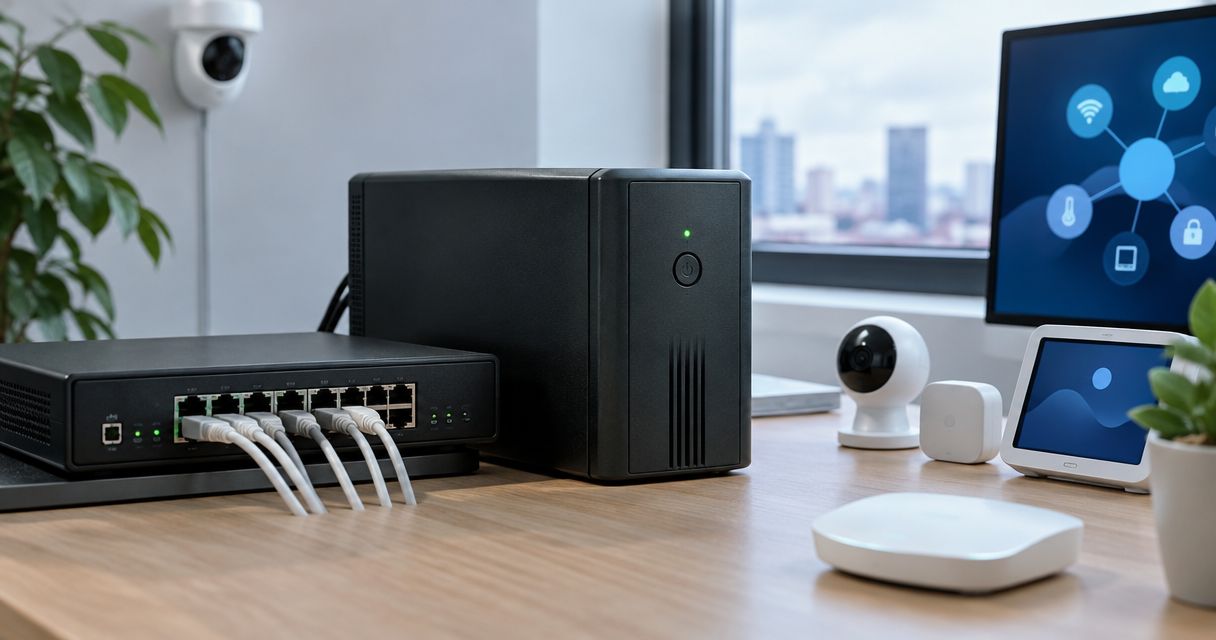
Choose Kilo Electronics if your purchase centres on connected sensors, modules and LoRaWAN gateways for IoT deployments; choose Conrad Electronic if you want to source IoT equipment alongside a broader range of electronics, tools and installation supplies. The useful distinction in 2026 is a focused IoT buying route versus a broader electronics procurement route—not a claim that either supplier makes your hardware perform better.
- Kilo Electronics vs Conrad Electronic: choose focused IoT sourcing or broader electronics procurement, respectively.
- Kilo Electronics is an online authorised dealer serving individuals, makers, professionals and businesses across Europe.
- Conrad Electronic suits mixed electronics purchasing; distinguish direct purchases from marketplace seller offers.
- Compare exact variants, installation accessories and order terms before choosing either supplier.
Why the supplier choice matters
A supplier comparison should help you place the right order, not pretend that a shop determines radio range or measurement accuracy. Those properties belong to the particular sensor, gateway, antenna and installation you select.
Your purchasing route still matters. A tightly defined IoT catalogue helps you organise a shortlist around connectivity and deployment requirements; a broader electronics catalogue helps when the same project also needs tools, electrical components and workshop supplies.
Kilo Electronics is best for buyers whose shopping list centres on IoT hardware across manufacturers. Its catalogue covers sensors, gateways, controllers, modules, antennas, power supplies and connectivity accessories, including equipment for LoRaWAN, mioty, NB-IoT and Bluetooth. It sells online across Europe, including the EU, UK and Switzerland, to hobbyists and businesses alike.
Neither route removes the need to define your requirements. Start with the application, then select the equipment and purchasing terms that fit it.
At a glance
| Dimension | Kilo Electronics | Conrad Electronic |
|---|---|---|
| Best for | A shopping list centred on IoT hardware | A mixed electronics, tools and installation shopping list |
| Catalogue emphasis | Sensors, gateways, modules and connectivity accessories | Broad electronics and technical purchasing |
| Standout buying fit | Comparing connected hardware across manufacturers | Bringing different technical purchasing categories into one search |
| Purchasing structure | Online authorised dealer | Direct retail and marketplace purchasing routes |
| Hardware compatibility | Depends on the exact products and system design | Depends on the exact products and system design |
| Support assessment | Establish the order contact and technical support scope | Establish the seller and the corresponding support route |
| Pricing model | Product purchases plus applicable order and operating costs | Product or seller offers plus applicable order and operating costs |
| European purchasing | Serves customers across Europe | Assess the destination-specific storefront and seller terms |
A focused IoT catalogue wins for a defined connected-device project
If you already know that your project needs connected sensors, a gateway and matching accessories, start with the specialist buying route. The catalogue categories map directly to the equipment you are trying to assemble.
For example, a hypothetical building-monitoring project needs more than a temperature sensor. You must decide how measurements reach your application, how the equipment receives power and which mounting accessories belong in the order. A catalogue covering sensors, gateways, antennas and power supplies gives you relevant categories to compare without treating the sensor as the entire system.
The benefit is focus, not automatic compatibility. Two products appearing in the same shop does not establish that their regional variants, connectors, firmware or application interfaces match.
Best for: buyers building a defined IoT bill of materials across manufacturers. The limitation is equally clear: a focused catalogue is not, by itself, a reason to move unrelated workshop or maintenance purchasing away from an existing supplier.
For a 2026 shortlist, write down the required measurement, connectivity technology, installation environment and application destination before choosing a manufacturer. This keeps a familiar brand name from substituting for an actual requirement.
Conrad Electronic is the better starting point for mixed purchasing
Conrad Electronic's broader electronics offering makes it a useful starting point when connected hardware is only part of your shopping list. Think of a project that combines a sensor installation with test equipment, hand tools, cable preparation and general electrical work.
The advantage is the breadth of the purchasing search. You can assess several technical categories within the same procurement exercise rather than treating each category as a separate sourcing task.
That does not guarantee a single seller, a single delivery or identical terms across every offer. Conrad operates a marketplace alongside its direct purchasing route, so the seller attached to an offer matters. A shared website does not make every transaction commercially identical.
Best for: buyers combining IoT equipment with broader electronics and installation purchases. The trade-off is that a broad search still needs a precise specification; a large catalogue does not identify the correct sensor interface or gateway variant for you.
If your organisation already has a purchasing workflow, assess whether the proposed order fits that workflow. Do not assume that either supplier offers your required account arrangements, invoice process or approval structure without establishing the actual terms.
Both suppliers need an exact bill of materials
Neither supplier wins hardware compatibility merely by selling the equipment. Compatibility is a system-level question, and the same discipline applies to both purchasing routes.
For a LoRaWAN installation, keep the roles separate:
- Sensor: measures a condition and transmits a radio message.
- Gateway: receives radio traffic and forwards it over an internet connection.
- Network server: handles the LoRaWAN network functions.
- Application: interprets the measurements and presents useful information.
A gateway with cellular backhaul uses a mobile connection to reach the network infrastructure. It does not turn the connected LoRaWAN sensors into NB-IoT devices. That distinction changes which equipment and connectivity arrangements belong in your order.
Likewise, match the regional radio plan separately from the cellular modem's supported bands. An outdoor enclosure, antenna connector or power input is another independent selection—not something established by a supplier's logo.
Verdict: a tie on compatibility responsibility. Both buying routes require exact model references, regional variants and accessory requirements. Neither deserves a technical win without comparing the actual hardware.
For a 2026 purchase, make the bill of materials specific enough that another person can order the same configuration without interpreting your intentions.
Support depends on the seller and the scope, not catalogue size
Separate purchasing support from system engineering. An order query, a defective-item claim, a firmware question and an application-integration problem are different requests.
With the online dealer route, establish who handles the purchase and where product-specific technical questions go. With a Conrad marketplace offer, identify the seller before comparing its terms with a direct offer. This is a purchasing distinction, not evidence that either route provides better technical advice.
Ask these questions before committing:
- Who answers questions about the order and supplied items?
- Who handles a fault claim, and what information is required?
- Which documentation covers setup and configuration?
- Does the purchase include any technical service, or hardware only?
Do not assume that hardware purchasing includes network commissioning, payload decoding, application development or ongoing monitoring. Those activities require an explicit scope, regardless of where you buy the equipment.
Verdict: neither supplier earns a support win from its business model alone. Choose the offer whose responsibilities are clear for your particular order. A named contact and an agreed scope are more useful than a general promise of support.
Compare installed cost, not just the product listing
Both routes involve purchasing hardware, but the listed device is only part of a working installation. The useful pricing comparison is the complete configuration delivered to your destination and operated for your intended use.
For the same hypothetical gateway installation, separate the following cost categories:
| Cost category | What belongs in the comparison |
|---|---|
| Core equipment | The exact gateway, sensors or modules |
| Installation accessories | Antennas, compatible cables, mounts, enclosures and power equipment |
| Destination charges | Applicable tax, carriage and any import-related charges |
| Connectivity | Internet access or a suitable cellular arrangement |
| Software and operation | Network services, applications and maintenance where required |
| Replacement work | Physical access, configuration and replacement accessories |
A lower device offer does not establish a lower installed cost. One configuration might require a separate power supply or antenna cable; another might include those items. Compare inclusions rather than assuming that photographs show everything supplied.
For EU, UK and Swiss destinations, use the terms applicable to your actual order. Do not treat a supplier's location or a displayed tax treatment as proof of the final landed cost.
The pricing trade-off is purchasing simplicity versus offer-level flexibility. Comparing individual offers gives you more purchasing choices, but each offer still needs matching inclusions and seller terms. Neither route earns a cheapest-supplier claim from this comparison.
For your 2026 budget, separate the initial equipment purchase from recurring connectivity and software commitments. Owning the gateway does not establish that the rest of the system has no ongoing cost.
Use the same specification to compare both offers
A supplier comparison becomes useful when both offers answer the same request. Otherwise, an apparent difference in cost or suitability can simply reflect different equipment.
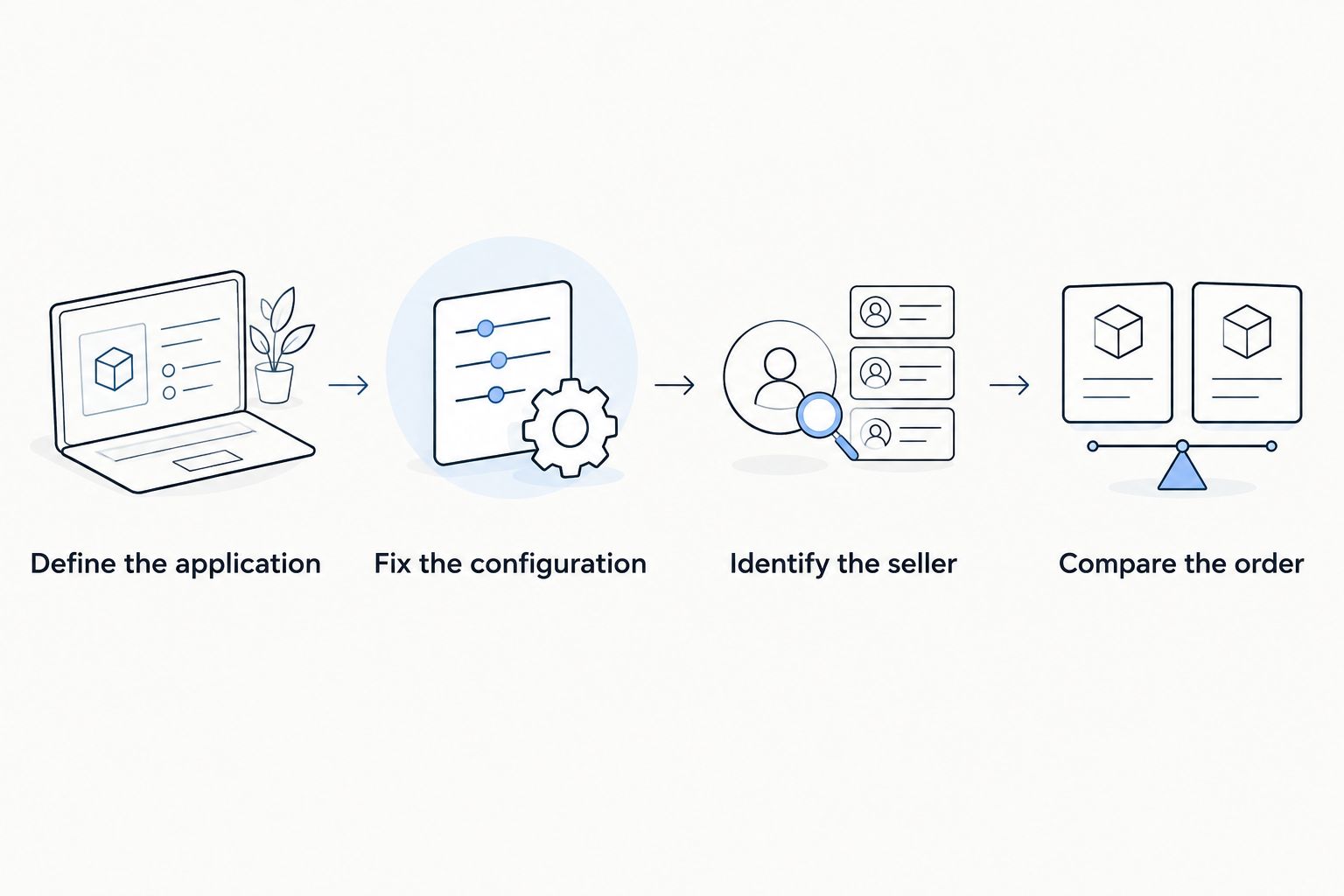
Use this sequence:
- Define the application. State the measurement or control task, installation environment and destination for the data.
- Fix the configuration. Record the manufacturer reference, regional variant, power arrangement and required accessories.
- Identify the seller. Establish the contracting seller and the route for order questions and fault claims.
- Compare the whole order. Match inclusions, destination charges and any separate operating commitments.
For an individual maker, this can be a short written list. For a larger deployment, use a controlled bill of materials so that repeat purchases preserve the intended configuration.
Avoid substituting a similar-looking model without reviewing the consequences. A different connector, power input or regional variant can change the accessories and installation work required. The right supplier is the one offering a suitable, clearly defined purchase—not simply the most familiar search result.
Final verdict: choose by the shape of your shopping list
Choose Kilo Electronics if your project centres on connected hardware
Named buyer profile: the maker, installer or project buyer assembling an IoT system across manufacturers. This is the stronger fit when your shortlist revolves around sensors, gateways, modules, antennas and connectivity accessories.
Use the focused catalogue to build the equipment list. Keep compatibility, installation and software responsibilities explicit; the dealer relationship does not replace system design.
Choose Conrad Electronic if your order spans broader technical categories
Named buyer profile: the workshop, maintenance or procurement buyer combining electronics with tools and installation supplies. Conrad is the stronger starting point when catalogue breadth is the main purchasing requirement.
Identify whether each offer is direct or marketplace-based. Compare seller terms and complete configurations rather than assuming that everything on the same website forms one uniform purchase.
| Decision | Preferred route |
|---|---|
| Focused IoT sourcing | Kilo Electronics |
| Mixed electronics and tools | Conrad Electronic |
| Hardware compatibility | Tie: exact configuration decides |
| Technical support | No general winner: establish scope |
| Lowest installed cost | No general winner: compare complete orders |
| European order suitability | Destination-specific terms decide |
FAQ
Is Kilo Electronics better than Conrad Electronic for IoT hardware?
Kilo Electronics is the more focused starting point when your shopping list centres on sensors, gateways, modules and connectivity accessories. Conrad Electronic is the broader starting point when you also need tools and general electronics supplies.
Can individuals buy from the online dealer, or is it businesses only?
Individuals can buy from the online authorised dealer, alongside makers, hobbyists, professionals and businesses. Its audience spans Europe, including the EU, UK and Switzerland.
Does buying a gateway include the software needed for an IoT system?
Buying a gateway does not by itself establish that network services or application software are included. Separate the hardware purchase from connectivity, network-server and application requirements.
Is every Conrad Electronic offer sold by Conrad itself?
No. Conrad has direct purchasing and marketplace routes, so identify the seller attached to the offer before assessing order terms and support responsibilities.
Which supplier is cheaper for a complete installation?
A complete, matched order comparison determines which supplier costs less for your installation. Include the exact equipment, accessories, destination charges and separate operating commitments rather than comparing device listings alone.
What should I prepare before requesting an IoT hardware quote?
Prepare the application requirements and an exact equipment configuration. Include regional variants, power arrangements, accessories, destination and the support scope you need.
One last thing
Before placing a 2026 order, ask someone else to read your equipment list without explanation. Can they identify the exact variant, its power source, the required accessories and where the data will go?
If not, fix the list before comparing suppliers. A precise bill of materials prevents a purchasing decision from becoming an installation problem.