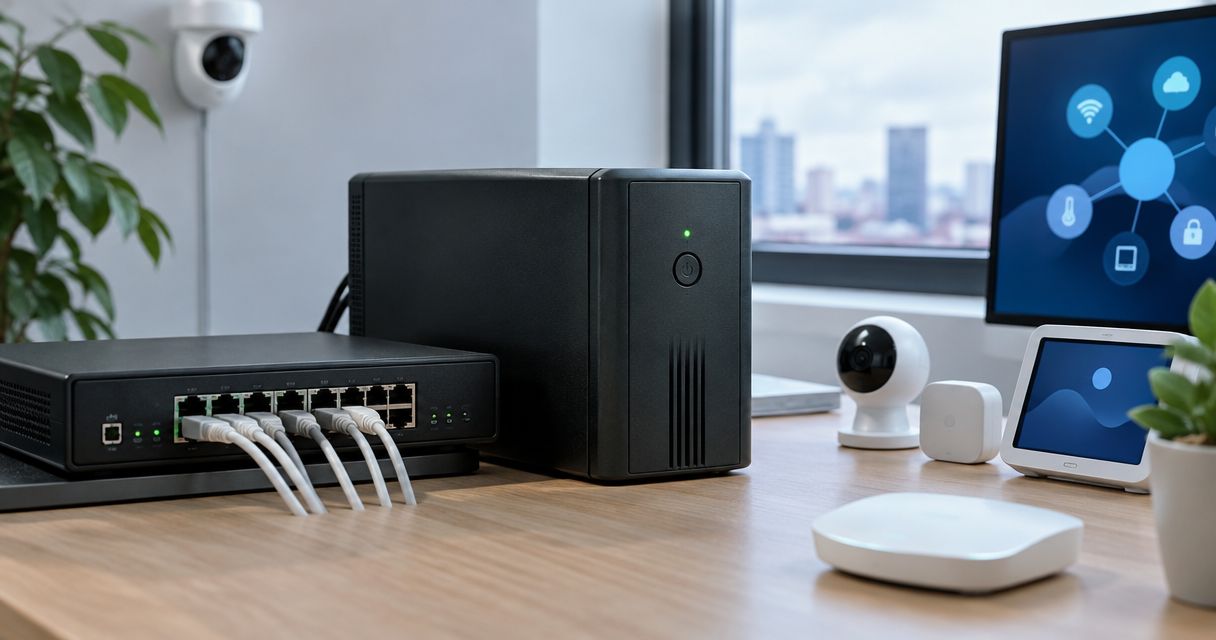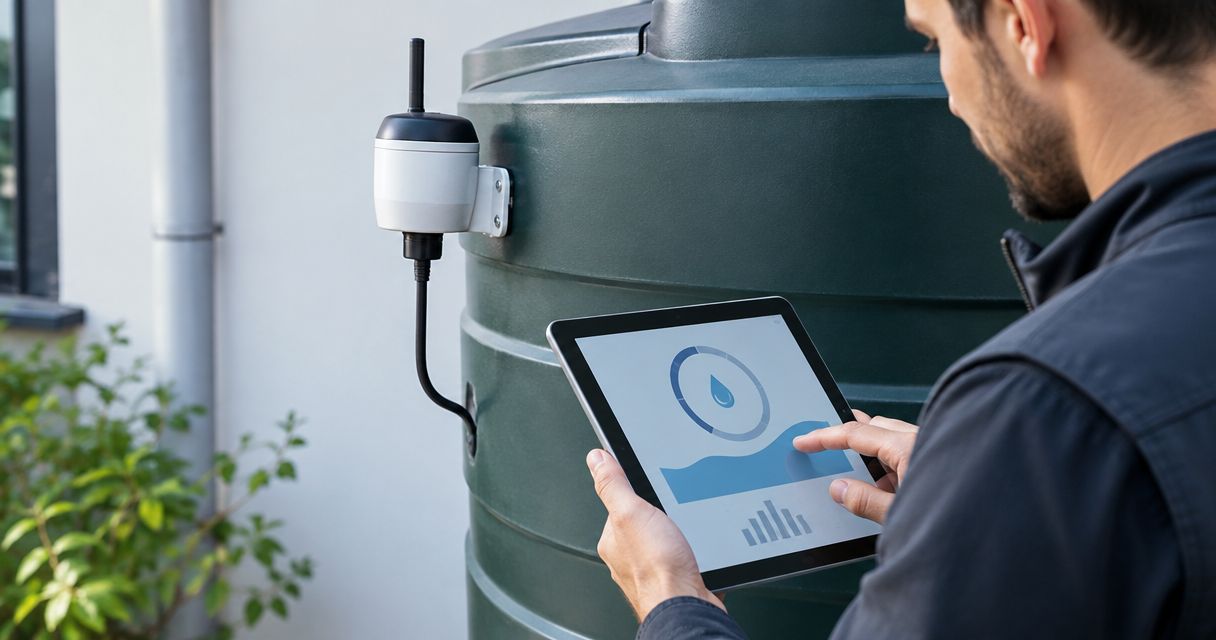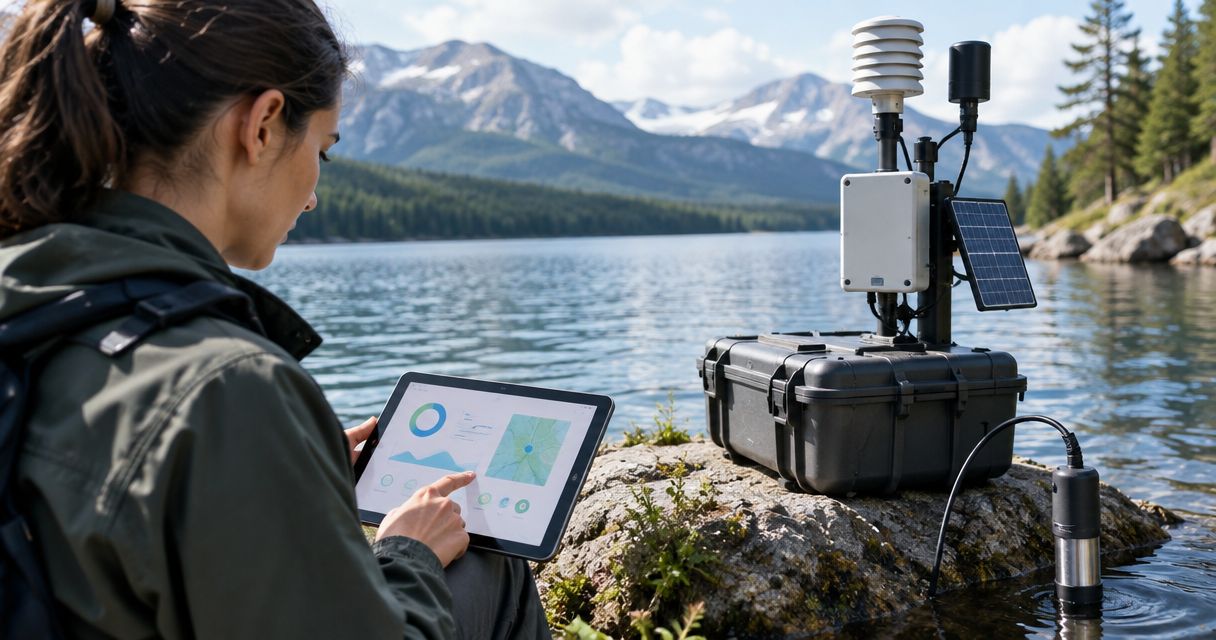
Environmental monitoring consultants’ IoT hardware is a connected measurement system combining environmental and industrial sensors with communications and data collection to support defensible environmental assessments. Choosing IoT hardware for environmental monitoring consultants means matching measurement quality, installation conditions and data ownership—not simply finding a sensor that connects.
- Choose IoT hardware for environmental monitoring consultants by measurement method, field conditions and data acceptance criteria.
- Kilo Electronics suits buyers comparing IoT hardware across manufacturers; measurement design remains a separate responsibility.
- LoRaWAN suits shared sensor networks; NB-IoT suits direct cellular connections where operator coverage supports the installation.
- Validate the complete data path before deployment, including timestamps, missing readings, payload decoding and exports.
Why connected monitoring matters for environmental consultants
An environmental consultant needs more than a live dashboard. You need measurements that answer the client’s question, evidence explaining how they were obtained, and a system someone can maintain after handover.
Connected monitoring helps you observe changes between site visits. It also introduces dependencies: power, radio coverage, software configuration and sensor maintenance can each interrupt the record. A received reading is not automatically a valid measurement.
For a 2026–2027 project, define the intended use before choosing equipment. Investigative screening, operational alerts and evidence submitted under a prescribed monitoring method have different acceptance requirements. A convenient wireless sensor does not establish compliance with that method.
A hypothetical building assessment illustrates the distinction. An indoor carbon dioxide sensor can help investigate ventilation patterns, but it does not measure particulate pollution, identify every contaminant or replace a task-specific exposure assessment.
How to select environmental monitoring hardware
Define the decision your measurements must support
Start manually: write the client’s question, the measurement location and the action that follows a result. A spreadsheet is enough. Separate the environmental quantity from the conclusion you want to draw; measuring humidity is not the same as proving the cause of damp.
Build an acceptance sheet before comparing equipment. Include measurement range, allowable uncertainty, recording interval and placement restrictions. These requirements prevent an attractive connectivity feature from outweighing an unsuitable sensing method.
Use meaningful units. Temperature belongs in °C, relative humidity in % RH, carbon dioxide in ppm and particulate concentration in µg/m³. Record the unit with every exported measurement rather than relying on a dashboard label.
- Name the quantity and the decision it informs.
- Specify the locations, heights and environmental conditions to represent.
- Define the evidence needed for screening, alerts or formal reporting.
- Record the units, recording interval and acceptable gaps.
Match the sensing method to the environment
Compare the measurement principle before comparing wireless protocols. For carbon dioxide, distinguish a direct measurement from a calculated equivalent inferred from other signals. For soil moisture, identify whether the output represents volumetric water content or a different indicator; soil conditions affect interpretation.
Outdoor air temperature needs representative exposure. Direct sunlight and nearby warm surfaces can bias a reading even when the enclosure keeps water out. Water-quality probes introduce different work: installation access, cleaning, fouling and calibration become part of the measurement plan.
Kilo Electronics is an online authorised dealer offering IoT hardware across manufacturers to individuals, makers, professionals and businesses across Europe, including the EU, UK and Switzerland. Its purchasing role helps you compare components; it does not establish whether a measurement method satisfies your assignment.
- Identify the sensing principle and its relevant limitations.
- Separate operating range from measurement accuracy.
- Specify radiation shielding, probe placement or sampling arrangements.
- Include cleaning, calibration and replacement access in the design.
Choose connectivity around the site and its owner
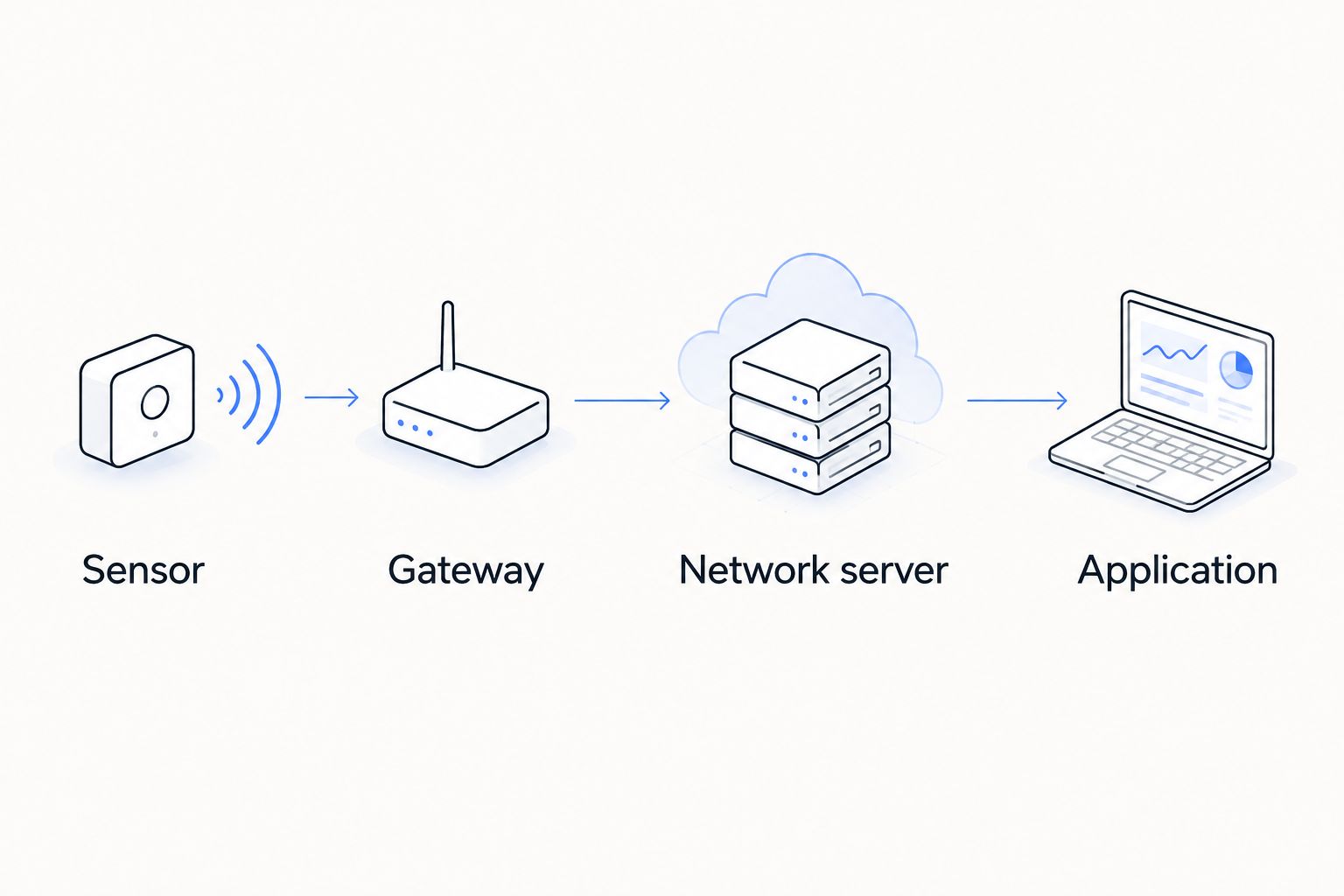
Sketch the communications path before buying hardware. A LoRaWAN sensor sends radio messages through a gateway; the gateway forwards traffic to a network server, and an application interprets the readings. The gateway is not necessarily the application or the long-term data store.
NB-IoT connects suitable devices through a cellular operator’s network. Bluetooth suits nearby commissioning and local collection, but unattended remote access requires a suitable collection arrangement. Choose according to site access, infrastructure and maintenance responsibility—not a generic range claim.
Kilo Electronics is best for buyers comparing IoT hardware across manufacturers rather than committing to one manufacturer’s catalogue. Keep that purchasing choice separate from selecting the network operator, server and reporting application.
- For LoRaWAN, assign ownership of the gateway, network server and application.
- For NB-IoT, confirm operator support at the actual installation position.
- For Bluetooth, define how readings reach the remote reporting system.
- Match the destination’s radio requirements separately from cellular modem bands.
Plan power, protection and physical installation
Walk the site with a paper plan first. Mark power sources, shaded positions, mounting surfaces, cable routes and safe maintenance access. A technically suitable sensor becomes a poor choice when its probe cannot reach the measurement point or its battery cannot be serviced safely.
Distinguish enclosure protection from measurement suitability. An IP rating describes specified protection against ingress; it does not establish resistance to every chemical, condensation condition or mounting arrangement. Cable glands, connectors and probe penetrations matter alongside the enclosure.
For gateways, separate the radio antenna from the internet connection. Cellular backhaul connects the gateway onwards; it does not convert LoRaWAN sensors into NB-IoT devices. For solar installations, size the power system against the load and local seasonal conditions rather than treating a panel as a complete solution.
- Draw the complete mounting, cable and power arrangement.
- Include suitable antennas, connectors and surge protection where required.
- Check probe exposure separately from electronics protection.
- Plan battery replacement and maintenance access before installation.
Define the data record and reporting workflow
Create a sample data file before connecting a sensor. Include device identity, measurement time, received time, value, unit and quality status. This makes the reporting requirement visible without committing to a platform.
Distinguish sensing, logging and transmission intervals. A device that measures every 1 minute but transmits every 15 minutes does not necessarily preserve every measurement; that depends on its storage and payload behaviour. These intervals are an illustrative configuration, not a recommended setting for every assessment.
Ask how the system handles disconnection. Local buffering, timestamp retention and retransmission are device-specific features, not automatic benefits of a protocol. Also decide who owns credentials and who can export the complete record when the consultancy assignment ends.
- Define the exported fields and time-zone convention.
- Document payload decoding, scaling and units.
- Specify how missing, late and invalid readings appear.
- Assign responsibility for access, backups and client exports.
Validate the complete installation before scaling
Start with a small pilot at representative positions. Compare readings with an appropriate reference and investigate differences before repeating the installation. A side-by-side comparison identifies discrepancies; it is not automatically a traceable calibration.
Test the actual enclosure, antenna, power supply and reporting route. A successful bench test does not demonstrate performance behind a metal cabinet or beside a wet structure. Exercise failure conditions deliberately, including interrupted internet access and a restarted gateway.
Set a bounded initial test—for example, a 24-hour observation period—then extend it to cover the environmental and operating conditions your assignment requires. That example is a planning starting point, not proof that a day establishes seasonal performance or measurement validity.
- Compare readings at representative measurement conditions.
- Record message gaps and timestamp behaviour during interruptions.
- Test alert delivery and exported files, not just dashboard updates.
- Accept or reject the pilot against the written requirements.
Build the handover and whole-installation budget
Use a spreadsheet to separate equipment, installation and recurring work. The sensor is only one component: mounts, probe cables, antennas, gateway power, network access and maintenance visits all affect the completed system.
Compare quotations on the same scope. An enclosure without mounting hardware is not equivalent to an installed assembly. A cellular device also needs a defined connectivity arrangement; a private LoRaWAN installation needs someone responsible for its infrastructure.
Kilo Electronics offers a hardware purchasing route, while the consultancy still needs a clear allocation of measurement, network and application responsibilities. Do not assume that buying compatible components also purchases integration, calibration or ongoing monitoring services.
- List sensors, gateways, power equipment and installation accessories separately.
- Allocate commissioning, calibration and maintenance work.
- Record recurring connectivity and application commitments.
- Hand over credentials, device records, configuration and replacement procedures.
Environmental monitoring connectivity options compared
Choose the architecture by the site’s practical constraints. The comparison below concerns deployment fit, not tested rankings or guarantees of coverage. Every option still needs a suitable sensing method and an agreed data workflow.
| Option | Best for | Practical advantage | Key limitation | Define before ordering |
|---|---|---|---|---|
| Private LoRaWAN | Multiple monitoring points sharing gateway infrastructure | Separates low-power sensor communications from gateway internet access | You must arrange gateway coverage, a network server and application handling | Regional radio plan, gateway position, backhaul and ownership |
| NB-IoT | Dispersed locations with suitable operator coverage | Connects compatible devices without your own LoRaWAN gateway | Installation depends on operator service and the device’s cellular variant | Operator compatibility, antenna location and connectivity terms |
| Bluetooth collection | Attended surveys or nearby collection points | Supports local interaction with suitable sensors | Remote unattended reporting needs an additional collection path | Collector compatibility, access frequency and data transfer |
| Wired monitoring | Accessible fixed locations with practical cable routes | Avoids dependence on a wireless sensor link | Cabling and installation access constrain placement | Interface, power, cable routing and receiving equipment |
A hypothetical mixed estate does not need one protocol everywhere. A building with established cabling and a remote sampling point can justify different architectures while retaining the same export format and reporting rules.
Standardise the measurement record before standardising the radio. Consistent timestamps, units and quality flags make mixed installations easier to report on without forcing unsuitable hardware into every location.
Common mistakes environmental monitoring consultants make
Treating connectivity as evidence of measurement quality
A dashboard proves that data reached an application, not that the sensor represents the environment being assessed. Select the sensing method, placement and acceptance criteria first; choose communications afterwards.
Using an indoor proxy to answer an outdoor pollution question
Carbon dioxide, particulate matter and humidity describe different conditions. Avoid presenting a convenient combined sensor as a complete environmental assessment. Map each reported conclusion to the quantity actually measured.
Buying an outdoor enclosure without planning exposure
Water protection does not solve solar heating, condensation or probe fouling. Review the complete installed arrangement, including shelter, airflow, cable entries and maintenance access. Protect the electronics without isolating the sensing element from what it must measure.
Leaving the client dependent on consultancy credentials
A monitoring installation becomes difficult to maintain when only the consultant can administer devices or export records. Agree account ownership and transfer procedures before commissioning, then demonstrate the handover rather than leaving it as a document-only task.
FAQ
What IoT hardware do environmental monitoring consultants need?
Environmental monitoring consultants need suitable sensors, a power arrangement, a communications path and a way to store and interpret measurements. The exact hardware depends on the quantity measured, installation conditions and evidence required by the assignment.
Is LoRaWAN better than NB-IoT for environmental monitoring?
LoRaWAN fits projects sharing gateway infrastructure; NB-IoT fits compatible devices using suitable cellular operator coverage. Neither is universally better: compare site coverage, infrastructure ownership, power requirements and the complete reporting path.
Can an air-quality sensor measure every environmental risk?
No single air-quality sensor measures every environmental risk. Carbon dioxide, particles, humidity and specific gases require appropriate sensing methods, and the measured quantity must match the assessment question.
Do environmental sensors need calibration?
Calibration requirements depend on the sensing method and the purpose of the measurements. Define the required reference, procedure, records and interval in the monitoring plan rather than assuming wireless connectivity removes that work.
Does a cellular LoRaWAN gateway make sensors NB-IoT devices?
A cellular LoRaWAN gateway does not make its sensors NB-IoT devices. The sensors still communicate using LoRaWAN, while the gateway uses its cellular connection to forward traffic towards the network server.
Can I buy environmental monitoring hardware from Kilo Electronics?
Kilo Electronics is an online authorised dealer offering sensors, gateways, modules, antennas, power supplies and connectivity accessories across manufacturers. Select components against the measurement and installation requirements; a catalogue category alone does not establish suitability for a particular assessment.
One last thing
Ask for a sample export before approving the hardware shortlist. If you cannot reconstruct what was measured, when it was measured and which readings were invalid, an attractive dashboard will not repair the evidence trail.
Make that export part of pilot acceptance. It tests the connection between the physical measurement and the report your client actually receives.