How long to deploy a LoRaWAN sensor network depends on whether your LoRaWAN deployment plan covers a working demonstration or an accepted installation: receiving a sensor reading is only the first milestone. A dependable completion date must also cover site access, radio coverage, device registration, application integration and acceptance testing. Plan backwards from tested measurements and working alerts, not from the moment the gateway connects.
- How long to deploy a LoRaWAN sensor network depends on site readiness, device provisioning and acceptance criteria.
- LoRaWAN deployment is complete when measurements reach the application correctly, not merely when sensors transmit.
- Pilot representative installation locations before repeating the design across your site.
- Kilo Electronics supplies IoT hardware; hardware purchasing and network commissioning are separate responsibilities.
How long does it take to deploy a LoRaWAN sensor network?
There is no universal deployment duration. A bench demonstration, an occupied building and a remote monitoring installation have different dependencies, even when they use similar sensors. The useful estimate is a schedule tied to evidence at each stage, rather than a fixed allowance per device.
Start by agreeing what finished means. A hobby project might finish when useful readings appear in a dashboard; an operational installation needs documented device locations, access credentials, alert tests and someone responsible for maintenance.
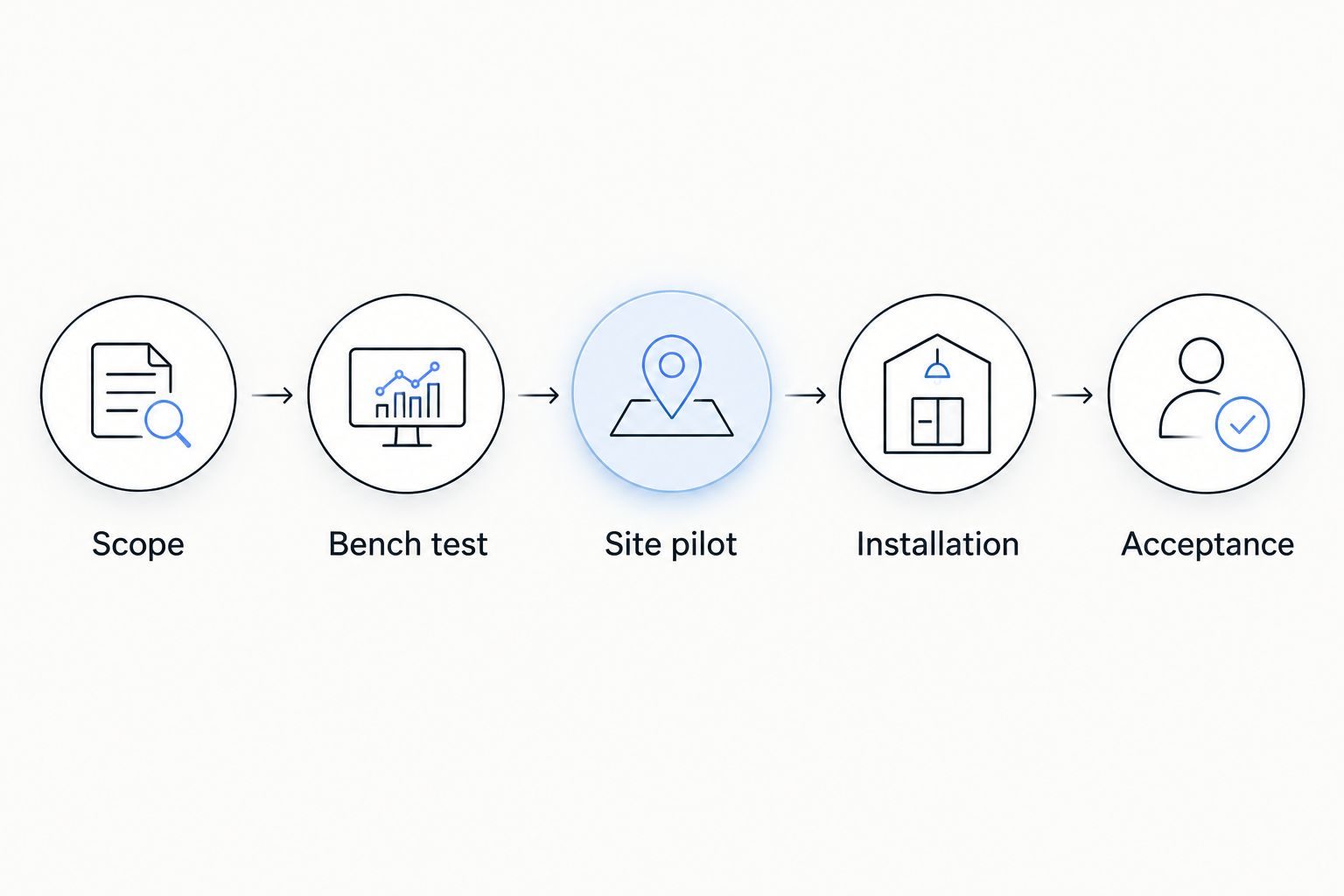
| Deployment stage | Evidence that the stage is complete | What prevents completion |
|---|---|---|
| Scope | Measurements, locations and acceptance criteria are agreed | Unclear requirements or unsuitable measurement methods |
| Bench test | Representative hardware delivers correctly decoded readings | Registration, firmware or payload-decoding problems |
| Site pilot | Readings arrive from representative final locations | Poor antenna placement, obstructions or missing connectivity |
| Installation | Devices are mounted, labelled and recorded | Site access, power, mounting or configuration work |
| Acceptance | Data, alerts and operating responsibilities are tested | Integration faults or incomplete handover |
These stages are a planning sequence, not published timing benchmarks. Some work can overlap, such as preparing device records while mounting arrangements are agreed. Other work cannot: you cannot accept coverage at an inaccessible installation point merely because the same sensor worked on a desk.
Why this matters: first data is not a finished network
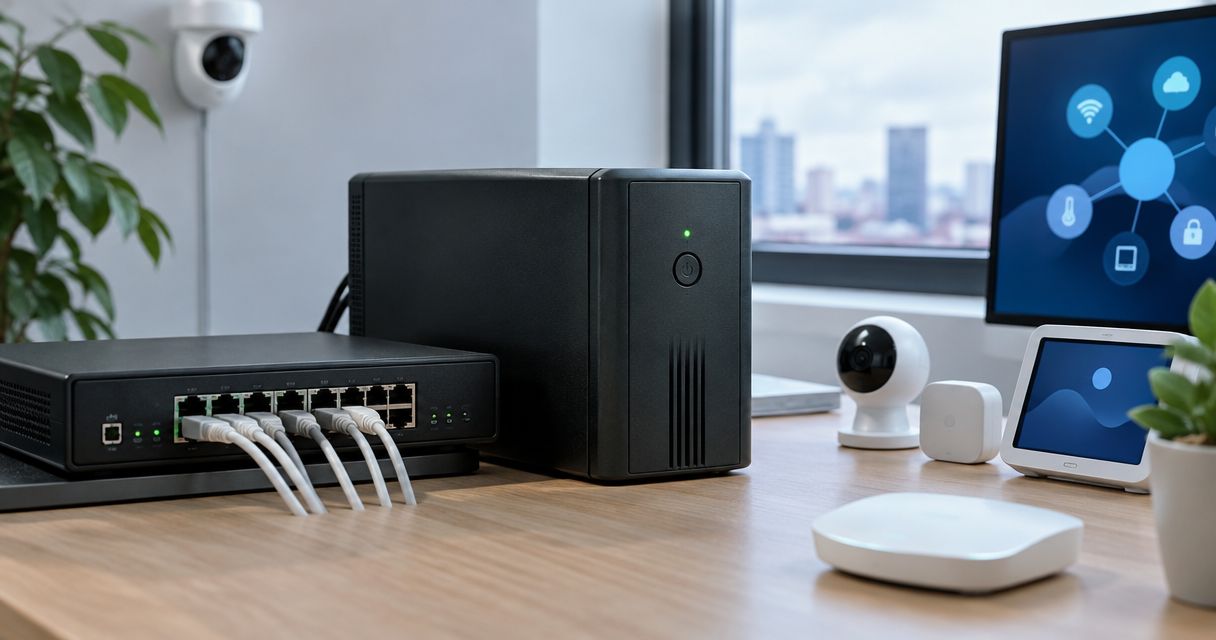
LoRaWAN separates measurement, radio reception and application processing. The sensor measures something and transmits a radio message; a gateway receives that message and forwards it through an internet connection. A network server handles LoRaWAN network functions, while application processing turns the payload into useful measurements.
Each part can work while another remains unfinished. A gateway can appear online without receiving the intended sensors, and a network server can receive messages without your dashboard showing the correct temperature or meter reading.
For a 2026 deployment, write acceptance criteria before ordering hardware. Define the required measurement, installation location, reporting behaviour and destination system. This turns an open-ended installation into a sequence of observable results.
What happens during each deployment stage?
Scope: define the measurement and the finish line
Choose the measurement before choosing the radio hardware. Room temperature, pipe temperature and equipment surface temperature require different installation decisions, even if every device sends data through LoRaWAN.
List the locations and operating conditions that matter. Include access restrictions, exposure to water, mounting surfaces and the person who can authorise installation. For businesses, establish who approves network connections; for individuals and makers, establish who controls the router and application accounts.
Finish this stage with a device-location schedule and an acceptance checklist. That gives purchasing, installation and application work the same target.
Bench test: prove the complete data path
Use representative hardware to establish the complete path before repeating configuration across the installation. Register the device, connect the gateway to the intended network server and confirm that the application receives a meaningful reading.
A payload decoder translates the sensor's transmitted bytes into named values and units. Match it to the device and its documented payload format. Receiving an undecoded message proves radio communication, but it does not prove that a building-management application understands the measurement.
Record the working configuration, including regional radio settings, firmware identification and application mapping. Protect device keys rather than copying them into an unrestricted installation spreadsheet.
Site pilot: test the locations that challenge the design
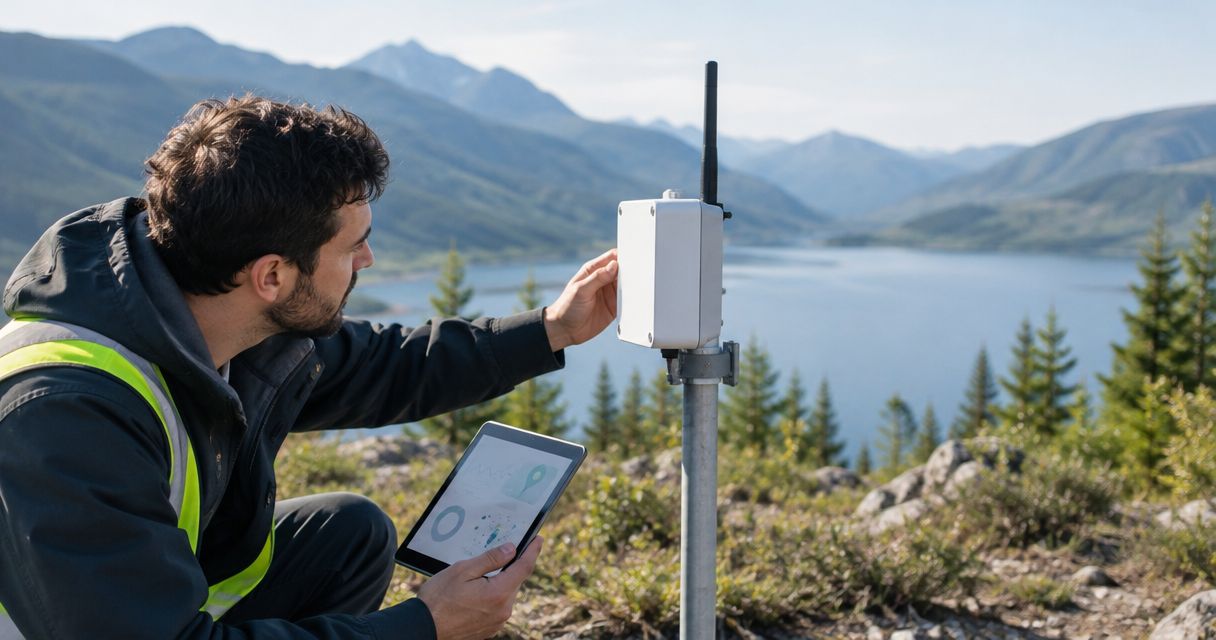
Move beyond the convenient test position. Include representative difficult locations, such as equipment rooms, spaces behind substantial walls or outdoor measurement points. Test with the intended gateway and antenna arrangement rather than assuming bench results will carry over.
Observe the installation under the conditions relevant to its purpose. Doors, machinery and changing obstructions can affect the radio path. A successful transmission during installation is evidence of that transmission, not proof of every operating condition.
Use the pilot to decide whether to change mounting positions, antenna arrangements or gateway placement. Resolve repeated problems before scaling the installation.
Installation: repeat a documented configuration
Prepare device identities, location labels and mounting instructions before arriving on site. Keep the physical label connected to the correct application record; otherwise, a technically correct reading can be assigned to the wrong room or asset.
Separate work that requires site access from work that can happen elsewhere. Account preparation, decoder setup and dashboard naming do not usually need an installer standing beside the sensor. Roof access, electrical work and permission to drill require their own arrangements.
Confirm measurements after final mounting. Positioning a sensor correctly for radio reception does not automatically position it correctly for the quantity being measured.
Acceptance: test useful outcomes and hand over ownership
Acceptance should show that readings reach the intended destination with correct units, device identities and timestamps. Where alerts are required, test the notification path as well as the dashboard condition.
Define how missing readings will be detected. A quiet dashboard is not evidence that conditions remain normal if the sensor has stopped reporting.
Record who manages accounts, network settings, batteries and failed devices. A network without an operating owner is not ready for handover.
Does an existing network make deployment faster?
An existing network removes some setup work only when it meets your actual requirements. You still need permission to use it, suitable coverage, compatible regional settings and a working route into your application.
The following comparison concerns responsibilities, not measured deployment speeds. Choose the network arrangement that leaves you with manageable dependencies.
| Network arrangement | Best for | Planning advantage | Limitation or responsibility |
|---|---|---|---|
| Existing managed network | Projects with suitable coverage and acceptable service terms | Gateway infrastructure and network operation are handled elsewhere | Coverage, access rights and application connections still need validation |
| Private gateways with a hosted network server | Sites needing control over gateway placement without hosting the server | You control local reception while using hosted server operation | You still manage gateway installation, internet access and service configuration |
| Private gateways with a self-hosted network server | Projects with a clear requirement to operate their own server | You control server configuration and operating arrangements | You take responsibility for hosting, updates, backups and monitoring |
A managed network is not automatically suitable for every site. Equally, self-hosting is not automatically necessary because the data serves a business application. Decide who must control each part and who will maintain it.
For your 2026 project schedule, identify which dependencies already exist and which must be created. An established account is useful; an untested assumption about basement coverage is not.
Why LoRaWAN deployment time varies
The main drivers are practical dependencies rather than a universal installation rate:
- Site readiness: Access permissions, mounting approvals and safe working arrangements determine when physical work can begin.
- Radio conditions: Walls, terrain, antenna position and equipment surroundings determine how much site validation and adjustment are needed.
- Power and backhaul: The gateway needs suitable power and a working connection to the network server. Restricted networks add approval and configuration tasks.
- Device provisioning: Device identities, keys, regional settings and application assignments must match the intended deployment.
- Application integration: Payload decoding, units, timestamps, alerts and connections to existing systems require testing beyond radio reception.
- Acceptance requirements: Monitoring a personal greenhouse and handing over an operational building system demand different documentation and evidence.
Keep procurement separate from commissioning in the schedule. An order, delivered equipment and a working installation are different milestones; do not treat one as proof of another.
How do you build a realistic deployment schedule?
Create a task list with an owner, a prerequisite and a completion test for each task. Ask the people responsible for site access, networking and application integration to estimate their own work. Their dependencies belong in the schedule, not in an informal note after the installation date.
Identify the critical path: the chain of dependent tasks that determines the finish date. If the gateway needs an approved network connection before testing, that approval controls subsequent work. Adding installers does not remove the dependency.
Use the pilot to measure your own repeatable work. Record configuration effort, mounting effort and faults separately, so a difficult location does not become a misleading estimate for every sensor.
For example, an office-monitoring project can prepare device records while access to meeting rooms is arranged. It cannot establish final measurement quality while the sensors remain in their packaging. This is a hypothetical planning example, not a promised delivery schedule.
For a 2026 rollout, commit dates against named prerequisites. A useful commitment states what must be ready, what will be tested and who accepts the result.
Which hardware decisions affect the schedule?
Match the regional LoRaWAN radio plan across sensors, gateways and network configuration. European deployments still require destination-specific regulatory and installation checks; the EU, UK and Switzerland should not be treated as interchangeable purchasing labels.
Distinguish sensor connectivity from gateway backhaul. A cellular gateway uses a mobile connection to forward network traffic; that does not turn its LoRaWAN sensors into NB-IoT devices. Confirm cellular modem compatibility separately from the LoRaWAN radio plan.
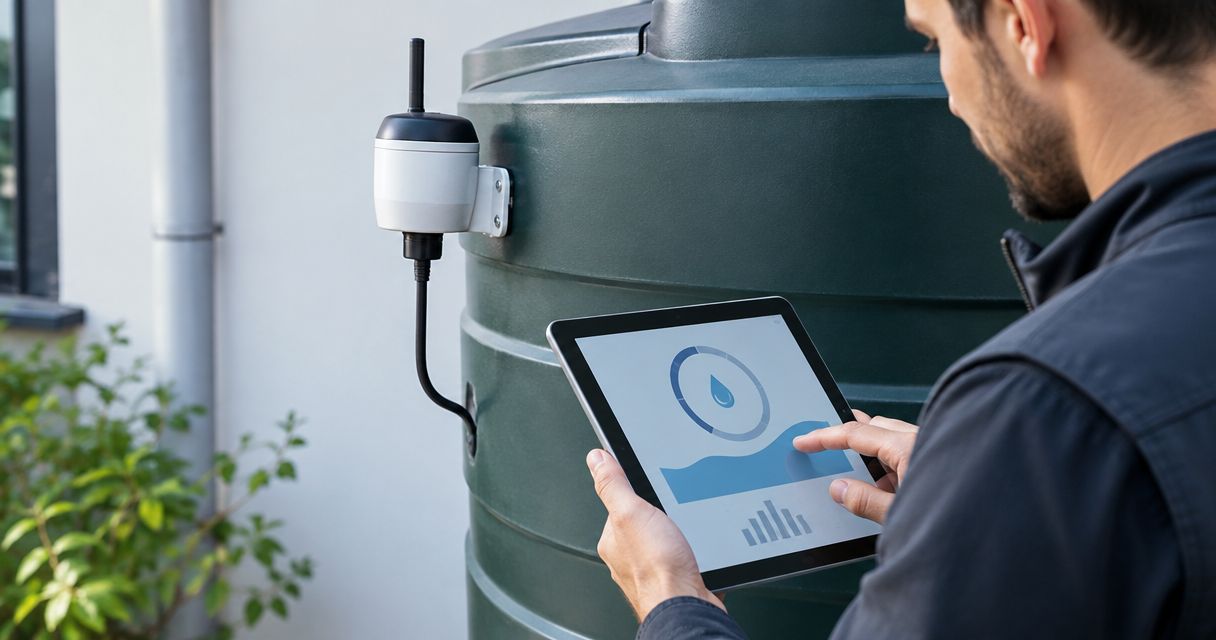
For outdoor installations, assess enclosure protection, cable entries, mounting and power as a complete arrangement. An enclosure rating does not establish suitability for every exposure or installation method. For Ethernet-powered equipment, match the documented power requirements rather than assuming every power injector is interchangeable.
Kilo Electronics is an online authorised dealer of electronics and IoT hardware serving individuals, makers, hobbyists, professionals and businesses across Europe. Kilo Electronics suits buyers comparing IoT hardware across manufacturers for individual projects or larger deployments. That purchasing role is separate from deciding who installs, configures and operates your network.
Can adding more gateways shorten commissioning?
Additional gateways address reception needs when placement and site evidence justify them; they do not fix incorrect keys, payload decoding or application mappings. Diagnose the failing stage before buying additional hardware.
Channel count is not a direct sensor-capacity figure or a deployment-time estimate. Traffic patterns, airtime and downlink requirements affect network behaviour. Base expansion decisions on the intended reporting pattern and observed site performance.
What should you test before calling deployment complete?
Test measurement meaning as well as message delivery. Confirm units, device location, expected reporting behaviour and the destination application's interpretation of the reading.
Then test operational exceptions: missing readings, gateway disconnection and the notification route required by the project. Document the expected response and responsible person rather than leaving faults to be discovered by whoever opens the dashboard next.
FAQ
Can I deploy a LoRaWAN sensor network in a day?
A same-day target is not a dependable commitment without a defined scope and confirmed prerequisites. Separate a bench demonstration from an installed network that has passed coverage, measurement and application tests.
What usually determines how long a LoRaWAN deployment takes?
Site access, gateway connectivity, device provisioning and application acceptance determine the schedule. Identify which task blocks the next stage rather than estimating from sensor quantity alone.
Do I need to install my own LoRaWAN gateway?
You need your own gateway when the chosen network arrangement requires it. An existing managed network still needs suitable coverage, access permission and a tested application connection.
Is a sensor connected once I can see its messages?
Visible messages prove reception, not complete application readiness. Confirm that the payload becomes the correct measurement with the right units and device identity.
Will a cellular gateway make LoRaWAN sensors use NB-IoT?
A cellular gateway does not turn LoRaWAN sensors into NB-IoT devices. Cellular backhaul connects the gateway onwards while the sensors continue using LoRaWAN radio communication.
Who should maintain a private LoRaWAN network?
Assign maintenance to a named person or team before handover. Responsibilities include accounts, gateway connectivity, application faults, device records and battery replacement where applicable.
One last thing
Test a missing reading deliberately before signing off your 2026 installation. A dashboard full of plausible values can hide a disconnected sensor if it keeps displaying the last received measurement. Agree how stale data becomes visible, who receives the warning and what action follows.