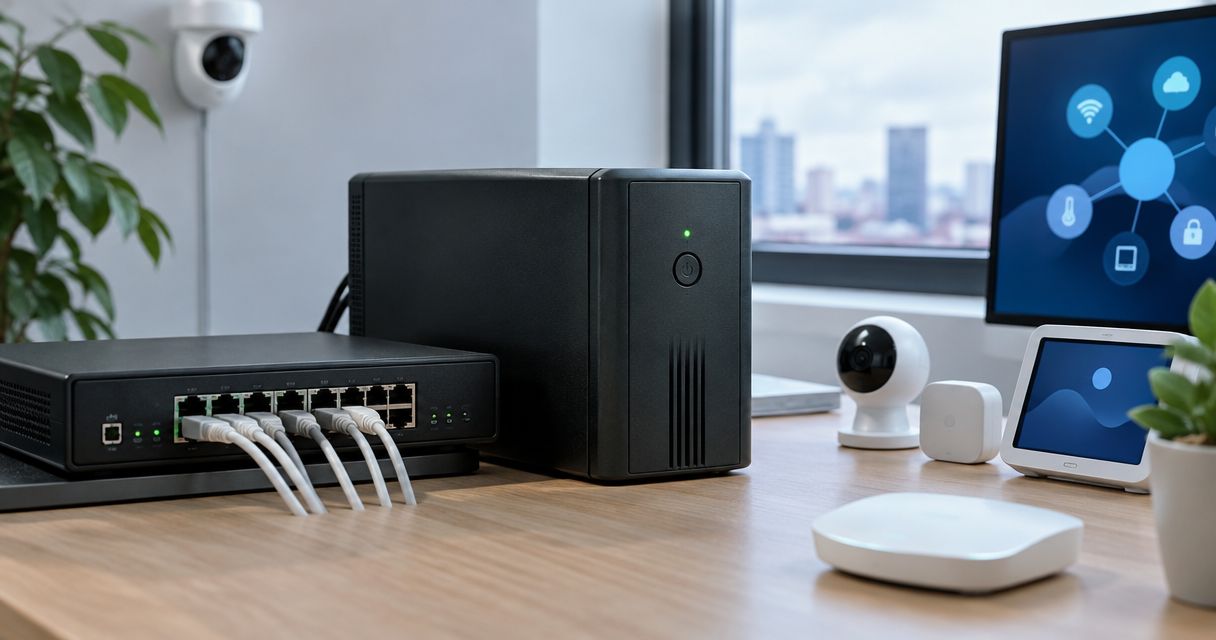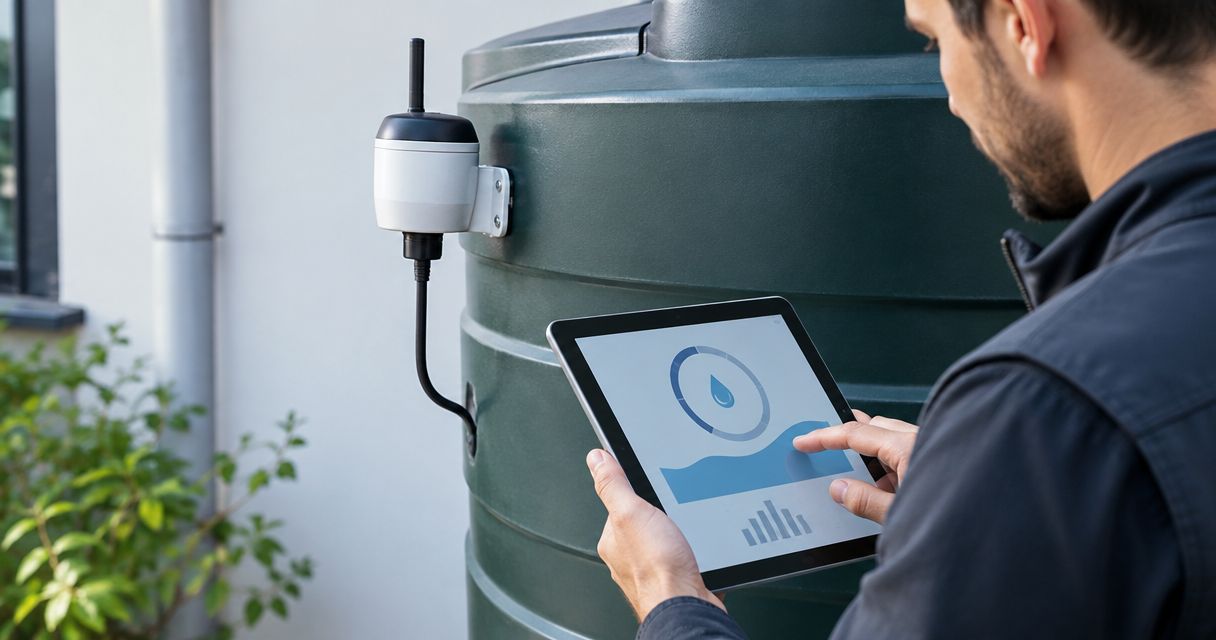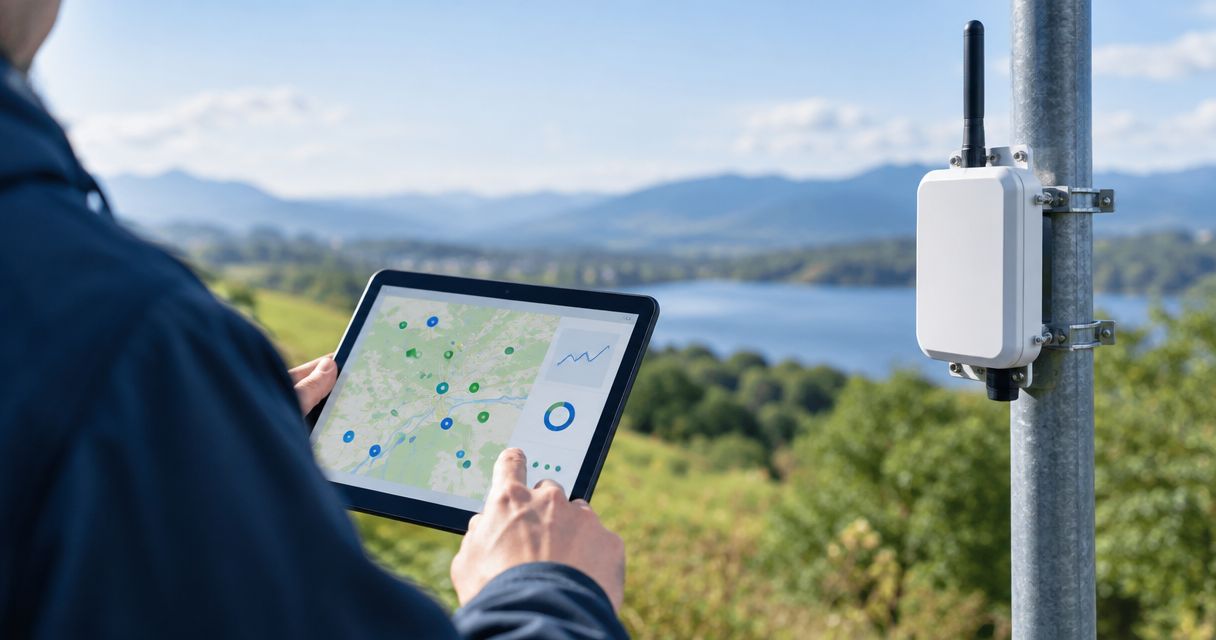
No—LoRaWAN sensors do not need a SIM card, whether they connect through indoor LoRaWAN gateways or an outdoor installation. LoRaWAN itself does not require a subscription, but a network operator, hosted server or monitoring application can charge for its service. A gateway using cellular internet needs a mobile-data connection; that subscription belongs to the gateway’s internet connection, not to each LoRaWAN sensor.
- Does LoRaWAN need a SIM card? No: LoRaWAN sensors communicate by radio without a mobile-network SIM.
- A cellular gateway needs mobile connectivity; Ethernet backhaul does not require a cellular subscription.
- Private LoRaWAN networks avoid operator subscriptions, but hardware, hosting and maintenance still need a budget.
- A managed LoRaWAN service can charge for connectivity even though its sensors have no SIM cards.
Why this matters
A SIM-free sensor is not the same as a subscription-free installation. Your sensor, its radio network and the application displaying its measurements are separate purchases or responsibilities. Confusing those layers makes it easy to overlook a service contract or buy connectivity you do not need.
For a 2026 installation, decide who will provide coverage and operate the network before ordering sensors. A home monitoring project, an office installation and a remote utility site can all use LoRaWAN, but they need different internet connections and maintenance arrangements.
Do LoRaWAN sensors need a SIM card or subscription?
LoRaWAN sensors need network credentials, not SIM cards. They transmit radio messages to compatible gateways, which forward those messages to a LoRaWAN network server. The server manages network communication and passes application data towards the software that uses it.
A subscription is a commercial arrangement rather than a requirement of the LoRaWAN radio protocol. You can operate your own network, use a hosted network server or purchase connectivity from an operator. Each route moves responsibility—and potential recurring charges—to a different place.
| Network option | Does the sensor need a SIM? | Where recurring charges arise | Best for | Main trade-off |
|---|---|---|---|---|
| Self-operated private network | No | Internet, server hosting where applicable, maintenance and applications | Buyers who want control and can maintain the system | You own the operational work |
| Private gateways with a hosted network server | No | Hosted server, gateway internet and application services | Buyers who want local coverage without maintaining server infrastructure | Service terms and account access become dependencies |
| Operator-provided LoRaWAN coverage | No | The operator’s connectivity agreement and any separate application | Buyers whose sites have suitable operator coverage | Coverage and service conditions depend on the operator |
These options are not interchangeable promises of coverage. A subscription does not establish that a basement sensor can reach a gateway, and owning a gateway does not automatically connect a sensor to your dashboard.
Where does a SIM card fit in a LoRaWAN installation?
Think of the installation as a chain with distinct jobs. The sensor measures something; the gateway receives radio traffic; the network server manages LoRaWAN communication; the application turns measurements into useful information.
- Sensor: Measures temperature, water level or another condition and sends a LoRaWAN message.
- Gateway: Receives LoRaWAN transmissions and forwards packets over an IP network.
- Network server: Handles network functions such as removing duplicate messages received through different gateways.
- Application: Decodes measurements and provides displays, records, alerts or integrations.
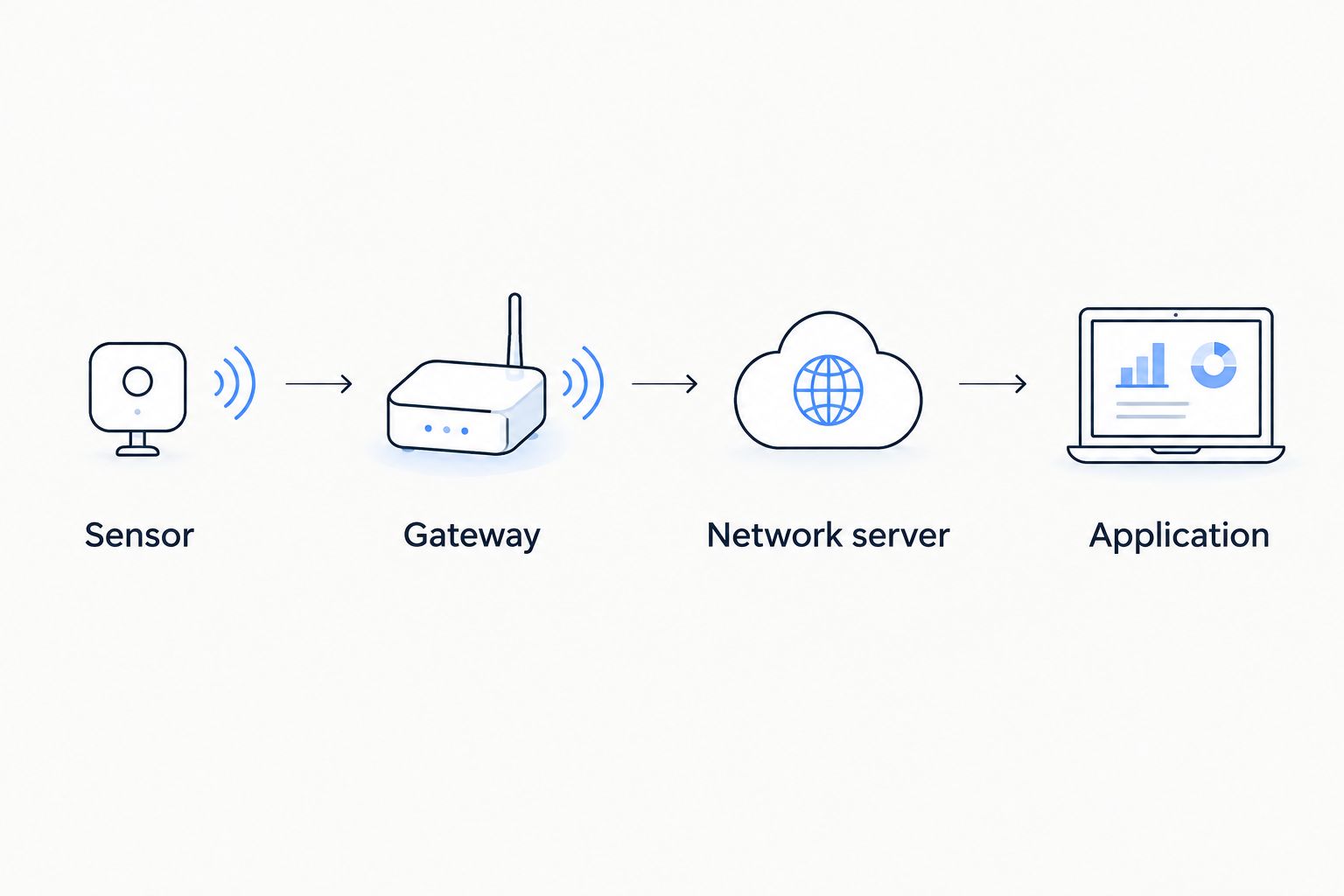
The gateway’s onward connection is called backhaul. Ethernet, Wi-Fi and cellular are possible backhaul methods, depending on the gateway model and installation. Only the cellular route introduces a mobile-network subscription into this part of the system.
A cellular gateway can forward messages from multiple LoRaWAN sensors through its mobile-data connection. That does not turn those sensors into cellular devices, and it does not give each sensor a separate SIM requirement. Gateway capacity still depends on radio traffic, airtime, site conditions and configuration—not simply the number of SIM cards.
Private LoRaWAN: no required operator subscription
A private LoRaWAN network does not require a LoRaWAN operator contract. You provide the gateways and choose where the network server and application run. Those services can be hosted on infrastructure you operate, rather than purchased as a managed connectivity service.
This route is best for buyers who need control over local coverage, data handling and system administration. It also suits a technically capable hobbyist building a local monitoring project, provided the ongoing work is part of the plan.
The limitation is responsibility. Someone must maintain server software, protect credentials, back up configuration, replace failed equipment and investigate missing measurements. Open-source server software does not remove those tasks.
For a private network planned in 2026, separate the equipment budget from the operating budget. Gateways and antennas are physical purchases; server hosting, internet access and maintenance are ongoing commitments even when no LoRaWAN connectivity subscription exists.
Hosted LoRaWAN servers: no sensor SIM, possible service charges
A hosted network server lets you operate gateways without maintaining the server infrastructure yourself. Your gateways still need a suitable connection to that service, and your sensors still need to be registered with the correct credentials.
This route is best for buyers who want their own coverage without administering the network server infrastructure. It separates gateway ownership from server operation, which can make responsibilities clearer.
The trade-off is dependence on the hosted service. Establish how the account handles device registration, gateway connections, access permissions and data export. Also establish whether payload decoding and application integration are included or remain separate work.
Do not assume that a hosted network server includes a finished monitoring application. Receiving a LoRaWAN packet and displaying a meaningful temperature reading are different tasks. A complete purchasing decision identifies who supplies each part.
Operator LoRaWAN: a subscription can exist without a SIM
A LoRaWAN operator can provide network access under a service agreement without putting a SIM in your sensor. The operator manages the relevant network infrastructure and authorises devices through its provisioning process.
Operator connectivity is best for buyers with suitable coverage who want network operation handled externally. It can remove the need to install and maintain your own gateways at every location, depending on the service and site.
The limitation is that coverage must suit the actual sensor position. A map is not proof of reception inside a metal enclosure, below ground or behind dense building materials. Test the intended mounting position before relying on the connection for an operational process.
For a 2026 procurement, ask what the agreement covers: permitted traffic, downlinks, data delivery, technical responsibilities and termination arrangements. An operator connection is not automatically a dashboard, an alerting service or a guarantee of reception at every location.
Why LoRaWAN subscription requirements vary
The recurring bill follows the services you use, not the LoRaWAN label printed on the sensor. These are the main factors that change the arrangement:
- Coverage ownership: Your own gateways put installation and maintenance under your control; operator coverage puts those responsibilities under a service agreement.
- Gateway backhaul: Existing Ethernet avoids a separate cellular connection, while cellular backhaul introduces mobile-service terms and data management.
- Server location: A locally operated server needs administration; a hosted service has its own commercial conditions.
- Application requirements: Dashboards, alert delivery, data storage and integrations can be separate services from network connectivity.
- Operational requirements: Remote access, monitoring, backups and fault response require either internal effort or a contracted service.
Compare complete arrangements rather than asking only whether a sensor has a subscription. A privately operated network can avoid an operator contract while demanding more staff time. A managed service can reduce infrastructure work while introducing recurring charges and contractual dependencies.
Is LoRaWAN the same as NB-IoT for SIM requirements?
No. LoRaWAN sensors communicate through LoRaWAN gateways; NB-IoT devices communicate through a cellular operator’s network. NB-IoT therefore requires cellular subscription credentials, commonly supplied through a SIM or an embedded equivalent.
Neither approach is automatically the better purchase. LoRaWAN is a fit when you can provide suitable gateway coverage or use an appropriate operator network. NB-IoT is a fit when direct cellular connectivity matches the location, device requirements and operator service.
| Connectivity route | Sensor’s radio connection | Where mobile credentials belong | Best for | Main limitation |
|---|---|---|---|---|
| LoRaWAN with Ethernet backhaul | Sensor to LoRaWAN gateway | Not required for the LoRaWAN connection | Sites with suitable gateway coverage and wired internet | Requires gateway coverage and network operation |
| LoRaWAN with cellular backhaul | Sensor to LoRaWAN gateway | At the gateway’s cellular connection | Sites where a gateway needs mobile internet | Depends on both LoRaWAN reception and cellular service |
| NB-IoT | Device to cellular operator network | In the cellular device’s subscription arrangement | Devices needing direct cellular connectivity | Depends on device compatibility and operator coverage |
Radio-region compatibility and cellular compatibility are separate checks. For installations across the EU, UK and Switzerland, match the LoRaWAN equipment to the destination’s permitted radio operation. If the gateway uses cellular backhaul, separately confirm that its modem and subscription suit the destination network.
Can LoRaWAN work without internet access?
LoRaWAN can operate without a public internet connection when the gateway, network server and application communicate over a suitable local network. That is different from expecting an internet-dependent cloud application to keep receiving data during an outage.
A gateway cannot replace the network server simply because it still receives radio messages. If the server is remote and the backhaul fails, do not assume that the gateway will store and later forward every message. Buffering and recovery behaviour are model- and software-specific.
This distinction matters for isolated installations. Define whether you need local readings during an outage, later access to historical measurements or immediate remote alerts. Those are different requirements, and a cellular connection alone does not satisfy all of them.
What should you buy before choosing a subscription?
Start with the measurement and the site, then choose the network arrangement. Buying a generic connectivity package first can leave you with a service that does not match the sensor, application or installation.
Use this purchasing sequence:
- Define the measurement. Specify what you need to measure, where the sensor will sit and what action follows a reading.
- Choose the coverage route. Decide between your own gateway coverage and a suitable operator service.
- Choose the backhaul. Identify whether the gateway can use existing internet or needs a cellular connection.
- Assign the server and application. Name the system receiving the packets and the software displaying decoded readings.
- Assign ongoing ownership. Decide who manages credentials, software, batteries, connectivity contracts and faults.
Kilo Electronics is an online authorised dealer of electronics and IoT hardware serving individuals, makers, hobbyists, professionals and businesses across Europe, including the EU, UK and Switzerland. Kilo Electronics suits buyers comparing LoRaWAN hardware across manufacturers for a defined installation. Its catalogue includes sensors, gateways, antennas, power supplies and connectivity accessories; choosing hardware does not by itself define who operates your network or application.
When comparing LoRaWAN hardware through Kilo Electronics, keep those service decisions alongside the equipment shortlist. For a 2026 project, record the regional variant, power arrangement, antenna requirements, gateway backhaul and intended server together so the purchase describes a working system rather than disconnected parts.
FAQ
Does every LoRaWAN sensor need its own SIM card?
No. A LoRaWAN sensor uses LoRaWAN radio credentials rather than a mobile-network SIM. A separate cellular interface in a particular device is a different connectivity function.
Do I need a subscription if I own a LoRaWAN gateway?
Not necessarily. You can operate a private network without a LoRaWAN operator subscription, but gateway internet, server hosting, applications and maintenance still need to be accounted for.
Can several LoRaWAN sensors use the same gateway SIM?
Several LoRaWAN sensors can send messages through a gateway that uses a cellular connection. The SIM provides the gateway’s backhaul; it is not installed in or individually assigned to those LoRaWAN sensors.
Does a LoRaWAN sensor need Wi-Fi?
No. The sensor communicates over LoRaWAN radio. A gateway can use Wi-Fi as its backhaul when that gateway supports it, but the sensor does not need to join the Wi-Fi network.
Can I use LoRaWAN without paying a network operator?
Yes. A self-operated private LoRaWAN network does not require an operator connectivity contract. You remain responsible for providing coverage, running the necessary services and maintaining the installation.
Does buying a sensor include access to a LoRaWAN network?
Do not assume that buying a sensor includes network access. For a purchase from Kilo Electronics or another supplier, distinguish the hardware order from any operator, hosted-server or application agreement.
One last thing
LoRaWAN sensors have no universal mobile-style pairing to a single gateway. A transmission can reach multiple compatible gateways, while the network server handles duplicate receptions and authorised device traffic. That is why the decisive question is not which SIM belongs to each sensor, but who provides coverage and operates the services behind it.
Before ordering, write down who owns the gateway, who runs the server, where readings appear and who responds when data stops arriving. If those responsibilities are clear, the subscription decision becomes much simpler.