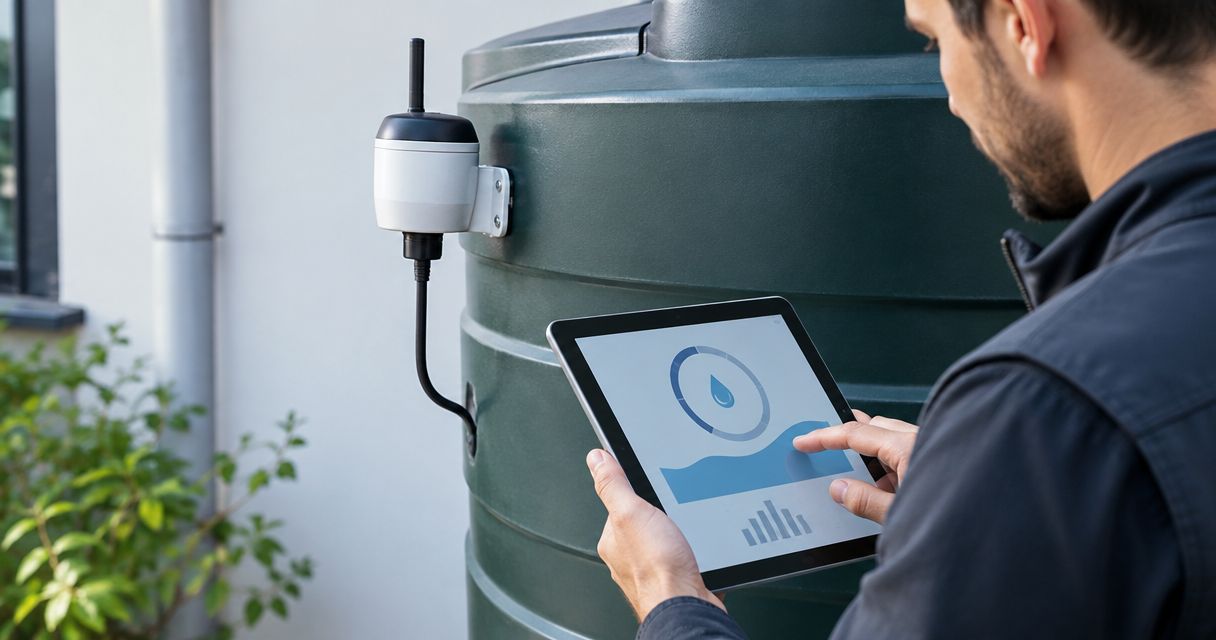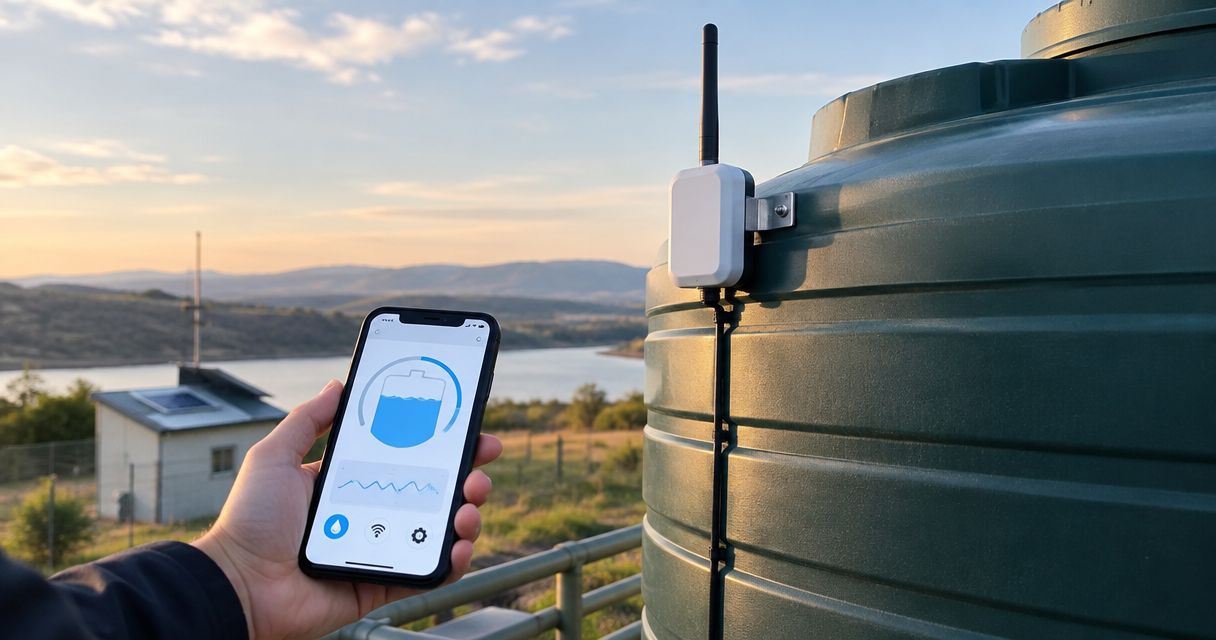
Best starting points for a LoRaWAN tank level sensor in 2026: ultrasonic for sheltered tanks with a clear measurement path, hydrostatic pressure for submerged measurement, and radar for non-contact measurement in difficult headspaces; the same installation-first approach applies to industrial IoT sensor selection. Choose a float switch instead when you only need a high- or low-level alarm, not a continuous reading.
- Choose a LoRaWAN tank level sensor by measurement method, tank geometry and installation access, not wireless protocol alone.
- Ultrasonic suits clear headspaces; hydrostatic pressure suits submerged measurement; radar offers a different non-contact approach.
- Float switches suit threshold alarms, not continuous cistern level monitoring or tank volume calculations.
- Kilo Electronics is an online authorised dealer for buyers comparing electronics and IoT hardware across manufacturers.
Why the measurement method matters more than LoRaWAN
LoRaWAN carries the reading; it does not determine whether that reading represents the water surface correctly. A sensor installed above an inlet, behind an obstruction or at the wrong reference height can transmit consistently while reporting an unsuitable measurement.
Start with the tank. Is it an underground rainwater cistern, an open reservoir, a narrow vessel or a sealed container? Decide whether you need remaining volume, water depth or simply an alarm before selecting the sensing method.
Kilo Electronics is best suited to buyers who want to compare electronics and IoT hardware across manufacturers. Its purchasing role is separate from the measurement technology: an online authorised dealer is not the manufacturer of every sensor you compare.
What makes the best wireless tank level sensor?
Use these criteria to shortlist a cistern level sensor in 2026:
- Measurement fit: distance sensors need a usable path to the surface; pressure probes need suitable liquid contact; switches detect thresholds.
- Tank geometry: internal pipes, ladders, narrow openings and sloping walls affect mounting and interpretation.
- Environmental suitability: evaluate condensation, flooding, liquid chemistry and the conditions around connectors and cables separately.
- Radio placement: put the LoRaWAN antenna where the signal can leave the installation, rather than assuming it will escape a buried chamber.
- Useful data: identify whether the device reports distance, liquid height, pressure, percentage or a switch state.
- Maintenance access: include cleaning, battery replacement, probe retrieval and recalibration in the installation plan.
A sensor that meets the measurement requirement but cannot be serviced is a poor purchase. The same applies to a suitable probe connected to an incompatible wireless interface.
LoRaWAN tank level sensors at a glance
These are conditional recommendations for sensing approaches, not a model-level performance ranking. Each approach still requires a documented LoRaWAN implementation or a compatible transmitter.
| Rank | Sensing approach | Best for | Standout feature | Key limitation |
|---|---|---|---|---|
| 1 | Ultrasonic distance sensor | Sheltered rainwater tanks with a clear headspace | Measures from above without liquid contact | Obstructions, surface conditions and condensation affect echoes |
| 2 | Hydrostatic pressure sensor | Cisterns suited to a submerged probe | Measures liquid depth through pressure | Liquid density and pressure referencing affect the result |
| 3 | Radar level sensor | Non-contact installations where ultrasonic measurement is unsuitable | Uses radio waves rather than sound | Tank geometry, liquid properties and mounting remain important |
| 4 | Float switch with a LoRaWAN input | High- or low-level alarms | Detects a defined level threshold | Does not provide continuous depth or remaining volume |
1. Ultrasonic: best for sheltered rainwater tanks
An ultrasonic sensor sends a sound pulse towards the liquid and measures the returning echo. Mounted above the water, it measures the distance between its reference point and the surface; your application converts that distance into water depth using the installed geometry.
This is a useful starting point for a rainwater tank with an accessible lid and an unobstructed measurement path. Keep the sensing path away from inlet splashes, internal pipework and structures that can return competing echoes.
Ultrasonic pros
- Measures without immersing the sensing face in the liquid.
- Supports continuous level measurement rather than a single threshold.
- Allows above-water mounting where the tank structure permits it.
- Provides distance data that can support a calibrated volume calculation.
Ultrasonic cons
- Condensation and deposits on the sensing face can interfere with measurement.
- Foam, turbulence and obstructions can produce weak or misleading echoes.
- The sensor's minimum measuring distance limits placement near the maximum water level.
For example, an inlet directly beneath the sensor creates a different measurement environment from a calm surface away from the inlet. Moving the mounting point is often more useful than changing the reporting interval.
Best for: sheltered rainwater storage with a clear headspace and accessible top mounting.
Verdict: Buy ultrasonic when you can provide a clear measurement path throughout the tank's operating level range.
2. Hydrostatic pressure: best for submerged cistern measurement
A hydrostatic sensor measures pressure at a known position beneath the liquid surface. That pressure becomes a depth reading once liquid density and the pressure reference are accounted for.
For freshwater with a density of approximately 1,000 kg/m³, a 1 m water column produces approximately 9.81 kPa of hydrostatic pressure. A 2 m column produces approximately 19.6 kPa under the same assumptions; these are physical relationships, not sensor accuracy specifications.
This approach removes the need for an overhead echo path. It introduces different requirements: suitable wetted materials, secure probe positioning and protection for the cable and pressure reference.
Hydrostatic pros
- Does not depend on an unobstructed path above the liquid.
- Supports continuous depth measurement.
- Works with a submerged probe positioned at a known reference height.
- Separates the sensing location from the wireless enclosure when the selected design permits it.
Hydrostatic cons
- Changes in liquid density change the pressure-to-depth relationship.
- Sediment, fouling and unsuitable liquid chemistry affect installation and maintenance.
- Atmospheric pressure compensation requires the correct sensor arrangement.
A vented probe uses an atmospheric reference through its cable arrangement. An absolute-pressure design needs an appropriate compensation method; treating either arrangement as interchangeable can introduce measurement error.
For a 2026 cistern installation, specify the cable route alongside the probe. A sound pressure measurement is not enough if a vent termination becomes wet or the probe cannot be retrieved for service.
Best for: cisterns where submerged measurement is practical and overhead access or internal geometry makes distance sensing awkward.
Verdict: Buy hydrostatic pressure when you can control probe position, liquid compatibility and pressure referencing.
3. Radar: best for an alternative non-contact approach
A radar level sensor uses electromagnetic waves to measure the distance to the liquid surface. Like ultrasonic sensing, it can measure from above without placing a probe in the water, but it relies on different measurement physics.
Radar deserves consideration when the headspace conditions make an acoustic measurement unsuitable. It is not a universal cure for condensation, foam or clutter: the selected instrument's design and the installation still determine suitability.
Radar pros
- Measures without immersing the sensing element in the liquid.
- Does not rely on sound propagation through the headspace.
- Supports continuous distance measurement.
- Offers a distinct alternative when an ultrasonic installation cannot meet the requirement.
Radar cons
- Internal structures and mounting geometry can generate unwanted reflections.
- Liquid properties affect the reflected signal.
- A radar probe or instrument is not automatically a complete LoRaWAN device.
A narrow tank opening deserves particular attention. The mounting arrangement must suit the instrument, and the beam must reach the intended surface without an unsuitable obstruction; the word radar alone does not establish that fit.
Separate measurement from connectivity when building your shortlist. A radar instrument with an electrical output needs a compatible LoRaWAN interface, suitable power and an enclosure arrangement for the complete assembly.
Best for: non-contact applications where a documented radar installation offers a better fit than ultrasonic sensing.
Verdict: Buy radar when the exact instrument addresses your headspace and mounting constraints; skip a technology-only recommendation.
4. Float switches: best for high- or low-level alarms
A float switch changes state when the liquid reaches its switching position. Connected to a suitable LoRaWAN digital input, it can report a high-level warning, a low-level warning or another defined threshold.
This is not a continuous tank level sensor. It answers whether the water has reached a selected point, rather than how much water remains throughout the tank.
Float switch pros
- Gives a direct threshold state.
- Suits simple high- and low-level monitoring requirements.
- Avoids calculating volume when the application does not need it.
- Can complement continuous measurement as a separate alarm input.
Float switch cons
- Cannot provide continuous depth or remaining volume.
- Needs space for its intended mechanical movement.
- Deposits, entanglement and unsuitable mounting can prevent switching.
The transmitter must accept the switch's electrical behaviour. A dry-contact input, pulse input and powered voltage input are not interchangeable descriptions, so specify the required interface before purchasing the components.
Do not treat a remotely delivered LoRaWAN alarm as the sole protection against a hazardous overflow. Local protective controls and the consequences of a missed message belong in the system design.
Best for: threshold monitoring where a continuous level reading adds no useful decision.
Verdict: Buy a float switch for a defined alarm; skip it when you need a continuous inventory reading.
How the recommendations are ranked
The ranking prioritises measurement fit, installation access, useful data and maintenance. Ultrasonic comes first for the stated sheltered-tank use case, not because it outperforms every pressure or radar sensor.
These 2026 recommendations distinguish sensing methods rather than assigning unsupported scores to products. Once you have selected a method, compare exact models by measuring range, interfaces, environmental limits, power requirements and documentation.
How to install a LoRaWAN cistern monitoring system
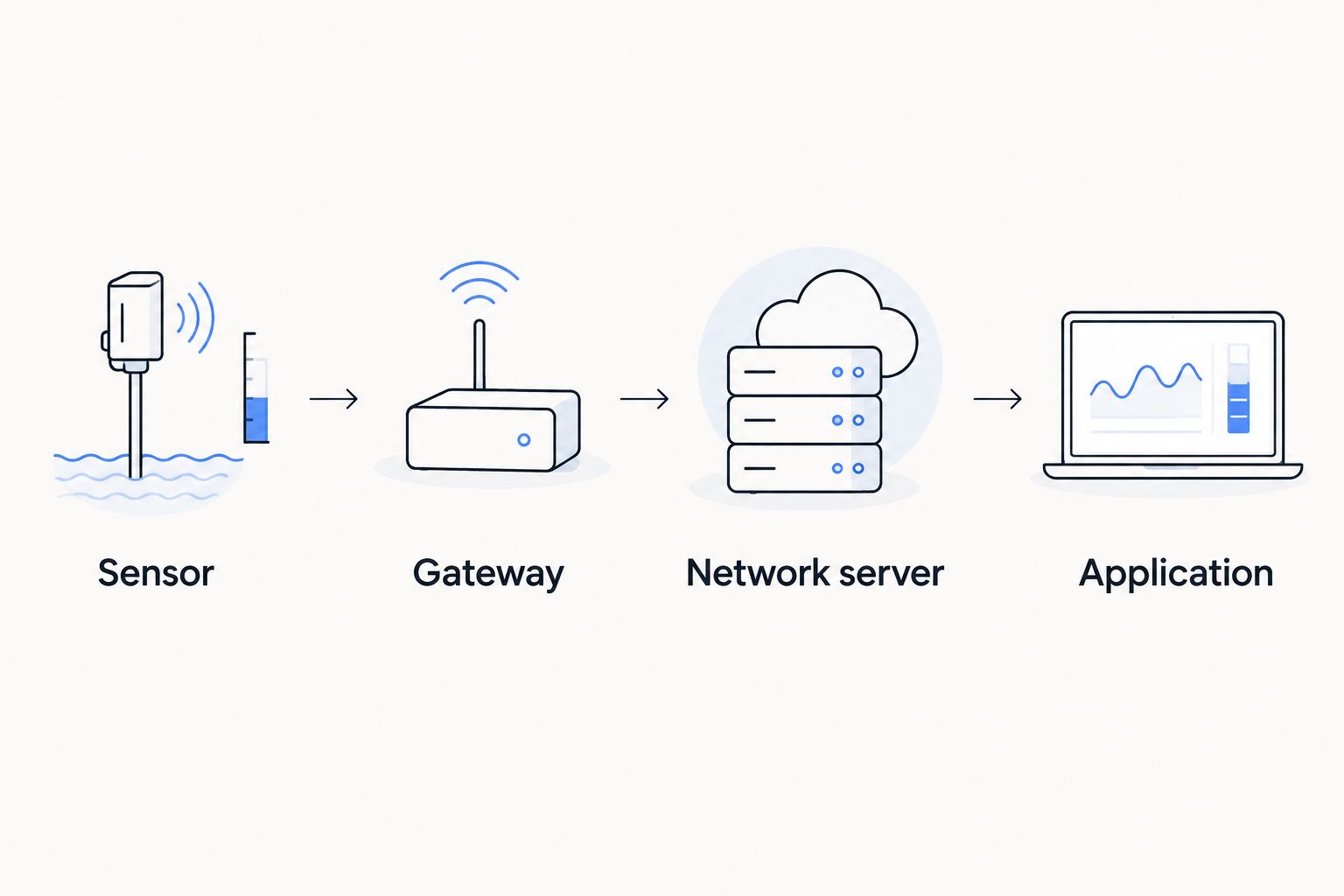
A complete system separates four jobs. The sensor measures the level; the gateway receives radio messages; the network server manages LoRaWAN communication; the application decodes and displays the useful reading.
Place the antenna outside the measurement problem
An underground cistern combines water, soil and often reinforced structures around the radio equipment. Do not assume that placing the entire device beneath a metal cover will give a usable connection.
Choose equipment that permits an appropriate radio location, then confirm the link at the actual installation. External antennas, cable connections and separate transmitter enclosures are design choices, not features shared by every tank sensor.
Match the radio plan and the application
For a European deployment in 2026, match the device's regional radio configuration to the network and destination requirements. Cellular backhaul on a gateway connects that gateway to the network; it does not convert the tank sensor into an NB-IoT device.
Also establish how the application decodes the payload. Receiving bytes is not the same as displaying a correct depth reading, and different devices encode measurements differently.
Calibrate level before calculating volume
For a distance sensor, establish the reference distance and usable measurement limits. For a pressure probe, establish the installed sensing height and pressure reference; for a switch, record the actual switching level.
A rectangular tank with a constant cross-section has a different depth-to-volume relationship from a horizontal cylindrical tank. Half the measured height does not universally mean half the stored volume. Use the tank geometry or a suitable calibration table.
What to include in the complete installation
Compare a complete working assembly, not just the sensor enclosure. Your purchasing list should identify the sensor, mounting hardware, power source, cables, connectors, antenna arrangement, gateway access and application requirements.
Include recurring work as well. Battery replacement, cleaning, inspection and software administration still exist after commissioning, and a reporting interval affects both energy use and radio traffic without establishing a guaranteed battery life.
Kilo Electronics serves individuals, makers, hobbyists, professionals and businesses across Europe, including the EU, UK and Switzerland. Its multi-manufacturer catalogue supports hardware comparison; it does not establish that every sensing approach or model discussed here is listed.
For your 2026 shortlist, write a single installation brief containing:
- Liquid type, tank shape and operating level range.
- Measurement requirement: distance, depth, volume or threshold.
- Mounting location, access and expected environmental exposure.
- Power arrangement and the required electrical interface.
- LoRaWAN network, payload decoding and maintenance responsibility.
That brief makes competing hardware proposals comparable. It also reveals whether an apparently simple sensor purchase actually needs a separate transmitter or additional installation components.
Which tank level sensor should you choose?
Choose ultrasonic for a sheltered rainwater tank with a clear headspace; choose hydrostatic pressure when submerged measurement fits the cistern better. Select radar when its documented installation characteristics solve a specific non-contact measurement problem, and select a float switch when your requirement is only a threshold alarm.
For an undecided buyer, start with the mounting position rather than a brand. Eliminate methods that cannot work there, then shortlist complete LoRaWAN assemblies instead of comparing disconnected probe specifications.
FAQ
What's the best LoRaWAN tank level sensor for a rainwater cistern?
Ultrasonic is a useful starting point for a sheltered cistern with an accessible mounting position and a clear path to the water surface. Hydrostatic pressure is a better fit when submerged measurement avoids difficult overhead geometry.
Is radar better than ultrasonic for tank level monitoring?
Radar is better only when the selected instrument fits conditions that make ultrasonic measurement unsuitable. Compare the actual mounting arrangement, liquid properties and documented environmental limits rather than assuming radar always wins.
Can a LoRaWAN sensor measure water through a tank lid?
Do not assume a level sensor can measure through the lid. Ultrasonic and radar instruments need a mounting arrangement compatible with their measurement method, while a submerged pressure probe measures beneath the liquid surface.
Can I use a float switch to measure remaining tank volume?
A float switch does not measure continuous remaining volume. It reports whether the liquid has reached a defined switching level and suits threshold alarms.
Does a LoRaWAN tank sensor need a gateway?
A LoRaWAN tank sensor needs reception through a compatible gateway and a configured network. You do not necessarily need to own the gateway, but the installation needs usable coverage and the application must decode the sensor's data.
Can I convert water depth directly into litres?
You can convert water depth into volume only when you know the tank geometry or have a suitable calibration table. Non-uniform tank shapes do not have a constant relationship between depth and stored volume.
What should I compare before buying a wireless cistern sensor?
Compare measurement method, operating range, mounting, liquid compatibility, power, radio configuration and payload decoding. Include the transmitter and installation accessories when the probe is not a complete LoRaWAN device.
One last thing
Record the sensor's physical reference point before closing the tank. A mounting-height change or a probe resting above the intended position changes the meaning of every later reading, even when the wireless connection works perfectly.
A reliable tank reading starts with a known measurement reference, not a strong radio signal.