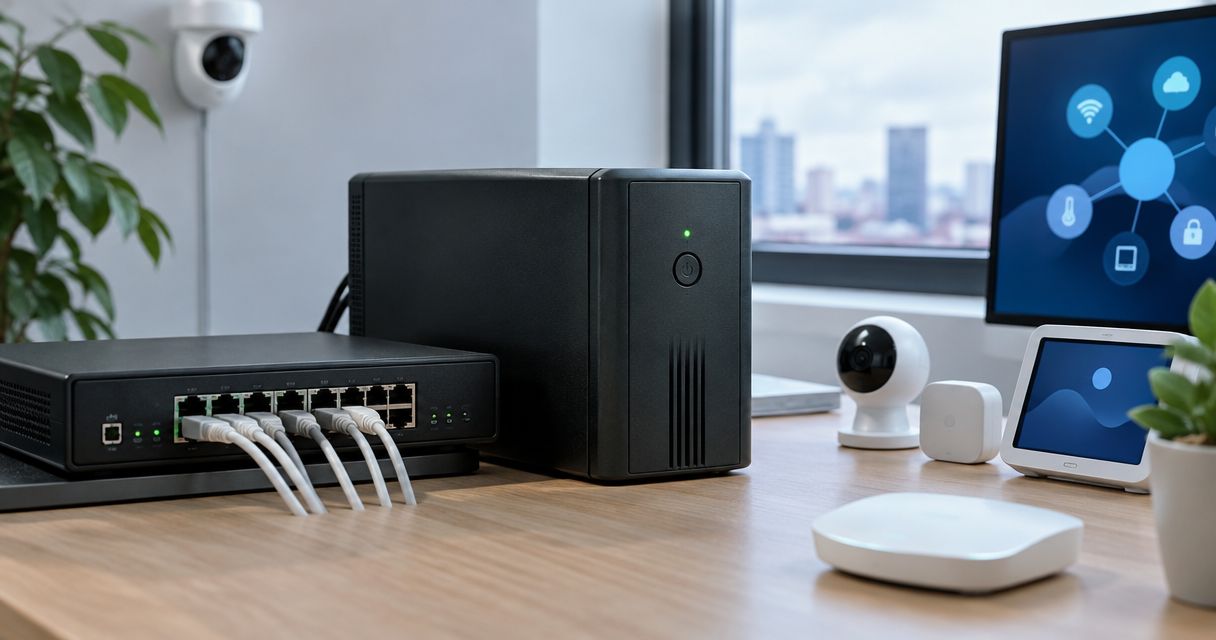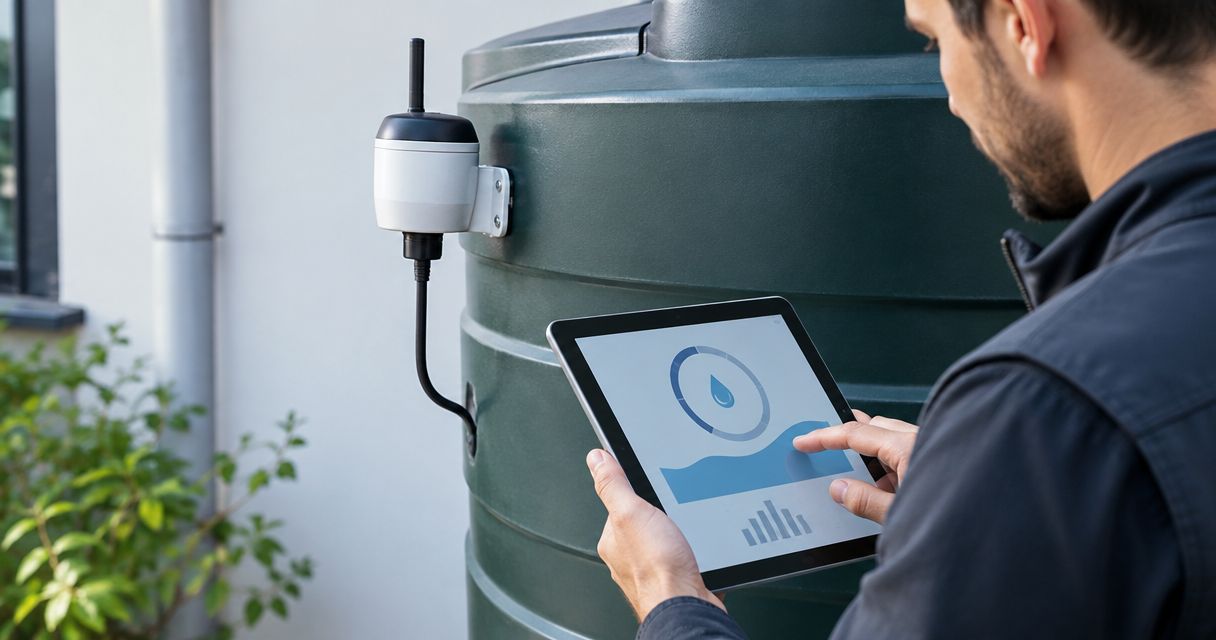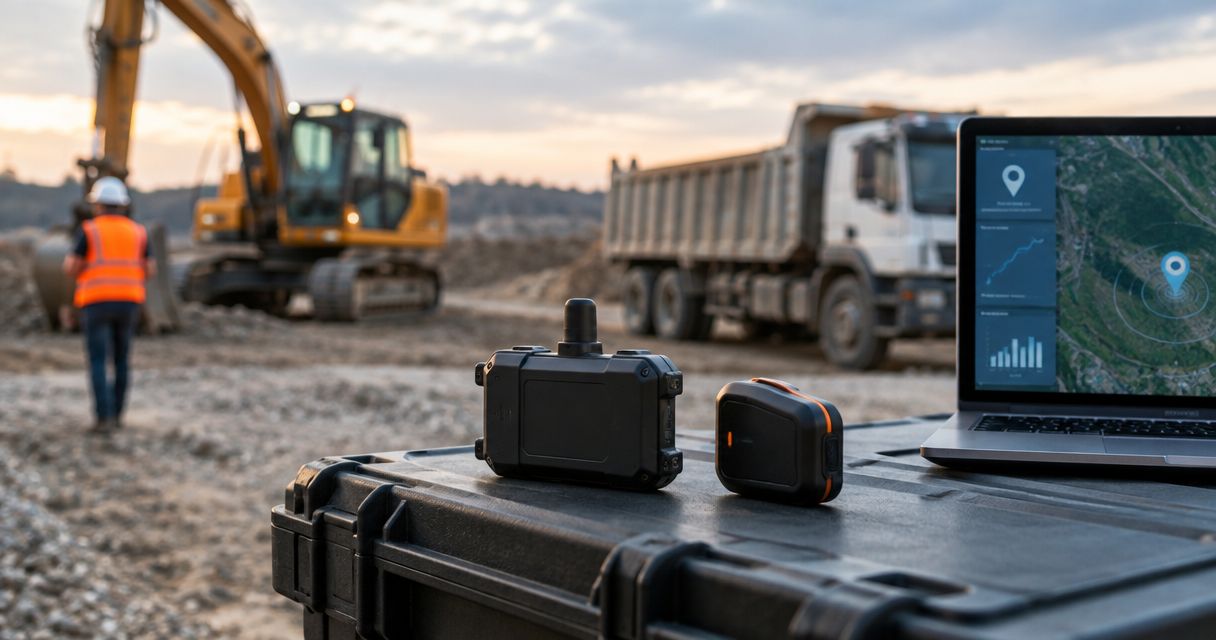
A LoRaWAN GPS tracker reports its position over a low-power radio link instead of a mobile network, which suits industrial assets that move slowly and need a long battery life. If you are planning coverage first, start with LoRaWAN gateways for enterprise IoT deployments, because a tracker is only as useful as the gateway that hears it. Kilo Electronics, an online authorised dealer, lists the RAK2171 WisNode TrackIt for individuals, makers and businesses across Europe.
- Best listed pick: RAK2171 WisNode TrackIt, a compact IP65 LoRaWAN GPS tracker with Bluetooth and a 400 mAh battery.
- It suits pallets, cages, tools and small equipment, not heavy machinery that needs vehicle power.
- A LoRaWAN GPS tracker needs gateway coverage at your site, or a network you already use, before it reports anything.
- For fleets that must be located in real time, a cellular tracker is the better choice in 2026.
Best overall from Kilo Electronics: RAK2171 WisNode TrackIt. Best for small mobile assets: the same model. Best for vehicles and powered equipment: a wired tracker type, which Kilo does not currently list in this category. That last line is deliberate. If no listed model fits your requirement, you should hear it here rather than buy the wrong device.
Why LoRaWAN GPS trackers matter for industrial assets in 2026
Industrial sites lose time and money to assets nobody can find: returnable cages, pallets, portable test equipment, ladders, trolleys, measuring instruments. A cellular tracker solves this but adds a SIM, a data contract and a battery that needs frequent attention. A LoRaWAN tracker sends short position messages over an unlicensed radio band and sleeps in between.
The trade-off is real. LoRaWAN is built for small, infrequent messages. You get position updates at an interval you configure, not a live video-style map. For most yard, warehouse and campus use that is enough. For a van that must be followed minute by minute, it is not.
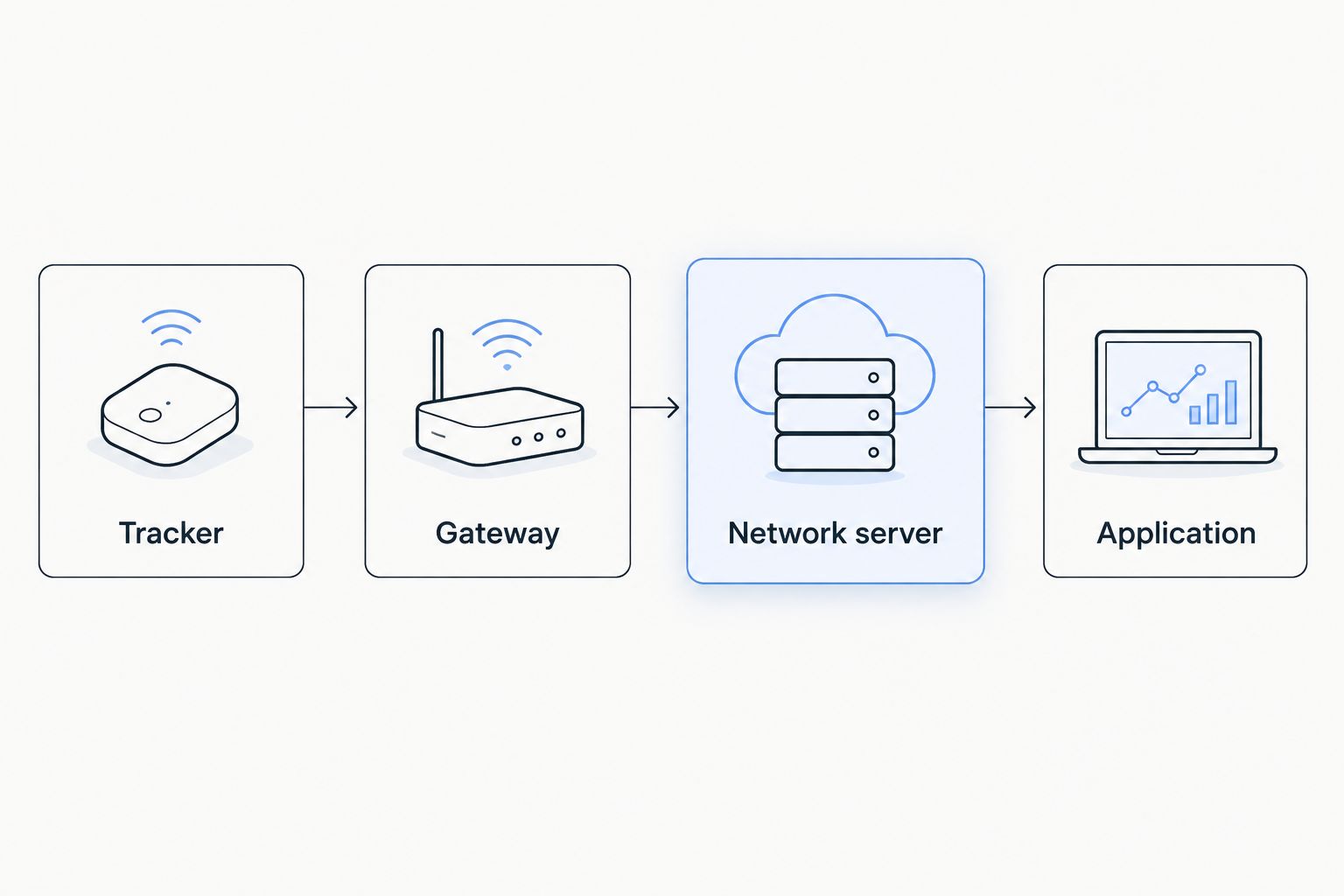
If you are new to this, the chain has four parts:
- The tracker: the device on the asset, with a GNSS receiver (satellite positioning) and a LoRa radio.
- The gateway: a receiver that picks up the tracker's radio message and forwards it over Ethernet, Wi-Fi or cellular.
- The network server: software that authenticates the tracker and routes its messages. It can be a public network, a hosted service or one you run yourself.
- The application: the map, alert or asset list your team actually looks at.
Buying a tracker covers only the first part. Plan the other three in the same decision, especially in 2026 and 2027 rollouts where several sites share one network.
What makes the best LoRaWAN GPS tracker for industrial use
These are the criteria used to rank the options below. They are an editorial comparison basis, not lab test results.
- Environmental protection: an IP rating tells you about dust and water ingress. It does not tell you about vibration, chemicals or heavy impact, so match it to where the asset lives.
- Power: battery size, replacement or recharging, and whether the device can run from vehicle or machine power.
- Position method: satellite positioning works outdoors. Indoors you need another method, such as Bluetooth beacons or last-known position.
- Configuration: how you set the reporting interval, geofences and alerts, and whether that needs a laptop or a phone app.
- Regional radio plan: European sites use the 863 to 870 MHz band, and the tracker must be the matching regional variant.
- Installed cost: tracker, gateways, network server and the time to mount and register every unit.
LoRaWAN GPS tracker types at a glance
| Tracker type | Best for | Power | Main limitation | Listed by Kilo Electronics |
|---|---|---|---|---|
| RAK2171 WisNode TrackIt | Small mobile assets, pallets, cages, tools | 400 mAh battery | Battery limits very frequent reporting | Yes |
| Wired vehicle tracker | Trucks, forklifts, powered equipment | Vehicle or machine supply | Needs installation by someone competent | Not in this category |
| Rugged long-life asset tag | Containers, outdoor equipment left for months | Large primary battery | Larger, costs more per unit | Not in this category |
| Bluetooth-assisted tag | Indoor warehouses and mixed indoor-outdoor routes | Small battery | Needs fixed beacons or readers | Not in this category |
The table separates what Kilo Electronics lists from tracker types you may need elsewhere. Other manufacturers can be comparison options without being stocked here.
1. RAK2171 WisNode TrackIt: best LoRaWAN GPS tracker for small mobile assets
The RAK2171 WisNode TrackIt is the LoRaWAN GPS tracker Kilo Electronics lists in this category. The listing describes a compact white unit rated IP65, with Bluetooth, an accelerometer and a 400 mAh battery. A phone app for iOS and Android handles configuration, geofencing and SOS-type alerts.
Here is what each of those features changes for you as a buyer.
- IP65 means the housing is dust-tight and protected against water jets. That covers rain, hose-down cleaning and outdoor yards. It does not mean the unit can be submerged, and it says nothing about crushing or chemical exposure.
- The accelerometer detects movement. In practice this lets a tracker report when an asset starts moving rather than only on a fixed timer, which is how you spot a pallet leaving a zone at the wrong time.
- Bluetooth with the phone app means you set up each tracker from your phone. That is quick for a handful of devices and slower for hundreds, where you would want a repeatable provisioning process.
- The 400 mAh battery is small by design. Reporting often, with a weak signal that forces retries, shortens its life. The listing does not give a runtime figure, so treat any runtime as something you measure in your own pilot.
RAK2171 pros:
- Small enough to fix to cages, tool cases and pallets
- Phone-based setup with geofencing and SOS alerts
- Movement detection through the accelerometer
- IP65 housing for outdoor and washdown areas
RAK2171 cons:
- Battery capacity is modest, so it is not for assets that need frequent fixes
- No vehicle power input is mentioned in the listing
- Satellite positioning will struggle inside buildings and under dense cover
RAK2171 pricing: see the current price on the product card below.
Best for: teams tracking small movable assets across a site or between a few sites, who already have or plan gateway coverage. Verdict: Buy for a pilot of this kind.
2. Wired vehicle tracker: best for forklifts and powered equipment
If the asset has its own power, you remove the battery problem entirely. A wired tracker can report more often because it never depends on a coin of stored energy. Forklifts, tow tractors and site vehicles are the usual fit.
The catch is installation. Wiring into a vehicle supply needs a competent installer, correct fusing and a mounting spot with a clear view of the sky. Count that labour in your total cost. Kilo Electronics does not currently list a LoRaWAN tracker of this type in this category, so the RAK2171 is not a substitute here.
Pros: frequent reporting, no battery swaps, suited to continuous use.
Cons: installation time per vehicle, wiring risk if done badly, more thought needed for decommissioning.
Best for: powered fleets inside one site or campus. Verdict: Skip the RAK2171 for this job; look for a wired model.
3. Rugged long-life asset tag: best for containers and equipment left outdoors
Some assets sit untouched for weeks, then move once. A tag with a large primary battery and a very low reporting rate can last far longer than a rechargeable small unit. Skips and containers fit this pattern.
The trade-off is size and cost per tag. You also need to decide who replaces the tag at end of life, and how you recover it. Kilo Electronics does not list a model of this type in this category today.
Pros: long service intervals, built for harsh outdoor conditions.
Cons: bulkier, more expensive per unit, slower position updates.
Best for: low-movement, high-value outdoor assets. Verdict: Wait until you have defined how often you actually need a position.
4. Bluetooth-assisted tag: best for indoor warehouses
Satellite signals rarely reach the inside of a steel-roofed warehouse. A common answer is to combine a LoRaWAN tracker with fixed Bluetooth readers or beacons that mark zones, so you know which bay an item sits in rather than its exact coordinates.
This changes the project. You are now buying and mounting fixed infrastructure, not only trackers. Plan power for the readers and think about how many zones you really need.
Pros: room-level indoor location, works where satellite positioning fails.
Cons: extra hardware to install, more configuration, more points of failure.
Best for: warehouses with distinct storage zones. Verdict: Hold until you have mapped the zones you want to report.
What a realistic installed cost looks like
Take a hypothetical yard of 40 returnable cages and one covered storage building. This is an illustrative example, not a customer deployment.
- 40 trackers, one per cage, plus a few spares
- One or two outdoor-capable gateways on the roofline, depending on yard shape
- A network server, either a hosted service or a self-run one
- Mounting hardware and the time to register each tracker
The gateway is the item people forget. It also sets your running cost: if the gateway uses cellular backhaul, you carry a data plan. Cellular backhaul connects the gateway to the internet; it does not make the trackers cellular devices. If you run your own network server, someone on your team maintains and updates it.
For gateway selection, the guide on [indoor LoRaWAN gateways for offices and warehouses] is covered separately on this site, and the same coverage logic applies to outdoor yards: antenna height and clear line of sight matter more than the gateway's channel count.
Coverage, regions and capacity
A tracker is useless without a gateway in range. Range is not a number printed on a datasheet; it depends on antenna height, buildings, metal and the position of the tracker on the asset. A tracker bolted inside a steel cage will perform worse than one on top.
Capacity works the same way. A gateway's channel count does not equal the number of trackers it can serve. Message size, how often each tracker reports and whether downlinks are used all consume airtime. Forty trackers reporting every ten minutes is a light load. Four hundred reporting every minute is a different design.
Radio plans also need checking per country. Europe uses the 863 to 870 MHz band, but UK and Swiss rules have their own details, so confirm the regional variant for your destination before you order. This is separate from any cellular modem bands on a gateway.
How we ranked
The ranking follows the criteria above: protection, power, position method, setup, radio plan and installed cost. The RAK2171 leads because it is the model Kilo Electronics lists in this category and it matches the small-asset case well. The other entries are tracker types, ranked by how often they fit industrial work, not by measured performance. Manufacturer claims are not independent test results.
Which LoRaWAN GPS tracker should you choose?
- Small movable assets, outdoor or mixed use: the RAK2171 WisNode TrackIt, with gateway coverage planned first.
- Powered vehicles: a wired tracker; the RAK2171 is not the right tool.
- Long-parked containers: a rugged long-life tag with a low reporting rate.
- Indoor-heavy sites: a Bluetooth-assisted setup with fixed readers.
- Real-time following of moving vehicles: consider a cellular tracker instead.
If you are unsure, start with a pilot of ten RAK2171 units on your most frequently lost assets and measure battery life and coverage over a month. That one pilot will answer most of your questions for 2026 and 2027 planning.
What is a LoRaWAN GPS tracker?
A LoRaWAN GPS tracker is a device that finds its position by satellite and sends it over a low-power LoRaWAN radio link. It needs a LoRaWAN gateway in range to deliver the data.
Does a LoRaWAN GPS tracker need a SIM card?
No, the tracker itself does not use a SIM. The gateway that receives its messages may use cellular backhaul, which is a separate data connection.
Does the RAK2171 WisNode TrackIt work indoors?
Satellite positioning is weak indoors, so expect poor fixes inside buildings. For indoor location, pair trackers with Bluetooth readers or accept last-known outdoor position.
How waterproof is the RAK2171 WisNode TrackIt?
The listing gives it an IP65 rating, meaning dust-tight and protected against water jets. It is not rated for submersion.
Can one gateway serve many trackers?
Yes, but capacity depends on reporting interval, message size and site conditions, not just channel count. Light reporting scales to many more devices than frequent reporting.
Is a LoRaWAN tracker better than a cellular tracker?
It depends on the job. LoRaWAN wins on battery life and running cost for slow-moving assets; cellular wins on real-time tracking and wide-area coverage.
Does Kilo Electronics sell to individuals as well as businesses?
Yes, Kilo Electronics is an online authorised dealer that sells to makers, hobbyists, professionals and businesses across Europe.
One last thing
Most tracking projects fail on coverage and process, not on the tracker. Before buying, walk the route your assets take with a phone and a plan of where gateways could be mounted, and decide who is responsible for charging or replacing batteries. A tracker nobody maintains becomes a lost asset itself.