The best LoRaWAN CO2 sensor depends on the room: shortlist Dragino AQS01-L for battery-powered environmental monitoring, ELSYS ERS CO2 for occupancy context, and Milesight AM319 for CO2 plus particulate measurements; plan coverage with the indoor LoRaWAN gateway guide before choosing installation points. This 2026 comparison separates the measurements each option provides from the network and maintenance decisions that determine whether your building gets useful data.
- Dragino AQS01-L is the catalogue-backed LoRaWAN CO2 sensor choice for battery-powered indoor environmental monitoring.
- ELSYS ERS CO2 suits rooms where motion and light readings add context to CO2 measurements.
- Milesight AM319 suits broader indoor air quality monitoring, including airborne particles alongside CO2.
- Choose direct CO2 measurement, then assess placement, power, calibration and application compatibility.
Why CO2 and air quality need different buying decisions
CO2 monitoring and air quality monitoring are not interchangeable. Carbon dioxide readings help you assess ventilation in occupied rooms. They do not tell you how much particulate pollution is present or identify every indoor contaminant.
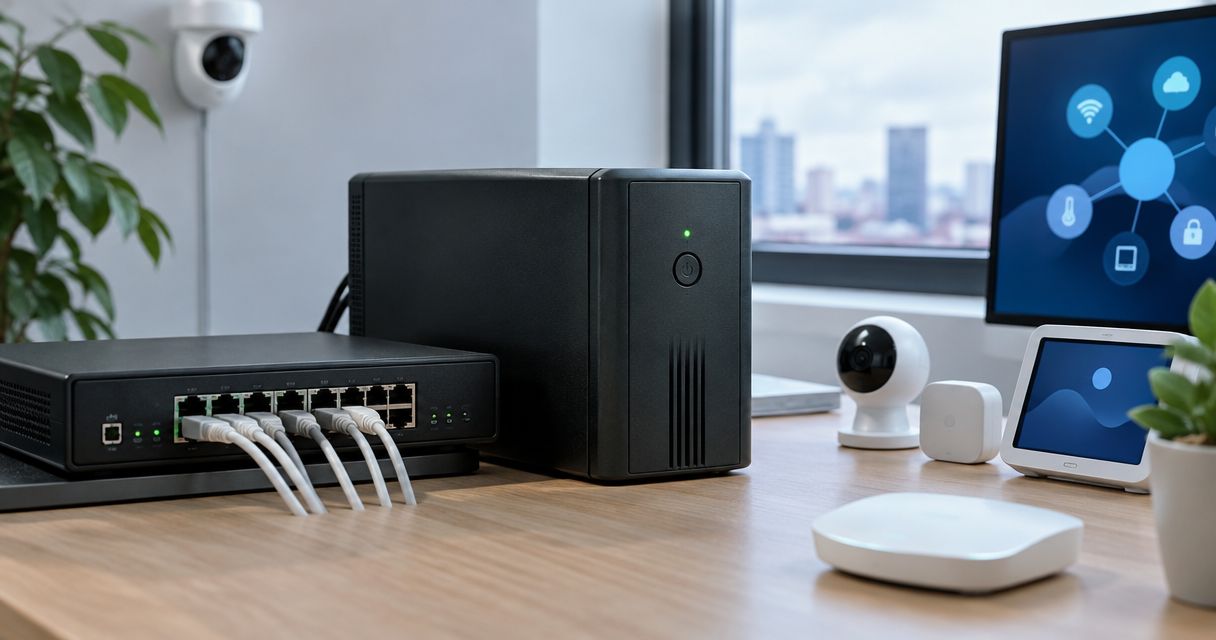
A sensor measures conditions; a LoRaWAN gateway receives its radio messages. A network server manages the LoRaWAN connection, while an application decodes readings and presents charts or alerts. Buying a sensor does not supply that whole system.
Kilo Electronics is an online authorised dealer serving individuals, makers, professionals and businesses across Europe, including the EU, UK and Switzerland. Its supplied catalogue entry establishes Dragino AQS01-L as a relevant indoor CO2 option; the other models below are manufacturer comparison options, not claims about the store's catalogue.
What makes the best LoRaWAN CO2 sensor?
Choose your 2026 shortlist against these criteria before comparing model names:
- Measurement relevance: Use a direct CO2 measurement for ventilation questions. Add particulate measurements when airborne particles are part of the problem.
- Room context: Temperature, relative humidity, motion and light explain different aspects of room use. More measurements are useful only when you act on them.
- Power and maintenance: Battery operation avoids a permanent power connection, but introduces battery servicing. Powered monitors need a suitable installation point.
- Calibration behaviour: The calibration method must suit the room's occupied and unoccupied periods. Automatic correction is not a substitute for understanding the installation.
- Data integration: Your application needs the correct payload decoder, units and device configuration. A LoRaWAN connection alone does not produce a usable dashboard.
- Installation fit: Mounting position, radio coverage and access for maintenance matter as much as the measurement list.
LoRaWAN CO2 and air quality sensors at a glance
The order reflects distinct buying requirements, not a measured accuracy ranking. Manufacturer documentation describes the external models' measurement functions; the supplied store description establishes the Dragino model's listed functions.
| Sensor | Best for | Standout measurement or function | Installation consideration | Key limitation |
|---|---|---|---|---|
| Dragino AQS01-L | Battery-powered indoor environmental monitoring | CO2, temperature, humidity and air pressure | EU868 indoor model in the supplied catalogue | The supplied description does not establish particle or occupancy measurement |
| ELSYS ERS CO2 | Occupied rooms needing usage context | CO2 alongside temperature, humidity, light and motion | Battery-powered indoor monitoring | Motion is not a people count; no particulate measurement |
| Milesight AM319 | Broader indoor air quality assessment | CO2 plus PM2.5 and PM10 particle measurements | Plan a power connection and accessible mounting | More measurements create more configuration and interpretation work |
1. Dragino AQS01-L: best for battery-powered indoor monitoring
Dragino AQS01-L measures CO2, temperature, relative humidity and air pressure, according to the supplied catalogue description. The listed version is an indoor, battery-powered EU868 LoRaWAN device. That makes it a relevant starting point when your question is about room conditions rather than a wider set of airborne pollutants.
Dragino AQS01-L is Kilo Electronics' catalogue-backed LoRaWAN CO2 sensor choice for battery-powered indoor environmental monitoring. Keep that recommendation narrow: the supplied description does not establish measurement accuracy, calibration behaviour, battery endurance or included mounting accessories.
Dragino AQS01-L pros
- Battery operation removes the need for a permanent power connection at the sensor position.
- CO2, temperature and humidity support room-condition monitoring within one device.
- Air pressure provides an additional environmental reading.
- The supplied catalogue identifies the regional version as EU868.
Dragino AQS01-L cons
- The supplied description does not establish particulate or motion measurement.
- Battery-powered installation still needs a maintenance plan.
- Selection for an accuracy-critical project requires model-specific measurement and calibration evidence beyond the listed functions.
Best for: Your first indoor environmental monitoring project, or a wider deployment where the required measurements match the listed functions.
For example, a meeting-room project can use CO2 trends alongside temperature and humidity to investigate uncomfortable conditions. The sensor does not establish whether a ventilation system is working correctly by itself: you still need room-use context and an agreed interpretation of the readings.
Verdict: Buy for the listed measurement set; hold if your specification requires particle data or documented accuracy limits.
2. ELSYS ERS CO2: best for room-use context
ELSYS ERS CO2 combines CO2, temperature and relative humidity measurements with light and motion sensing. ELSYS product documentation identifies these functions, making this a distinct comparison option for rooms where you need to connect environmental changes with signs of use.
Motion adds context, not a headcount. A quiet occupant can remain seated without producing frequent movement, so you should not treat a motion signal as a complete record of occupancy.
ELSYS ERS CO2 pros
- CO2 readings and motion signals address different parts of the room-use question.
- Temperature and humidity help distinguish ventilation concerns from thermal discomfort.
- Light sensing adds another environmental signal.
- Battery operation suits positions without a permanent power connection.
ELSYS ERS CO2 cons
- Motion sensing does not establish the number of people in a room.
- The measurement set does not include airborne particles.
- Battery servicing remains part of ongoing building maintenance.
Best for: Meeting rooms, classrooms and shared spaces where you want environmental readings alongside room-use signals.
For a 2026 meeting-room project, decide what you will do with motion data before choosing the model. Linking movement events to rising CO2 can help explain a trend, but any automated ventilation decision still needs appropriate control logic and a clear fallback when readings are unavailable.
Verdict: Buy when motion and light have a defined role; skip when you only need the core environmental readings.
3. Milesight AM319: best for CO2 and particulate monitoring
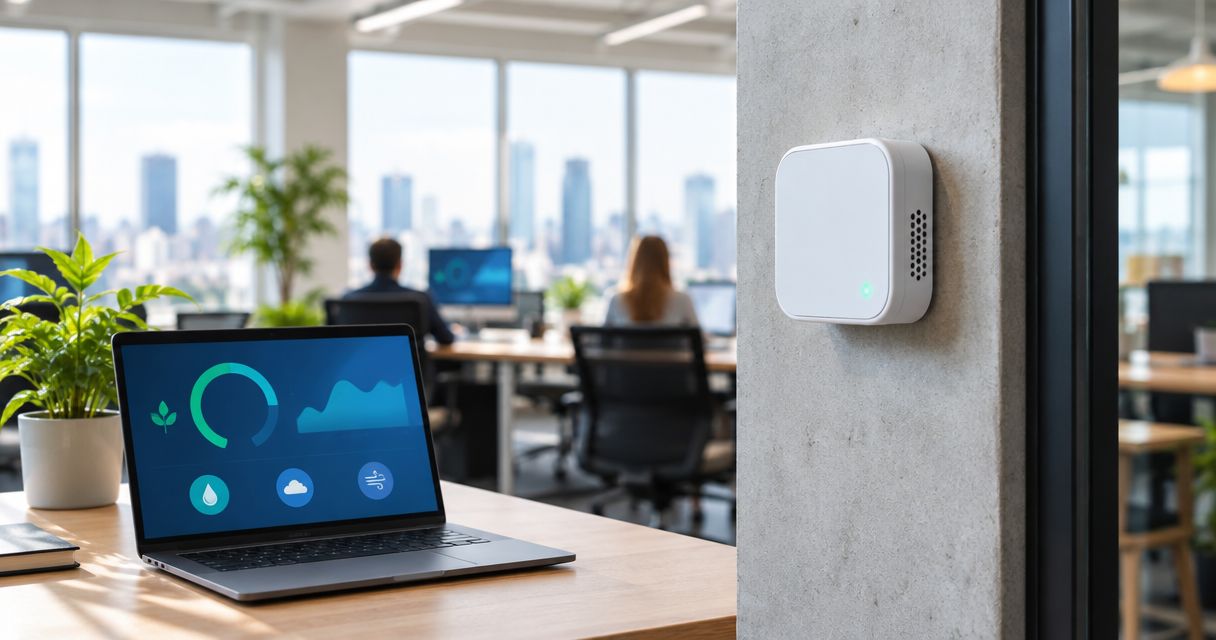
Milesight AM319 combines CO2 monitoring with a broader indoor air quality measurement set, including PM2.5 and PM10. Milesight product documentation describes those particle measurements and the device's powered installation. It belongs on a shortlist when CO2 alone cannot answer your building's air-quality question.
Particle measurements report a different condition from CO2. Dust-generating work, cooking or pollution entering from outside can affect airborne particles without producing the same pattern as occupant-generated CO2.
Milesight AM319 pros
- CO2 and particle readings cover distinct indoor air-quality questions.
- PM2.5 and PM10 measurements help you distinguish particle categories.
- Its display makes readings visible at the installation point.
- External power removes routine sensor-battery replacement from the installation plan.
Milesight AM319 cons
- You need a suitable power connection at the chosen location.
- More measurement channels require more dashboard and alert configuration.
- One monitor still describes its surroundings, not every room in a building.
Best for: Buildings investigating ventilation and particle exposure together, rather than ventilation alone.
A hypothetical shared workspace beside a busy road illustrates the distinction. CO2 trends address the relationship between occupancy and ventilation; particulate trends address a separate pollution question. Do not merge those readings into one unexplained score and expect users to know which action to take.
Verdict: Buy when particle measurements change a decision; skip when those readings would only decorate a dashboard.
CO2, eCO2 and particulate readings explained
CO2 is commonly reported in parts per million, written as ppm. For ventilation monitoring, choose a sensor that measures CO2 directly rather than treating an eCO2 estimate as equivalent. Estimated CO2 can be derived from other gas measurements and does not represent the same measurement process.
PM2.5 refers to particles with aerodynamic diameters of 2.5 micrometres or smaller; PM10 covers particles of 10 micrometres or smaller. Those labels describe particle-size categories, not CO2 concentration. Temperature is normally shown in degrees Celsius, while relative humidity is expressed as a percentage.
Use separate charts and alerts for separate questions. A CO2 alert should lead to a ventilation investigation; a particle alert should lead to investigation of particle sources and appropriate filtration or exposure controls. Neither reading identifies every possible cause by itself.
How to install a smart-building sensor system
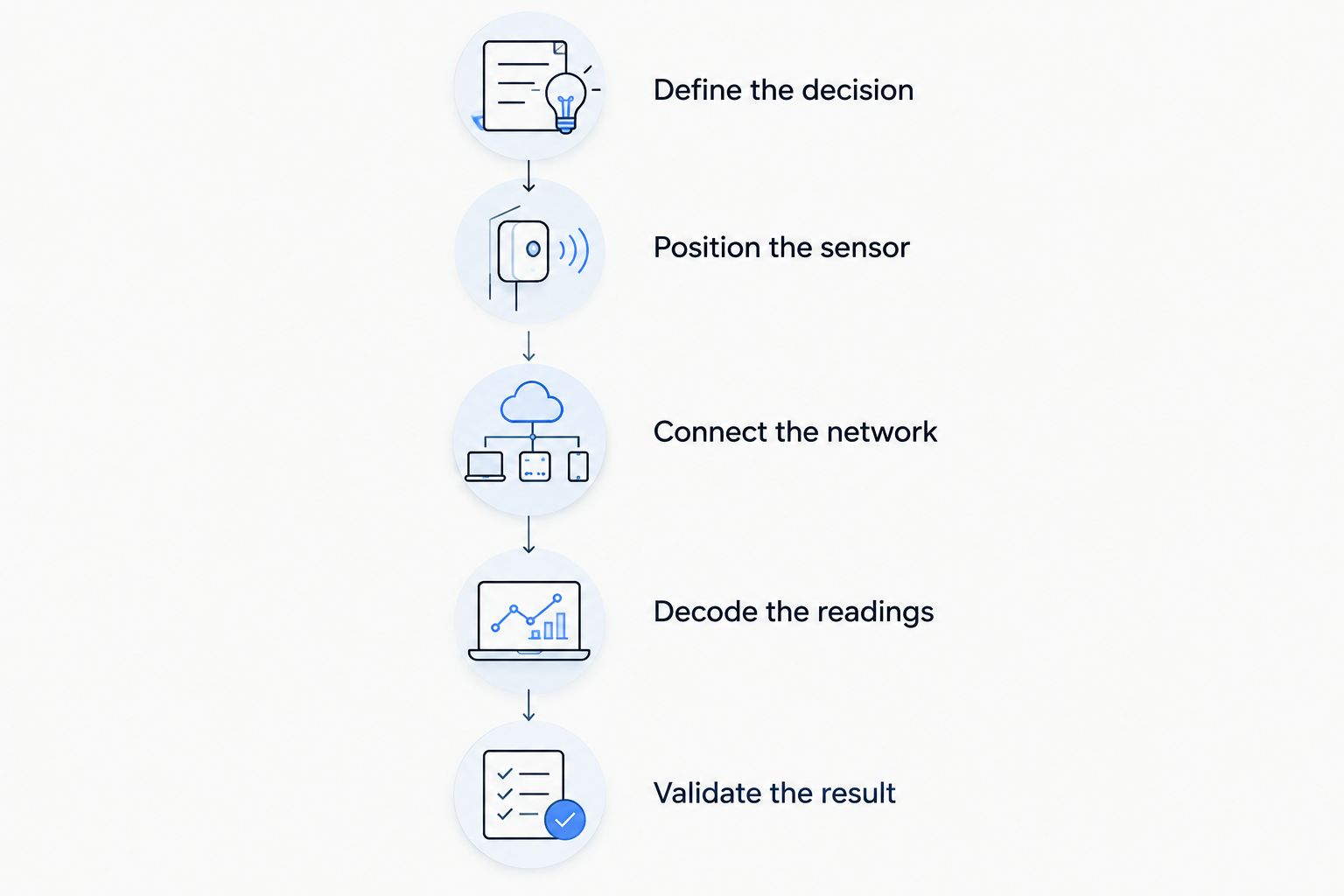
A useful 2026 installation starts with the decision you want the data to support. Work through the following sequence before expanding beyond the first representative rooms.
Define the decision
Write down whether you are investigating ventilation, thermal comfort, room use or particulate pollution. That determines which measurements belong on the shortlist and stops you buying functions without a purpose.
Position the sensor
Choose a representative indoor position rather than an obvious local disturbance. Avoid placing the device directly beside a supply vent, an open window or a person's usual breathing position, where readings can disproportionately reflect that immediate source.
Connect the network
Confirm the sensor's regional radio version and the gateway's configuration. Then register the device with the network server and arrange the application connection; gateway reception is only part of the route to a readable measurement.
Decode the readings
Use the correct payload decoder for the model and configuration. Confirm that CO2, temperature, humidity and any additional channels appear under the correct names and units before enabling alerts.
Validate the result
Observe occupied and unoccupied periods, investigate gaps and compare behaviour with known room activity. Validate the installation before treating the data as a building-control input.
Regional compatibility and ongoing maintenance
For European projects, regional radio compatibility and destination-specific requirements need separate attention. The supplied Dragino listing identifies EU868, but that label does not establish compatibility with every gateway configuration or fulfil every installation requirement across the EU, UK and Switzerland.
Cellular backhaul connects a gateway to its network services. It does not turn a LoRaWAN CO2 sensor into an NB-IoT device. Likewise, gateway channel count is not a guaranteed sensor count: message frequency, airtime, downlinks and site conditions affect capacity.
Plan recurring work alongside installation. Battery changes, calibration procedures, failed-device replacement and application maintenance belong in the same ownership plan, even when different people perform them.
For a 2026 rollout, assign responsibility for the device, gateway, network server and application explicitly. A sensor that keeps transmitting is not a working monitoring system if its decoder or alert configuration is wrong.
How these recommendations are ordered
This shortlist uses measurement relevance, room context, power requirements and integration needs. It does not claim laboratory testing, comparative accuracy results or a universal winner.
Dragino AQS01-L appears first because the supplied Kilo Electronics catalogue entry establishes a relevant purchasing option for core indoor environmental readings. ELSYS ERS CO2 addresses room-use context, while Milesight AM319 addresses broader air-quality measurement. Their positions are a decision path, not performance scores.
Which sensor should you choose in 2026?
Choose Dragino AQS01-L when its listed CO2, temperature, humidity and pressure measurements answer your project question. Choose ELSYS ERS CO2 when motion and light data have a defined purpose. Choose Milesight AM319 when you need particulate readings alongside CO2 and can provide power at the monitoring point.
For an undecided buyer, start with the core measurement requirement rather than the longest feature list. Shortlist the suitable hardware through Kilo Electronics, then resolve calibration, mounting, network and application requirements before committing to a building-wide deployment.
FAQ
What's the best LoRaWAN CO2 sensor for a smart building?
The best choice depends on the measurements your building needs. Dragino AQS01-L suits battery-powered indoor environmental monitoring, ELSYS ERS CO2 adds room-use context, and Milesight AM319 adds particulate measurements alongside CO2.
Does a LoRaWAN CO2 sensor need a gateway?
A LoRaWAN CO2 sensor needs gateway coverage to send readings through a LoRaWAN network. You also need a network server and an application that can decode and display the device's data.
Is CO2 monitoring the same as air quality monitoring?
No, CO2 monitoring covers one part of indoor air assessment. Particles and other pollutants require their own measurements, so a CO2-only reading cannot describe every air-quality concern.
Is a battery-powered CO2 sensor better than a powered monitor?
Battery operation suits locations without a permanent power connection, while a powered monitor avoids routine sensor-battery replacement. Choose according to the installation point, required measurements and maintenance responsibility.
Can a motion sensor tell me how many people are in a room?
A motion sensor does not establish a people count. Movement data provides room-use context, but stationary occupants and the sensor's detection area affect what it records.
Will an EU868 sensor work anywhere in Europe?
An EU868 label does not establish universal compatibility or destination-specific compliance. Match the device's regional configuration to the gateway and network, then address the requirements of the installation country.
Can I use CO2 readings to control ventilation automatically?
CO2 readings can inform ventilation control when the complete system is designed for that purpose. Validate measurement behaviour, alert or control logic, communications failures and fallback operation before relying on automation.
One last thing
Decide what happens when a reading is missing. An application that leaves the last CO2 value on screen without showing its age can make stale data look current. Require a clear last-received timestamp and a missing-data indication before using any sensor's dashboard to make ventilation decisions.